


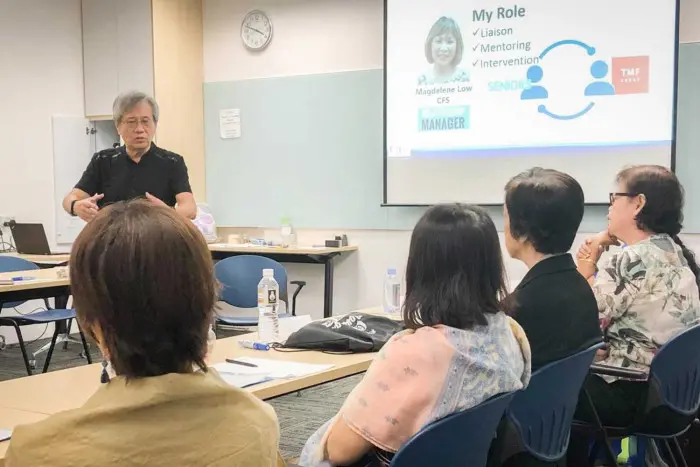
Southeast Asia is preparing for a digital future, albeit with an ageing workforce. While governments invest in artificial intelligence, automation and advanced industries, an equally important question receives less attention: Who will equip older workers with the skills needed to remain productive?
For Thailand, this challenge is particularly urgent. Its ageing population is reshaping labour markets and raising concerns about long-term economic competitiveness.
Malaysia faces similar demographic pressures, making workforce adaptation an important regional policy priority.
Yet, ageing should not mean declining productivity.
The World Bank has warned that Thailand's demographic transition could weaken economic growth unless workforce participation and productivity improve.
However, older employees possess valuable institutional knowledge, professional judgement and practical experience.
The challenge is not simply extending working lives, but ensuring that longer careers remain productive, rewarding and supported by appropriate skills.
Governments should therefore recognise older workers as economic contributors rather than viewing population ageing exclusively as a welfare burden.
Malaysia offers useful policy lessons.
Malaysia's National Ageing Blueprint 2025–2045 recognises workforce participation, education and skills development as important responses to demographic change.
The Thirteenth Malaysia Plan similarly emphasises labour market adaptation and opportunities for older workers to remain economically active.
These priorities complement broader national efforts to strengthen human capital through reskilling and lifelong learning.
However, training must reach workers in smaller businesses and communities beyond major cities.
Do not forget, skills development must become age-inclusive.
The issue is that traditional training programmes frequently concentrate on younger employees or professionals seeking career advancement.
Under this, older workers may face different barriers, including limited digital skills, financial constraints and inflexible working arrangements.
Universities, technical institutions and employers should provide shorter, practical courses aligned with workplace requirements.
Digital literacy, artificial intelligence applications and financial management are increasingly relevant across occupations.
Training should recognise existing experience rather than requiring older workers to restart their professional development.
Therefore, employers must rethink workforce management.
Businesses often discuss talent shortages while overlooking experienced employees.
Flexible employment, mentoring opportunities and age-inclusive recruitment could help organisations retain valuable expertise.
Intergenerational learning offers benefits. Younger employees may contribute technological familiarity, while experienced colleagues provide organisational knowledge and professional judgement.
Small and medium-sized enterprises could benefit from government-supported training partnerships that reduce development costs.
Regional cooperation can strengthen workforce resilience.
Thailand and Malaysia could expand cooperation in lifelong learning, professional certification and age-friendly employment practices.
Asean institutions could encourage exchanges of effective training approaches, particularly in healthcare, manufacturing, tourism and digital services.
Importantly, workforce participation must remain a matter of opportunity and choice. Older people should not be pressured to continue working because retirement security is inadequate.
Governments must balance employment opportunities with adequate pensions, healthcare and workplace protections.
Ultimately, an ageing workforce need not become an economic disadvantage.
With investment in skills, flexible employment and lifelong learning, experienced workers can continue contributing to productivity and national development.
Southeast Asia's future competitiveness will depend not only on preparing young people for tomorrow's jobs, but also on ensuring that experienced workers are not left behind.
Abd Rahim Romle is an Associate Professor and Deputy Dean at the Ghazali Shafie Graduate School of Government, Universiti Utara Malaysia. Ainur Rabiyatul Abd Rahim is a Master of Teaching English as a Second Language (TESL) candidate at Universiti Putra Malaysia.