


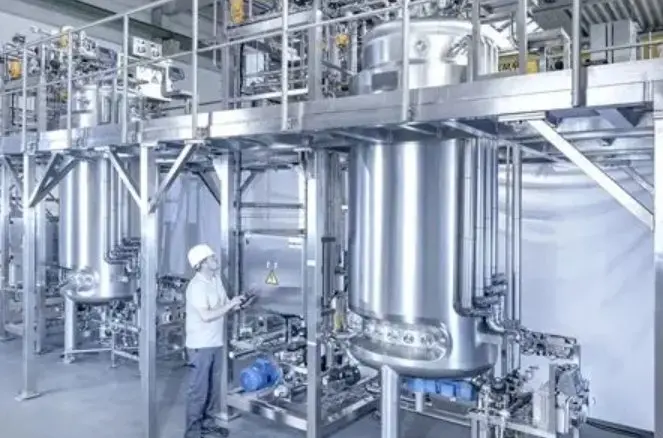
India, July 1 -- image credit- freepik
According to IMARC Group, the India fermentation chemicals market reached $3.2 billion in 2025 and is projected to grow to $5.5 billion by 2034, exhibiting a CAGR of 5.79 per cent during 2026-2034. However, growth alone will not guarantee leadership. India's ability to build a robust domestic fermentation ecosystem, reduce import dependence, and scale advanced biomanufacturing capabilities will determine whether it can emerge as a global fermentation hub.
Pharma fermentation refers to the use of microorganisms such as bacteria, yeast, and fungi in controlled bioreactors to produce pharmaceutical products, ingredients, and biologics. Several fermentation methodologies are used across the pharmaceutical industry. Microbial fermentation employs bacteria, yeast, or fungi; cell culture fermentation uses mammalian or insect cells; precision fermentation relies on genetically engineered microbes to produce specific proteins or molecules. Production processes can be classified into batch fermentation, which involves a single production cycle, and fed-batch fermentation, where nutrients are added during production and which remains the most widely used approach in the pharmaceutical industry.
Fermentation is critical to the production of a wide range of pharmaceutical products, including antibiotics such as penicillin, erythromycin, and cephalosporins; biologics and recombinant proteins such as insulin, monoclonal antibodies, growth hormones, and interferons; as well as vaccines, enzymes, and specialty biomolecules. The increasing demand for these high-value products is one of the key factors driving renewed investment and interest in fermentation technologies across India's pharmaceutical sector.
The BioE3 Policy Boost
Recognising the strategic importance of fermentation-based manufacturing, the government has introduced several policy initiatives aimed at strengthening India's biomanufacturing capabilities. A major milestone came in August 2024 with the approval of the BioE3 (Biotechnology for Economy, Environment and Employment) Policy. The policy prioritises high-performance biomanufacturing, precision fermentation, bio-based Active Pharmaceutical Ingredients (APIs), enzymes, biologics, and advanced bioprocessing infrastructure.
The initiative seeks to strengthen domestic capabilities in producing peptides, proteins, specialty molecules, and other high-value biopharmaceutical products through sustainable and efficient fermentation-based manufacturing routes. By providing access to advanced infrastructure and scale-up facilities, the policy aims to bridge the gap between laboratory research and commercial production, enabling faster translation of scientific innovation into market-ready products.
Policy Momentum Translates into Industry Action
The government's policy push is already translating into tangible industry investments, with companies expanding domestic fermentation capacities and developing advanced biomanufacturing capabilities.
Recently, Dr Jitendra Singh, Minister of State (Independent Charge) for Science and Technology, laid the foundation stone for Orchid Biopharma's 7-ACA fermentation facility in Kathua, Jammu & Kashmir. The project marks a significant step in India's journey toward self-reliance in critical pharmaceutical raw materials and a stronger domestic antibiotic supply chain. The facility is India's first biotechnology fermentation-based plant dedicated to domestic production of this important molecule.
In another development, True North announced a partnership with Embio, a regulated-markets-focused manufacturer of APIs operating at the intersection of synthetic biology and precision fermentation. Embio specialises in complex APIs and intermediates, integrating chemical and fermentation-based processes while leveraging expertise in controlled substances.
Building India's Fermentation Ecosystem
While policy support is creating an enabling environment, industry players across the value chain-from technology providers and biotech innovators to API manufacturers and CDMOs-are helping shape India's fermentation ecosystem.
Technology and Infrastructure Providers
Among equipment and technology suppliers, Eppendorf has emerged as a key partner for pharma fermentation teams, particularly in process development and scale-up. One of the company's strengths lies in offering the same platform in both glass and single-use formats, enabling flexibility for manufacturers. Its systems also allow easy integration of Process Analytical Technology (PAT) tools, including sensors, analyzers, and advanced monitoring systems.
Rather than focusing solely on large-scale reactor capacity, Eppendorf is positioning itself as a trusted backbone for smart, data-driven, PAT-enabled fermentation development. According to Dr Abhishek Mule, Senior In-Field Application Specialist, Eppendorf APC, fermentation is becoming strategically important for India's pharma and biotech sector because it now extends far beyond the production of bulk antibiotics.
"While India is making significant strides toward self-reliance by setting up thousands of metric tonnes of domestic capacity, the structural reality is an ongoing transition. Total bulk drug imports continue to rise to meet India's expanding global formulation exports. As a result, overall import dependence for upstream intermediates still floats between 65 per cent and 70 per cent. Building a fully insulated, self-sustaining fermentation ecosystem remains a multi-year structural goal," he says.
Innovation-Led Fermentation Companies
StrainX Bioworks represents the new generation of biotechnology companies focused on advanced fermentation technologies. The company is developing next-generation platforms for the rapid development and commercialisation of fermentation-based products using advanced strain engineering and precision fermentation. Its priorities include developing high-performance microbial cell factories through AI-enabled strain engineering, creating scalable fermentation processes, and expanding portfolios of specialty biomolecules and fermentation-derived ingredients.
According to Alok Malviya, Co-Founder and CEO, StrainX Bioworks, India has the potential to become a global biomanufacturing powerhouse. "Having already demonstrated leadership in generics, vaccines, and biosimilars, the next frontier lies in fermentation-based manufacturing. Success will require coordinated investments in infrastructure, talent, policy, and innovation ecosystems. If executed effectively, fermentation could play for biotechnology the same transformative role that IT services played for India's digital economy," he says.
CDMOs and Manufacturing Service Providers
Contract manufacturing and research organisations are also expanding their fermentation capabilities. Syngene International offers end-to-end services across the vaccine manufacturing value chain. Its cGMP microbial manufacturing facility can produce recombinant proteins from bacteria and yeast cells with either intracellular or secreted expression. The facility is equipped with 200L and 500L stainless steel fermenters, continuous centrifuges, cell homogenizers, chromatography systems, and tangential flow filtration (TFF) systems. It supports fermentation scale-up to 500L and advanced downstream processing through a 1000L refolding single-use system.
Fermentation-Based API Manufacturers
Several Indian companies have built strong capabilities in fermentation-based API manufacturing.
Ahmedabad-based Concord Biotech specialises in producing APIs and formulations through fermentation. The company recently received US FDA approval for immunosuppressant mycophenolate mofetil, a fermentation-based API used to prevent organ rejection in kidney, heart, and liver transplant patients.
Indore-based Symbiotec focuses on both synthetic and fermentation-based APIs, with particular expertise in steroid APIs used in pain management, dermatology, and cardiovascular therapies.
Meanwhile, Panchsheel Bio Tech's biotechnology division, Panchsheel Bio Speciality, is engaged in fermentation-based enzyme production and probiotic development. Operating from facilities in Indore and Pithampur, the company manufactures products such as cellulase and amylase enzymes for domestic and international markets.
India's Import Dependency: A Critical Challenge
Despite these encouraging developments, a major structural challenge continues to hinder the sector's growth trajectory. India remains heavily dependent on imports for fermentation-based APIs, intermediates, and key starting materials. Although the country is a major exporter of finished pharmaceutical formulations, a substantial share of fermentation-derived raw materials continues to be sourced externally, predominantly from China.
Government data highlights the scale of dependence. Approximately 99.86 per cent of streptomycins, 99.72 per cent of gentamycin and its salts, 99.65 per cent of tetracycline and oxytetracycline, 97.65 per cent of erythromycin and its derivatives, 95.92 per cent of 6-APA, and 92.87 per cent of penicillins and their salts are imported from China.
According to Vandana Iyer, Director, TechVision Growth Analytics, Frost & Sullivan, this dependence is structural and stems from China's large-scale production advantages and the closure of many Indian fermentation facilities due to cost disadvantages. She believes fermentation-based APIs represent a strategic vulnerability that India must address through accelerated domestic manufacturing.
Malviya agrees, noting that China's integrated supply chains, lower production costs, and sustained policy support have historically made domestic production less competitive. "Recent supply chain disruptions, geopolitical shifts, and growing emphasis on pharmaceutical security have catalyzed a renewed focus on rebuilding domestic fermentation capabilities. Increasingly, self-reliance in fermentation is being viewed not just as an economic objective, but as a strategic imperative for national health security and industrial resilience," he says.
Addressing this dependence will be critical if India is to fully leverage opportunities emerging from biologics, biosimilars, vaccines, precision fermentation, and advanced therapeutics.
Defining the Next Phase of Growth
The next phase of India's fermentation industry will be shaped by a transition from conventional fermentation to technology-led biomanufacturing. Key growth drivers will include large-scale fermentation infrastructure, advanced strain engineering powered by synthetic biology and artificial intelligence, integrated downstream processing capabilities, localisation of feedstocks and raw materials, stronger academia-industry collaboration, and regulatory frameworks that support faster commercialisation of innovation.
According to Dr Mule, the future will not be determined by who has the largest fermentation tanks, but by who creates the greatest value. "The shift is from sheer volume and 'me-too' products to smarter, more original fermentation. Instead of depending mainly on bulk antibiotics and basic intermediates, Indian companies are starting to bet on precision fermentation, high-value biologics, designer enzymes, specialty probiotics, and alternative proteins," he explains. However, he cautions that technology alone will not determine success. India also needs a stronger domestic support ecosystem, including local suppliers of media, resins, sensors, and other critical inputs.
Government initiatives such as Production Linked Incentive (PLI) schemes, bulk drug parks, biotech incubators, and export-friendly regulations will play a major role in accelerating industry growth. Vandana believes the next phase will depend on India's ability to convert policy support into sustainable operating scale. While incentives for fermentation-based bulk drugs, bulk drug parks, and broader biotech policies have created a supportive framework, execution and commercial viability will be key.
Amit Patni, Founder, Raay Neo Pharma, highlights fermentation's role in strengthening domestic manufacturing capabilities, reducing import dependence, and supporting the growing global demand for biosimilars, vaccines, and specialty biologics.
As India pursues its ambition of building a $300-billion bioeconomy by 2030, demand for fermentation-based products-including antibiotics, enzymes, amino acids, vaccines, biologics, and specialty ingredients-is expected to accelerate significantly.
The Future: From Manufacturing Hub to Innovation Leader
Industry experts believe the next chapter for India's fermentation sector must go beyond manufacturing scale and focus on innovation, technology ownership, and global competitiveness. Global companies are increasingly likely to view India as a strategic innovation and manufacturing partner, supported by strong scientific talent, engineering expertise, advanced manufacturing infrastructure, and a rapidly evolving biotech ecosystem.
According to Bhabesh Panigrahi, Founder and Principal Consultant, EastPoint BioStrategy, the future will be defined by how effectively India can move from manufacturing excellence to developing differentiated technologies and products. "The opportunity now is to connect these strengths and improve the journey from promising science to successful commercial products. The next chapter in fermentation should not only be about producing more. It should be about creating more innovation, owning more technology, and building companies that can compete globally," he says.
India's pharmaceutical fermentation industry is at an inflection point. Strong policy support, growing investments in biomanufacturing, rising global demand for biologics, and an expanding innovation ecosystem provide a solid foundation for growth. However, achieving global leadership will require sustained investments in infrastructure, talent, technology, and supply chain resilience. If these challenges are addressed successfully, fermentation could become a cornerstone of India's next-generation bioeconomy, positioning the country as both a manufacturing powerhouse and an innovation leader in global biotechnology.
Sanjiv Das [email protected]