



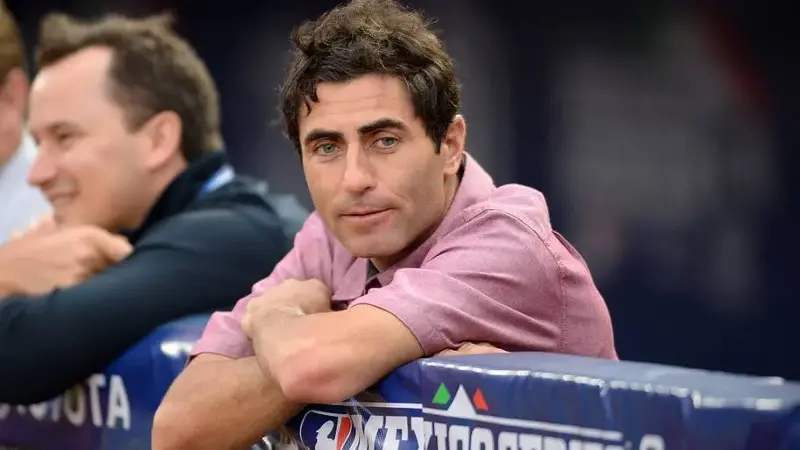
AJ Preller is widely regarded as one of MLB's best executives, and it isn't hard to see why. Preller has brought a San Diego Padres organization that lacked any semblance of sustained success prior to his arrival to consistent contention. The Padres haven't won a World Series under his watch, but they always seem to be in the hunt. They've made the postseason in four of the last six years after doing so just five times in 50 years before this recent run.
As much credit as Preller deserves for this, he also deserves blame for the position the Padres are in right now. San Diego would be on the outside looking in on the postseason if it began today, and while things could still turn around, the Padres are lucky to even be 34-31. It feels like it'll only get worse before it gets better this season, and with a subpar farm system and a slew of brutal contracts on the books moving forward, I don't know if the Padres will get back to October any time in the near future. A series of Preller mistakes have led to this team suddenly being in one of the worst positions in the league.
Insistence on acquiring stars hampered the Padres' flexibility
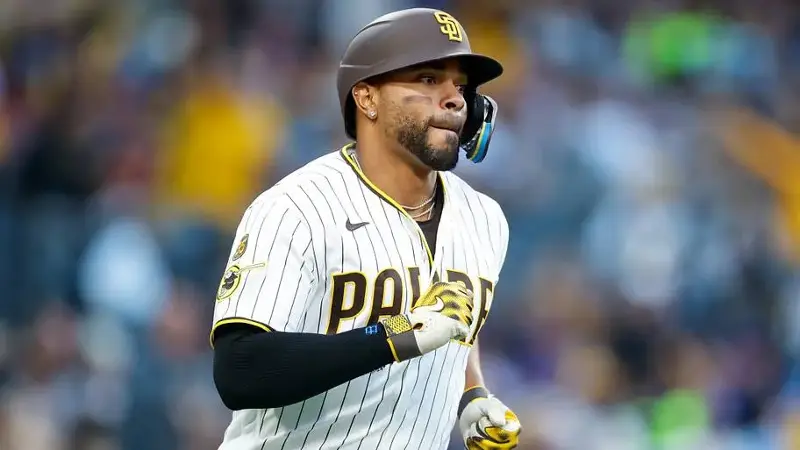
Nobody loves star-hunting more than Preller, very much to a fault. No matter their position, age or contract status, if a star is available, Preller will show interest. This has backfired on numerous occasions.
While the initial Manny Machado deal worked out, the extension looks like a major albatross. The Xander Bogaerts signing was a head-scratcher at the time and only looks worse now. He's also parted with more good prospects than I can count for guys like Josh Hader, Mason Miller, Juan Soto and even Mike Clevinger.
Getting star talent is great, but doing so costs big money and prospects. There are only so many stars a team can acquire before running out of money and assets, and that's the situation the Padres find themselves in.
Preller's insistence on acquiring stars rather than prioritizing depth has the Padres full of bloated contracts and left them with a subpar farm system to supplement on the cheap.
The Juan Soto trade tree did not pan out in the Padres' favor
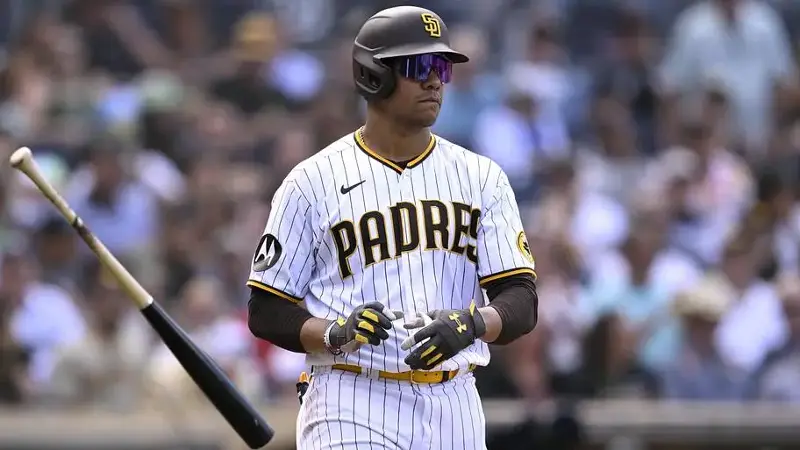
It's hard to talk about Preller without mentioning the Juan Soto trade. The Padres were the team to acquire 2.5 years of Soto from the Nationals in the summer of 2022, parting with a franchise-altering prospect haul including James Wood, CJ Abrams and MacKenzie Gore. To say this has turned into a Nationals win would be an understatement.
Wood looks like a perennial MVP candidate. Abrams is blossoming into a superstar in his own right. Gore brought the Nationals a massive haul of five prospects. Even Jarlin Susana, somewhat of a throw-in as part of that deal, is one of the most underrated pitching prospects in the sport when healthy. Meanwhile, Soto was traded after just 1.5 years in San Diego for a return nowhere near as strong as what they gave up.
While Michael King has been a good addition, Drew Thorpe, the best prospect Preller got in return, was traded for Dylan Cease — who underwhelmed in 2025 and is now a Blue Jay. Even Trent Grisham, a salary dump that went to New York along with Soto, had a breakout 2025 campaign in the Bronx.
Preller deserves credit for landing Soto, but parting with the likes of Wood, Abrams and Gore for 1.5 years of his services — and having just King remain (and even he only re-signed as a free agent) — is not a good thing.
Trading for Mason Miller was a risk that won't pay off
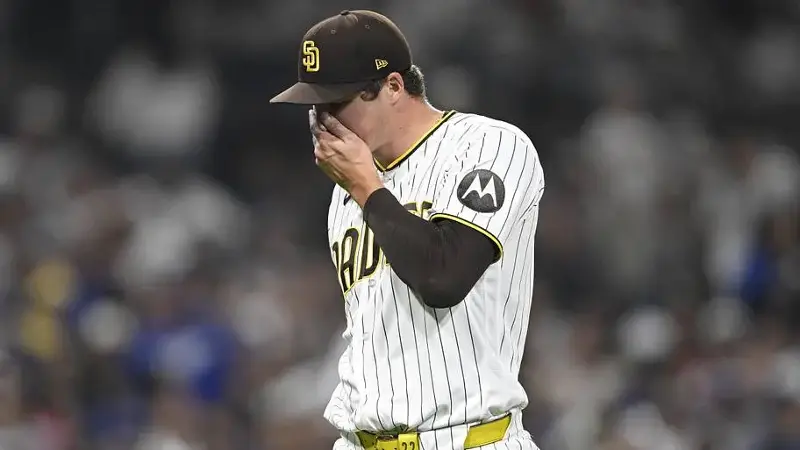
Preller has made his share of bullpen splashes. He traded for Hader. He even traded for Jason Adam. Nothing compares to the Mason Miller deal, though: Lacking assets, Preller was given a choice of trading Leo De Vries, arguably the best prospect in the sport, to acquire the hard-throwing righty or miss out entirely. Preller chose to trade De Vries, and I still just don't love that decision.
This has nothing to do with Miller, who has been even better than expected in San Diego. He's the only reason the Padres are watchable right now. This has everything to do with trading De Vries, a potential franchise cornerstone at a far more valuable position.
Will De Vries pan out? Who knows, but he sure looks like a future superstar at the shortstop position. Miller is a superstar in his own right, but he's a reliever, and it doesn't look like he'll be starting a game any time soon (for good reason). Relievers can only have so much of an impact, as we can see this season.
Miller is the best reliever in the NL and arguably the sport as a whole, yet the Padres are only two games over .500 because the rest of the team is just not good enough. What value does a closer have when his team isn't leading many games after eight innings? Miller has barely pitched the past couple of weeks, with the Padres struggling because they haven't had late leads to protect.
San Diego is the worst offensive team in the league — don't you think De Vries would've helped with that? Even if the Padres were set on trading De Vries, it would've made more sense to move him for a position player or a starter since they have more control over the outcome of an individual game. Trading a blue-chip prospect for a one-inning reliever remains hard to justify.
AJ Preller jumped the gun on unnecessary extensions
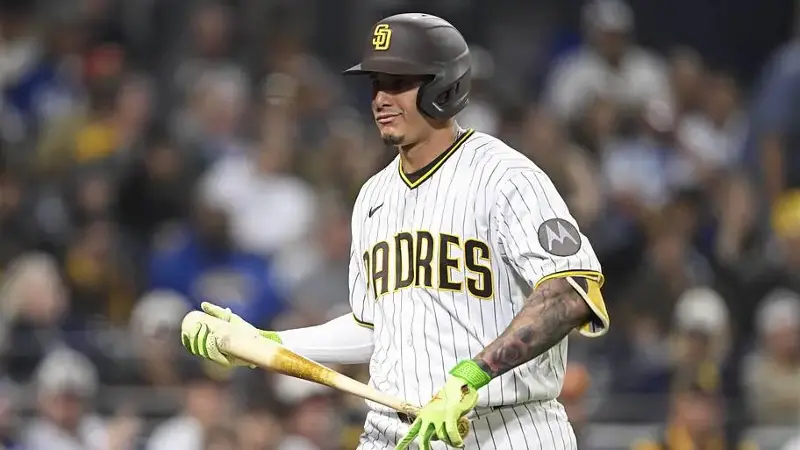
It's one thing to overpay in free agency, and it's another to do so with players already under contract. So many extensions Preller has signed look like they're going to age horribly.
The Machado extension made some sense, as the Padres risked having him opt out of his contract, but Preller essentially added six more years on top of the remaining five that Machado had on his initial deal, coming to terms on an 11-year, $350 million pact that'd keep the third baseman in a Padres uniform through 2033. Preller was fine with paying a 40-year-old Machado roughly $40 million at the end of the deal. This was never going to age well, but with Machado hitting .166 with a .586 OPS this season, the deal looks like an unmitigated disaster already.
Speaking of unmitigated disasters: Instead of letting a 36-year-old Yu Darvish hit free agency, the Padres gave him a six-year, $108 million extension ahead of the 2023 season. Darvish will likely retire before this expires, saving San Diego money, but this never made sense. Extending Jake Cronenworth for $80 million over seven years when he was coming off a sub-.700 OPS season also falls into that category.
I don't blame Preller as much for extending Fernando Tatis Jr. and Jackson Merrill, two young position players who looked to be on the path to superstardom, but neither of these players looks the part of what they're being paid — and that's been the case for a few years now. Even those deals don't look good.
More San Diego Padres news and analysis:
- Fernando Tatis Jr.’s contract isn’t one the Padres can escape
- These Padres are as good as gone if San Diego's free fall continues
- MLB Insider notes on the Padres, White Sox, Tarik Skubal and more
- This Padres-Tigers trade for Tarik Skubal would be A.J. Preller's masterclass
- The biggest weakness all 30 MLB teams must address before the trade deadline