



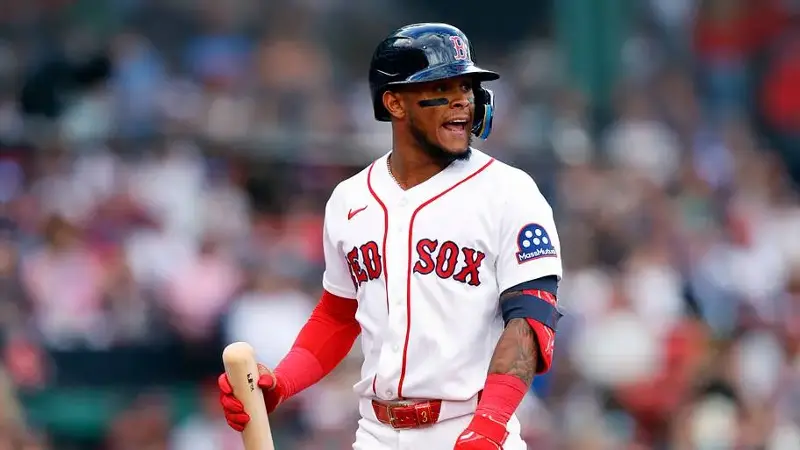
Under normal circumstances, the New York Yankees arriving at Fenway Park for a four-game set with the Boston Red Sox would be appointment viewing and front-page news. And yet, as these two ancient rivals get set to renew acquaintances on Thursday night, you'd be hard-pressed finding anybody in New England who much cares.
Such is the state of Red Sox baseball in 2026, which is setting up to be a fourth year out of five (and six of eight) without a postseason appearance. New York, meanwhile, sits atop the AL East by three games, looking to get back to the playoffs for the ninth time in the last decade — and back to the World Series for the second time in three years.
Which begs the question: What happened? How did these two powers start down such divergent paths? Here are five mistakes that Boston should hopefully learn from moving forward.
The Mookie Betts debacle
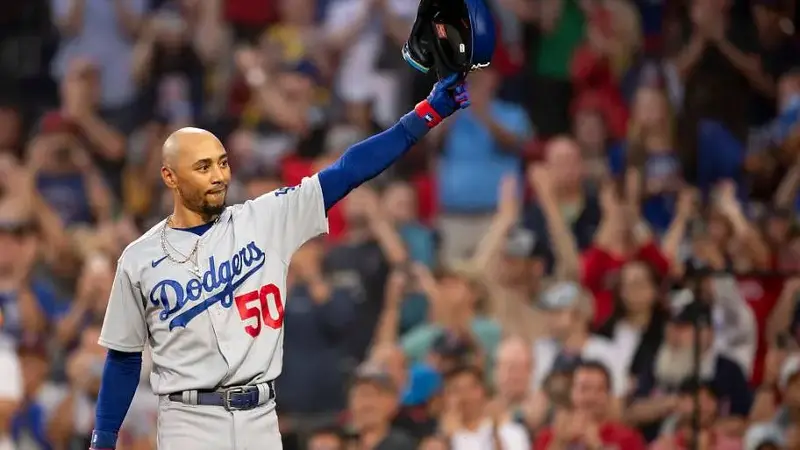
Really, could this list start anywhere else? Not to let Dave Dombrowski off the hook for his part in the beginning of Boston's long, slow slide, but this feels like as fitting a starting point as any. It's one thing for the Red Sox to decide that they simply couldn't afford to pay what it would cost to sign Betts to a contract extension; that's not a decision that I agree with — trust me, we'll get to John Henry soon enough — but it at least has a certain logic behind it. But it's another thing entirely to botch the ensuing trade as badly as Boston did.
Once word got out that the Red Sox had no intention of keeping Betts around, their leverage in trade talks was effectively nuked. The players Boston wound up getting from the Los Angeles Dodgers, Alex Verdugo, Jeter Downs and Connor Wong, failed to amount to all that much of anything during their time in New England. Just like that, their most valuable player was lost for nothing, and the financial flexibility they gained by sending him away went to all the wrong places.
Paying the wrong hitters
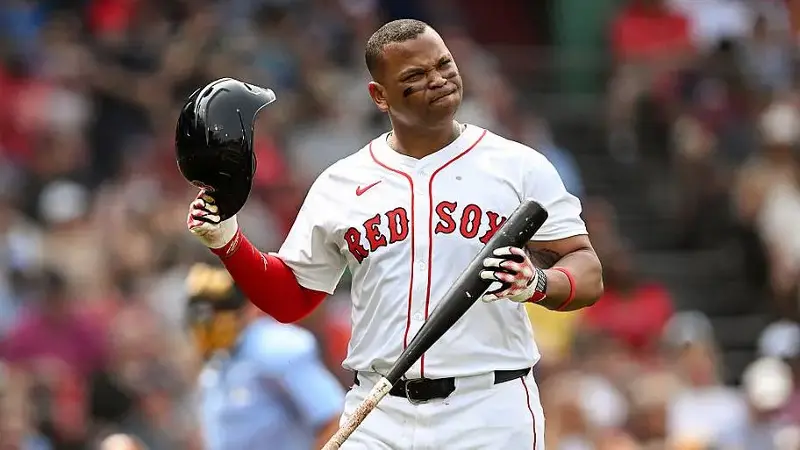
The Red Sox were in hindsight fortunate that the San Diego Padres blew them out of the water for Xander Bogaerts, who now is the owner of one of the very worst contracts in the sport. But they weren't as lucky with Rafael Devers, whom the team signed to a deal worth upward of $300 million — and whose tenure in Boston ended in acrimony as a new front office led by Craig Breslow clearly wasn't enamored with having that sort of money on the books for the next decade.
And that was far from the only mistake Chaim Bloom made when it came to this lineup. Trevor Story and Masataka Yoshida are still haunting this team's payroll. The Red Sox were able to get out from under the Devers deal last year, but they got precious little from it, with James Tibbs now a top prospect in Los Angeles and Kyle Harrison starring with the Brewers. Given a questionably limited budget to work with, both Bloom and Breslow have allocated those resources poorly, with disastrous results as the Red Sox have been unable to score runs consistently.
Selling low on Chris Sale
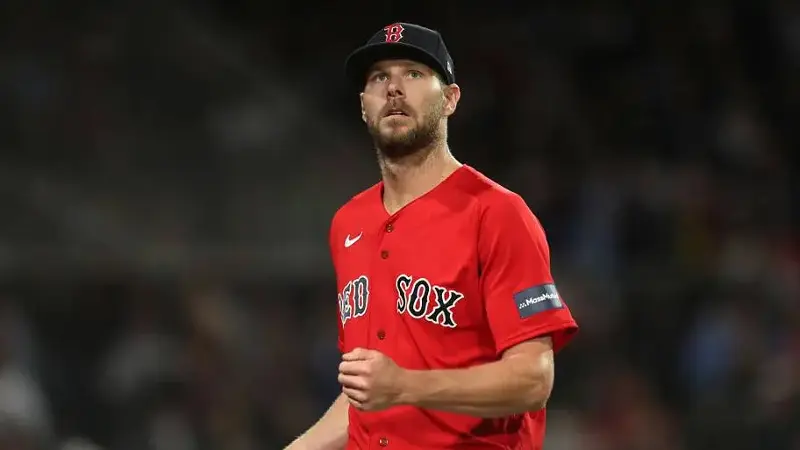
On one hand, it's hard to be too hard on Breslow here. Sale had only cracked the 100-inning mark once in four years when the Red Sox finally decided to cut bait after the 2023 season, and he appeared to be in decline when he was able to take the mound.
On the other hand, though ... man, imagine being the guy who sold low on Chris Sale. It's bad enough that Sale has been not only healthy but incredibly effective for the Atlanta Braves, looking like the Cy Young winner of old. The fact that the only player Boston was able to get in return, Vaughn Grissom, was a questionable bet at the time and has busted in the years since. Pitching hasn't really been the problem during the Breslow era, but Sale should have at least helped to bring in quality position players.
Failure to develop homegrown talent
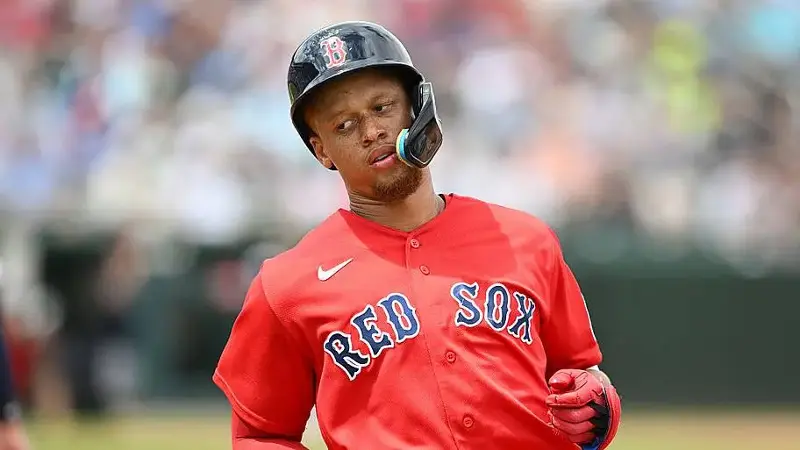
This is a trend that began under Chaim Bloom's leadership; tasked with keeping Boston competitive without splashing as much cash as his predecessor Dombrowski, Bloom put an emphasis on churning out homegrown talent, only to watch guys like Brayan Bello and Triston Casas fail to become what was hoped for. Heck, even one of his biggest success stories, Jarren Duran, is mired in a miserable 2026 season that has him front and center in trade talks.
Bloom's approach appeared to finally bear fruit just in time for Breslow to take all the credit, led by the ballyhooed big three of Roman Anthony, Marcelo Mayer and Kristian Campbell. But while no one should be selling Anthony stock despite an injury-plagued sophomore campaign, Mayer hasn't hit a lick, while Campbell signed an eight-year, $60 million deal after a hot start ... only to regress so badly that he's currently hitting .212/.342/.284 in Triple-A. Homegrown arms like Kutter Crawford and Tanner Houck have battled injuries of late, too, and while potential stars remain in the pipeline — from Payton Tolle to Connelly Early to Franklin Arias — things don't look nearly as rosy as they did a year or two ago.
A failure of leadership at the top
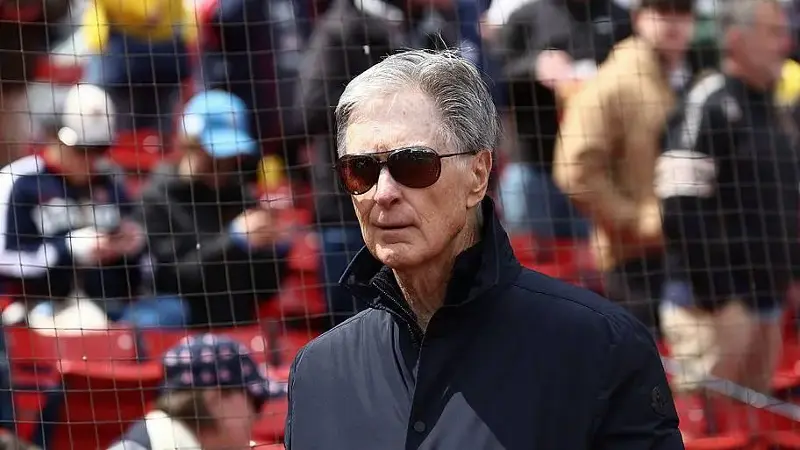
Really, this is the crack in the foundation from which everyhting else spreads, the one constant amid years of increasing dysfunction. No matter who is making baseball decisions in Boston, drama and internecine strife seem to follow, so much so that it's hard not to lay blame at the feet of John Henry and president Sam Kennedy — neither of whom have been able to pick a course, stick to it and keep everyone else happy and in line.
And that's not even touching the financial elephant in the room, in which Henry tried to Moneyball his way to sustained success rather than acting like one of the behemoths of the sport. Say what you will about how the New York Yankees operate under Hal Steinbrenner and Brian Cashman, but there's zero question about who's in charge or the way things operate, and they've still managed to put up the money when necessary to put a consistent contender on the field. Henry, on the other hand, seems too disinterested to much care about what's happened to his franchise, and Red Sox Nation can only hope that another season out of the playoff picture will result in a wake-up call.