


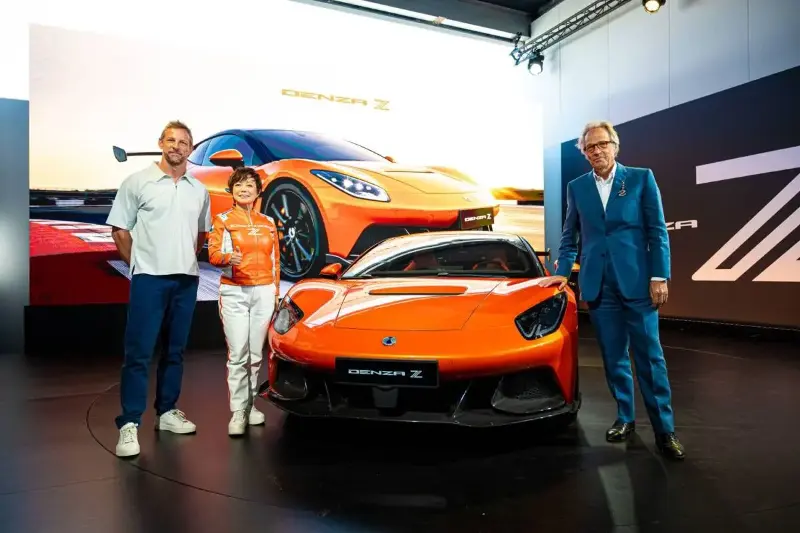
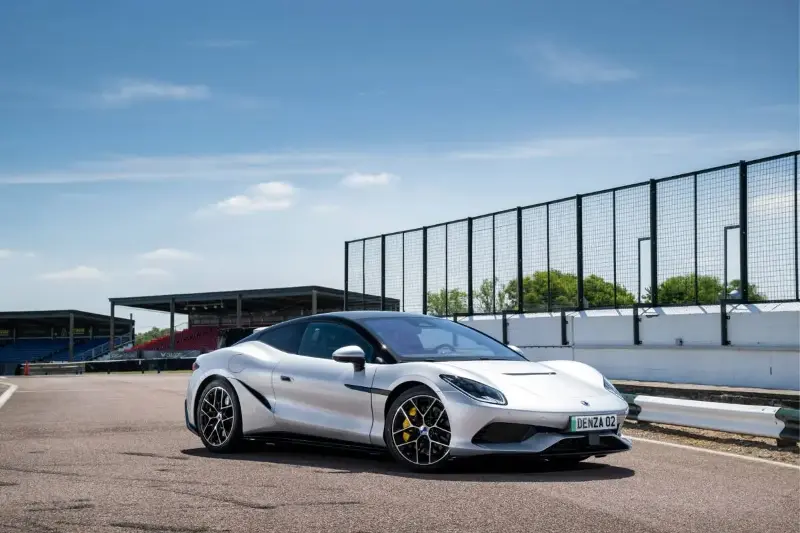
DENZA has unveiled the Z, an all-electric supercar developed to showcase the premium BYD Group brand’s highest-performance technologies.
Presented publicly at the Goodwood Festival of Speed, the four-seat DENZA Z uses a triple-motor electric drivetrain producing a combined 1,604PS, equivalent to 1,180kW, and 1,240Nm of torque.
DENZA has confirmed Coupe, Spider, and Racing versions, along with a more extreme Special Edition being prepared for Nürburgring Nordschleife lap-record attempts.
BYD executive vice president Stella Li and former Formula One world champion Jenson Button introduced the vehicle at Goodwood.
“The DENZA Z is born to perform and built to win. It redefines performance with its power, acceleration and dynamic ability, and FLASH Charging means it’s the only electric supercar without compromise on how these strengths can be used,” Li said.
Three motors and sub-two-second acceleration
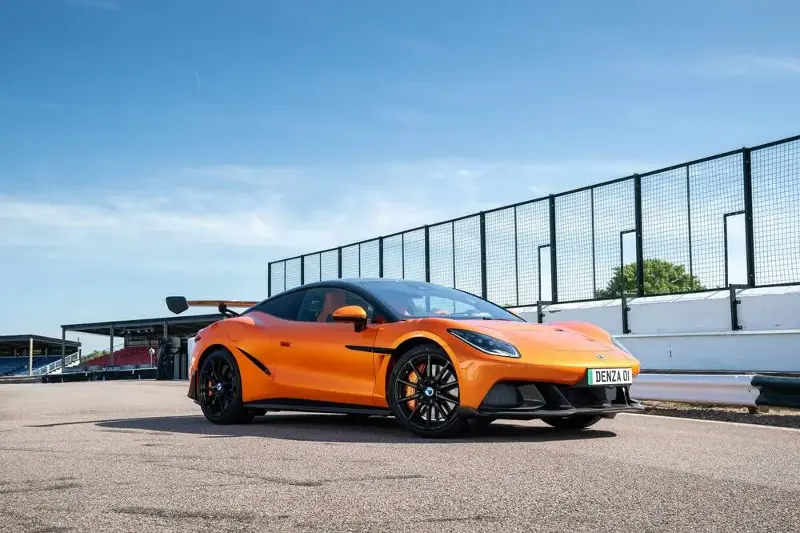
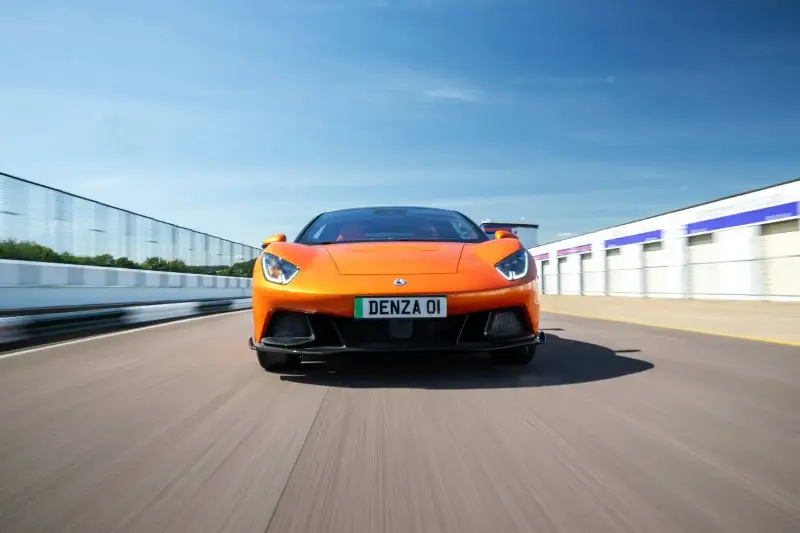
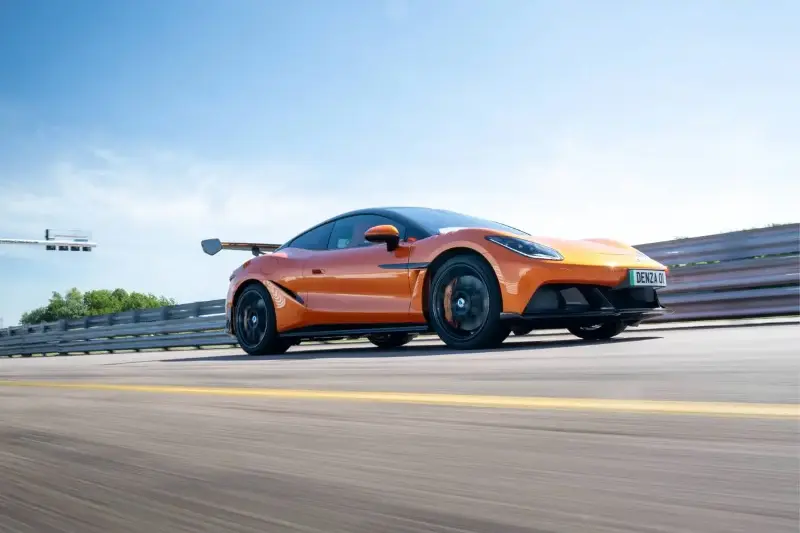
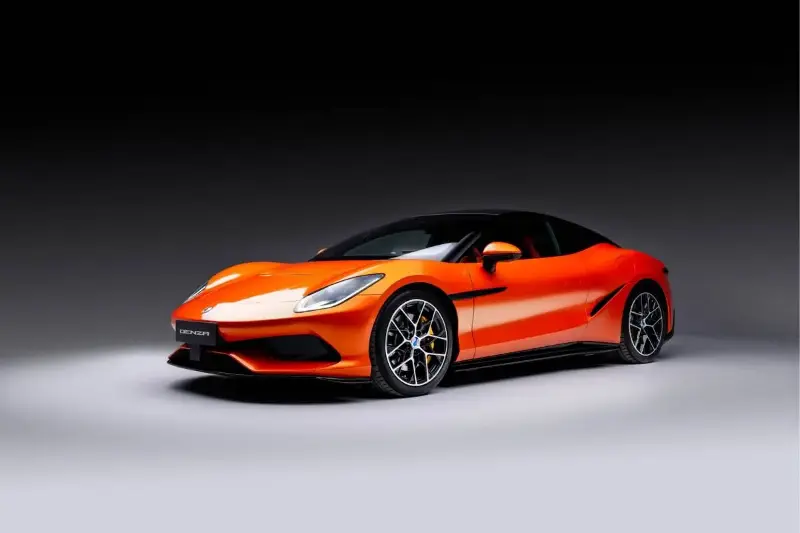
The DENZA Z is built on the brand-exclusive e3 Sports Car Platform, pronounced “e-cube.” Its drivetrain consists of one front electric motor and two independently controlled rear motors.
The system sends power to all four wheels and allows the vehicle to adjust torque at each rear wheel. DENZA says the arrangement supports functions such as torque vectoring, high-speed stability control, and a “compass turn,” where the rear of the car can rotate around its front wheels.
The Coupe can accelerate from 0 to 100km/h in 2.25 seconds and reach a top speed of 300km/h. The Spider completes the same sprint in 2.3 seconds.
The Racing version has a standard 0-to-100km/h time of 2.25 seconds. When equipped with an optional semi-slick tire package, DENZA claims it can complete the run in 1.96 seconds and reach 350km/h.
The Z Special Edition raises total system output beyond 2,000PS and is claimed to accelerate from 0 to 100km/h in under 1.7 seconds. DENZA says further technical information on this version will be released later.
Active suspension developed for road and track
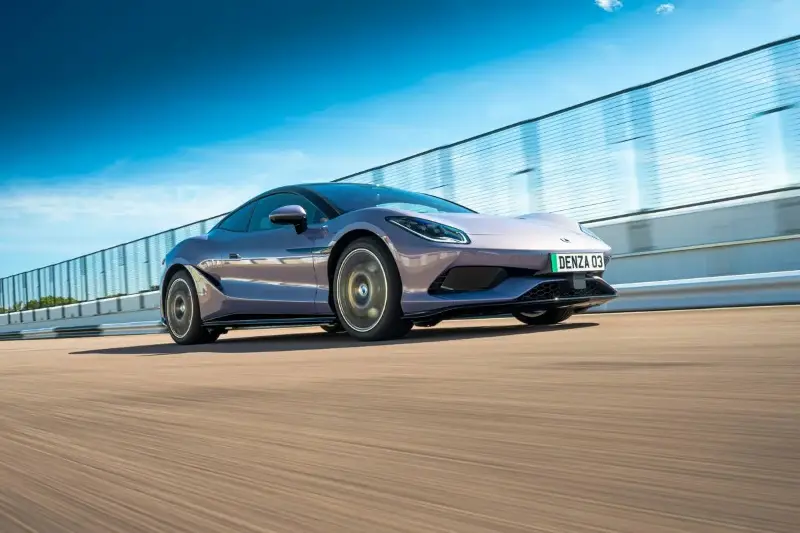
The e3 platform combines the triple-motor drivetrain with Cell-to-Body battery integration and DENZA’s DiSus-M magnetorheological suspension.
DiSus-M uses dampers filled with magnetically responsive fluid. The system can change the fluid’s viscosity in milliseconds, allowing the suspension to adjust its compression and rebound characteristics according to road and driving conditions.
Coupe and Spider models pair the system with air suspension, while the Racing version uses coil springs for a more track-focused setup. All three employ a double-wishbone front and five-link rear suspension layout.
DENZA also equips the Z with carbon-ceramic drilled brake discs and fixed calipers with six pistons at the front and four at the rear. The company says the brake system reduces unsprung mass by approximately 30kg while improving cooling and durability.
A Vehicle Motion Control system coordinates braking, suspension, steering, and drivetrain functions. DENZA claims it can transmit signals in as little as 10 milliseconds.
The system also supports a tire-burst control function designed to redistribute torque and help stabilize the vehicle following a sudden loss of tire pressure.
FLASH Charging promises shorter stops
All three principal versions use a 76kWh second-generation Blade Battery with lithium iron phosphate chemistry.
DENZA lists a WLTP combined range of 410km for the Coupe, 400km for the Spider, and 380km for the Racing version.
The battery supports 11kW AC charging and the BYD Group’s FLASH Charging technology. DENZA says the system can deliver up to 1,500kW through a single connector when used with a compatible FLASH Charging station.
Under the company’s stated test conditions, the battery can charge from 10% to 70% in five minutes and from 10% to 97% in nine minutes. DENZA also claims a 20% to 97% recharge can be completed in 12 minutes at minus 30 degrees Celsius.
These figures depend on access to specialized charging infrastructure capable of delivering the required output. The company has not detailed the planned availability of FLASH Charging stations in individual markets.
Functional aerodynamics for the Racing version
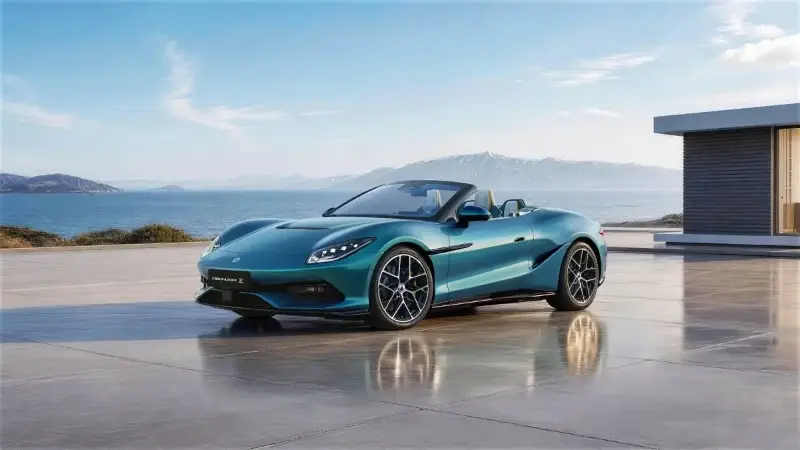
The DENZA Z Coupe and Spider measure 4,780mm long and have a 2,780mm wheelbase. The Racing version extends to 4,870mm and receives additional cooling and aerodynamic components.
The Racing model uses a redesigned front intake and a multi-duct cooling system. DENZA says this improves electric-motor cooling efficiency by 50% and brake-disc cooling by 32%.
It also receives a carbon-fiber front splitter, underfloor vortex generators, body vents, and an optional three-position carbon-fiber rear wing. The company claims the package can generate as much as 1,060kg of downforce at 350km/h.
The Special Edition takes a more extreme approach, using carbon-fiber body panels and an active drag-reduction system. DENZA claims it can reduce drag by up to 40% and produce more than 2,000kg of downforce at 300km/h.
These aerodynamic and performance claims remain manufacturer-supplied figures pending independent testing.
A supercar with four seats
Unlike many performance cars in its class, the DENZA Z has a four-seat cabin.
The Coupe and Racing versions provide 250 liters of luggage capacity, which expands to 550 liters when the rear seats are folded. Racing customers may also replace the rear seats with a roll cage and carbon-fiber trim.
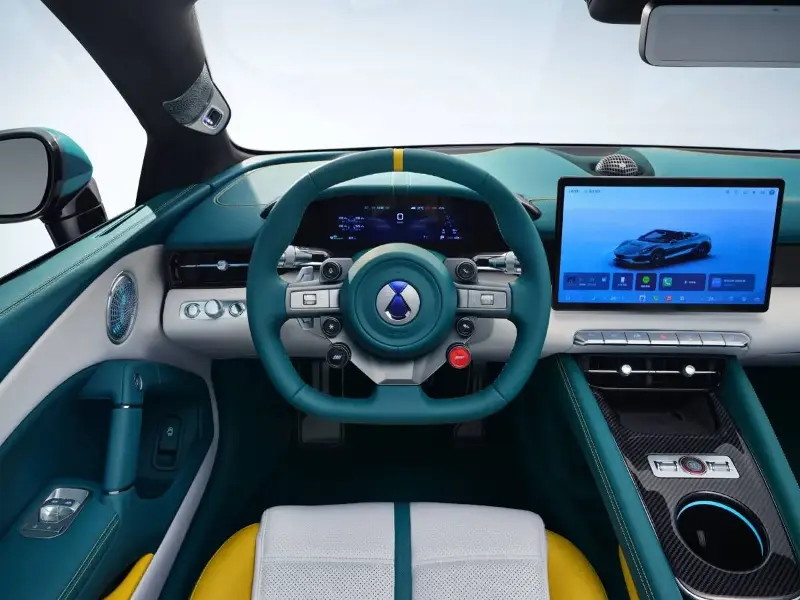
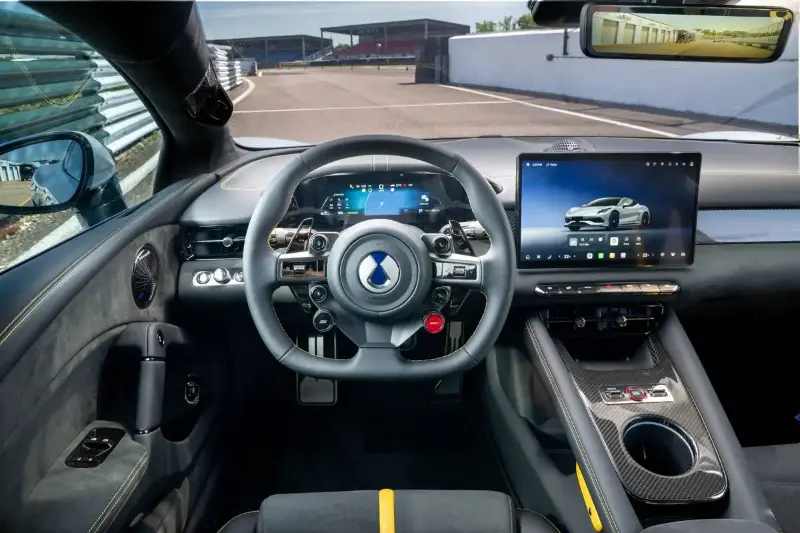
The driver-focused cabin includes an 8.88-inch digital instrument display, a 12.8-inch infotainment screen, wireless smartphone charging, and a digital rear-view mirror.
Front occupants receive eight-way power-adjustable seats with four-way electric lumbar support, heating, ventilation, and massage functions. The Coupe and Racing have a 12-speaker Devialet audio system, while the Spider receives 10 speakers.
Google Built-in provides access to Google Maps, Google Assistant, and the Google Play Store in supported markets.
Track settings and driver controls
Physical buttons on the steering wheel provide direct access to Boost and Track modes.
Boost mode increases throttle torque by 30% for 20 seconds, according to DENZA. Track mode opens a dedicated infotainment application that records positioning and G-force data and allows lap information to be exported through a USB drive.
Drivers can save three customized profiles covering front-to-rear power distribution, traction control, regenerative braking, suspension damping, brake assistance, torque vectoring, anti-lock braking, and vehicle stability settings.
The Z also features a configurable virtual engine sound that can be played inside the cabin, outside the vehicle, or through both.
Safety and driver assistance
The listed safety equipment includes front airbags, front-seat side airbags, curtain airbags, and an additional rear side airbag on the driver’s side.
Driver-assistance features include fatigue and distraction monitoring, front and rear cross-traffic alerts with braking assistance, lane departure assistance, intelligent cruise control, and blind-spot detection.
Actual specifications may vary by market and should be confirmed when regional configurations are announced.
Three versions planned for selected markets
DENZA says orders for the Z Coupe, Spider, and Racing will open during the European summer in selected markets, with initial customer deliveries expected before the end of 2026.
The Special Edition will undergo additional development before its planned Nürburgring Nordschleife attempts in the European autumn.
The release does not confirm Philippine pricing, availability, homologation, local specifications, or charging infrastructure plans. Although BYD Group operates in the Philippines, the announcement is positioned primarily around DENZA’s European introduction and selected international markets.
In Summary
The DENZA Z is a four-seat electric supercar built on the brand’s e3 Sports Car Platform. Coupe, Spider, and Racing versions share a triple-motor drivetrain producing 1,604PS and 1,240Nm, while their 76kWh Blade Batteries provide claimed WLTP ranges of 380km to 410km.
DENZA claims compatible FLASH Charging equipment can replenish the battery from 10% to 70% in five minutes and from 10% to 97% in nine minutes. The Racing version can accelerate from 0 to 100km/h in as little as 1.96 seconds with optional semi-slick tires.
Orders are expected to begin in selected markets, but Philippine availability, local specifications, pricing, and charging support have not been announced.