



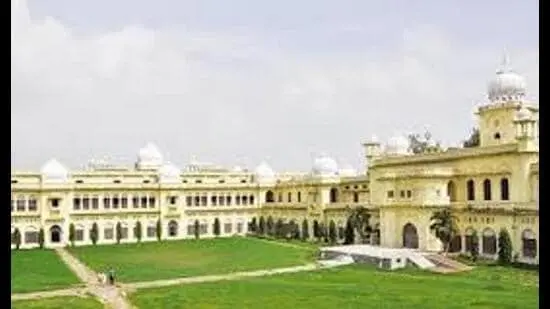
Several aided colleges affiliated with Lucknow University, once known for high cut-offs and intense competition, are now struggling to fill seats, with many institutions reporting 20 to 30% vacancies in undergraduate courses over the past few academic sessions. Data from recent academic sessions indicates that despite large sanctioned intakes, enrolments have dropped sharply, pointing to a steady decline driven by weak academic delivery, rising competition, and logistical constraints.
In the 2024–25 academic session, at Vidyant Hindu PG College, only about 241 of 670 BA seats were filled, while B.Com admissions stood at around 220 against 320 seats. Shashi Bhushan Balika Vidyalaya Degree College reported just 41 admissions against 500 BA seats, and Karamat Husain Muslim Girls PG College enrolled roughly 500 students against 1,075 available seats, reflecting a wider pattern across aided colleges in the city.
The higher education landscape has changed significantly over the past decade. The number of colleges affiliated with Lucknow University has expanded from a few dozen to over 500, including more than 180 in the state capital alone. This growth has increased options for students, particularly with private institutions offering professional and skill-based courses.
A major factor contributing to this trend is the rapid expansion in the number of affiliated colleges. From just 19 aided colleges in the early 2000s, the number of affiliated institutions under Lucknow University has surged to 556, including 182 within the state capital. This sharp rise has intensified competition, particularly from private colleges offering job-oriented and skill-based courses.
Shyamali Dube, retired faculty member at AP Sen Girls Degree College, said the shift has been gradual. “There was a time when students competed for seats in aided colleges. Now private colleges have expanded into areas where aided colleges were limited, reducing intake, especially in girls colleges,” she said. “Students completing intermediate are focused on jobs. Only those inclined towards academics opt for full-time graduation,” she added.
Concerns over classroom engagement and teaching standards have also contributed to falling admissions. Reports of irregular classes and limited accountability have weakened confidence among students.
Pankaj Kumar, retired faculty member at Vidyant Hindu PG College, said gaps in teaching practices are a factor. “There are instances when classes do not run regularly and no action follows. This discourages students from attending,” he said.
A student of Vidyant Hindu PG College, requesting anonymity, said attendance has become secondary. “We rarely attend classes and depend on notes shared by peers. It allows us to work alongside studies,” the student said. The trend suggests that for many students, colleges are no longer central to learning.
Infrastructure and accessibility issues have further affected enrolment, particularly for students from suburban areas.
Sumita Dutta, retired faculty member at Shashi Bhushan Balika Vidyalaya Degree College, said, “Students from nearby districts earlier depended on memo trains, which were discontinued after the pandemic. This reduced commuting and attendance.” She added that the semester system has added pressure, with several colleges struggling to adjust.
Policy interventions have yet to fully address the concerns. While the National Education Policy proposes industry-linked and flexible courses, implementation at the college level remains uneven.
Maulendu Mishra, president of UP Shikshak Sangh, said, “Industry-oriented courses are part of the policy, but execution is limited. Even aided inter colleges are seeing fewer students, which reflects in degree colleges.”
Efforts such as the centralised admission process introduced by Lucknow University have also seen limited participation from colleges, restricting their overall impact.