



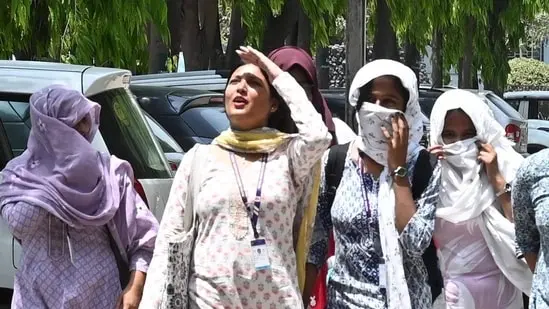
The thermal conditions in India are changing and they are starting to affect the design and operation of buildings. In 2024, the nation registered 536 days of heatwave, among the most scorching summers in the last ten years. The thermal load on built environments is rising due to prolonged heatwaves, rising peak temperatures, and urban heat island effect. Urban temperatures in most cities are currently 3° C to 7° C above those of the surrounding areas, and summer temperatures have already exceeded 45° C.
These conditions are changing expectations from climate control systems. The requirement has shifted to integrated indoor environment control: Thermal comfort, mechanical ventilation, air quality, and energy efficiency are considered collectively as an operating system of the building, not a set of independent functions.
India is entering a phase of accelerated cooling demand. The Indian heating, ventilation and air conditioning (HVAC) market was at $ 11.67 billion as of 2024, but it is expected to hit $ 45.42 billion by 2033. The Cooling Action Plan of India estimates a growth in space cooling of 11 times during the period between 2018 and 2038. In addition to this, India is projected to be the largest space cooling consumer in the world by 2050, according to the IEA. Residential air conditioner penetration is less than 10% of total households, which implies that there is an untapped opportunity.
This growth is being fueled by urbanisation, increase in income and the rapid construction of commercial infrastructure. Data centres, as an example, are projected to increase by more than 20% in a compound annual rate, which would generate a long-term demand of precision cooling systems. The growth is also becoming geographically broader. Demand is no longer concentrated in metro cities alone. Over 40% of AC demand now originates in Tier 2, 3, and 4 cities, where rising incomes, improving electrification, and expanding commercial infrastructure are creating first-generation cooling markets. This geographic spread changes the industry's obligations. It is not enough to build excellent HVAC systems for premium projects. The standard of engineering, installation, and service that defines those projects needs to extend across a much wider canvas.
There is a category of application in which HVAC failure is not discomfort, it is a disruption to something critical. India's data center capacity reached 1,263 MW in 2025, more than triple its 2020 level, with projections pointing to 3 to 5 GW by 2030. Cooling accounts for 38 to 40% of total power consumption in these facilities. In pharmaceutical manufacturing, temperature excursions carry regulatory consequences. In hospital critical care environments, airflow design is a clinical decision.
The sectors that understand this have already elevated HVAC to the status of primary infrastructure; specifying with the same rigor they apply to power supply, demanding redundancy, performance guarantees, and long-term service accountability. In each of these environments, HVAC systems function as operational infrastructure. Performance is measured not only in efficiency, but in consistency, precision, and reliability over long operating cycles.
Cooling already accounts for nearly 40% of India's total electricity demand, a figure that will grow substantially as the Cooling Action Plan's projections materialize. Inverter-driven compressor technology, variable refrigerant flow systems, and high-efficiency chiller platforms are delivering real reductions in energy intensity, while the Bureau of Energy Efficiency's progressive standards, upgraded approximately every two years, provide the structural framework within which improvement compounds. The transition to lower global warming potential refrigerants, aligned with India's obligations under the Kigali Amendment, addresses the environmental footprint of the refrigeration cycle itself. Efficiency and sustainability are no longer separate conversations in this industry; they are the same one.
India presents one of the more demanding operating environments for HVAC systems. System performance is affected by ambient temperatures that may reach 48°C, high concentrations of airborne particulates, high humidity variability, and uneven grid conditions.
These have resulted in more focused engineering. The systems are currently being developed to be efficient at high ambient temperatures, to be useful during extended periods, and to be able to handle the air that is heavy in particulate matter without affecting performance. Such components as compressors, heat exchangers, and filtration systems are being modified to these realities.
This is further being supported by the development of domestic manufacturing. The heightened localisation is allowing equipment to be tailored to the operating conditions in India, instead of being customised to international requirements. This enhances consistency of performance and long-term reliability.
The convergence of urban density and air quality is making ventilation a first-order design consideration. The concentration of indoor pollutants can accumulate tremendously without proper ventilation of buildings that are tightly sealed, especially in cities where the quality of outdoor air is already strained. Energy recovery ventilation is a direct solution to this, allowing high fresh air exchange rates without the energy cost that direct outdoor air intake would otherwise impose. HEPA-grade filtration and photocatalytic purification systems are being integrated into air handling units as standard specification, not premium additions.
For hospitals, schools, commercial complexes, and transit infrastructure, healthy indoor air is increasingly understood as a determinant of occupant performance and long-term asset value. The buildings that get this right are not simply more comfortable, they are more productive, better occupied, and more competitive as assets.
The data available from a well-instrumented modern HVAC system, real-time readings on temperature, humidity, occupancy, CO2 concentration, and equipment performance, creates conditions for a fundamentally different quality of building management. AI-enabled platforms are turning that data into operational intelligence: predictive maintenance that identifies compressor drift or refrigerant pressure deviations before they become failures, occupancy-responsive ventilation that adjusts fresh air delivery to actual building use, dynamic load optimisation that reduces grid stress during peak demand.
The Smart Cities Mission in India, which has 7,188 projects implemented in 100 cities by July 2024, has been a significant catalyst to the use of IoT-enabled HVAC. Intelligent building management is no longer a premium specification, but rather a market expectation, and the operational and energy performance it provides are making the commercial case compelling across every sector.
The efficiency of an HVAC system is not fixed at the point of installation; it is the outcome of decisions made across its entire operational life. Responsible refrigerant recovery during servicing, installation quality, scheduled maintenance disciplines: Each of these variables determines whether designed performance is realised in practice. An industry serious about its environmental commitments has to be equally serious about what happens after the equipment leaves the factory.
India's growing base of trained HVAC engineers and accredited service networks is strengthening the industry's capacity to sustain performance at scale. The investment being made in technical skills and service infrastructure today will determine the real-world efficiency of the installed base that India is building, and that base will be operating well into the 2040s.
India's HVAC industry is at a genuinely consequential juncture. The convergence of climate pressure, urban infrastructure growth, domestic manufacturing maturity, and AI-enabled systems is producing an industry more capable and more purposeful than at any previous point in its history. The systems being specified today will shape building performance, energy consumption, and indoor environment quality for decades.
The direction is clear with greater integration of efficiency, ventilation, digital intelligence, and climate-resilient engineering, built specifically for India's conditions and India's scale. The industry that rises to that standard will not just serve India's cooling demand. It will be part of how India manages one of the defining challenges of the decades ahead.
(The views expressed are personal)
This article is authored by Neeraj Gupta, Vice President - Air Conditioning Systems, Mitsubishi Electric India.