



What if the countries with the greatest reserves of labour are no longer the obvious destinations for the world's factories?
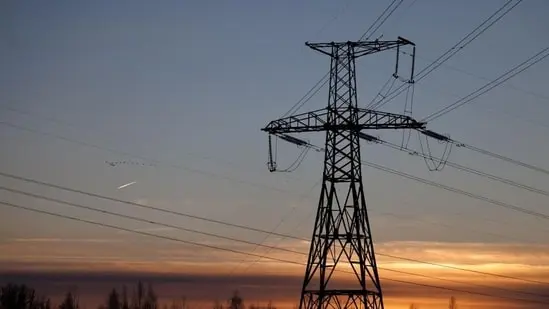
For generations, developing economies have pursued a familiar route to prosperity: educate workers, attract manufacturers and export their way into higher-value industries. That strategy rests on an assumption that may become less dependable. Factories have traditionally followed workers. Increasingly, some may follow electricity.
Artificial Intelligence (AI) and industrial robotics will not eliminate the importance of labour. But as production becomes more automated, reliable power, computing capacity and speed of connection to electricity networks could carry greater weight in investment decisions.
This presents an uncomfortable possibility for India and other developing economies. India's young population is rightly regarded as an economic asset, central to its ambitions of becoming a global manufacturing powerhouse. Yet a demographic dividend depends on productive employment, not simply the availability of workers. If automation reduces the labour needed in industries that once absorbed millions, the traditional route to industrialisation could become narrower.
The shift is no longer entirely theoretical. A recent BBC report described Indian barbers and garment workers being paid to record their everyday tasks, generating data used to train AI-powered robots. A Financial Times documentary similarly examined textile workers in Tamil Nadu whose movements were being recorded for robotics training. India's workforce is already helping develop technologies that could eventually change the economics of employing that same workforce.
This does not mean those jobs will disappear. AI may also create new employment and industrial opportunities. But it raises a more consequential question: Will countries supplying the labour and data also capture the higher-value industries that emerge from these technologies?
China offers an indication of the scale of change. According to the International Federation of Robotics, its factories installed 354,000 industrial robots in 2025, representing approximately 59% of global installations. This does not prove that electricity has displaced labour as the decisive factor in manufacturing. It does show how quickly industrial production is changing.
The greater policy mistake, however, may lie in how governments plan electricity infrastructure.
Most forecast future demand and then decide what to build. That seems prudent. Spare capacity costs money, and consumers ultimately pay for poorly judged investments. But the logic contains a trap: demand may depend on infrastructure being available in the first place.
A manufacturer unable to secure a grid connection may invest elsewhere. A data centre facing years of delay may abandon a location. An industrial cluster may never form because the electricity required to support it cannot be guaranteed.
The demand that would have justified investment never materialises. The forecast appears accurate, although the shortage helped make it so.
This is why treating electricity networks merely as a response to projected consumption could be an economic error. In strategically chosen locations, spare capacity is not necessarily waste. It can be an option on future industrial development.
That does not justify building grids indiscriminately. Governments should distinguish between speculative overcapacity and infrastructure supported by credible industrial opportunities. But they should also ask what investment will never arrive if capacity is unavailable.
For investors, this changes the calculation. The value of an electricity network cannot always be measured by today's utilisation alone. Its ability to shorten the time between an industrial decision and an operating factory may be an economic advantage in itself.
Cheaper renewable generation strengthens the opportunity, but also exposes the limits of simplistic energy comparisons. The International Renewable Energy Agency puts the global weighted-average levelised cost of newly commissioned utility-scale solar power at approximately $44 per megawatt-hour in 2025. That is a generation cost, not the price of dependable electricity delivered to a factory. Networks, storage and flexibility still matter.
For India, which is expanding its renewable energy capacity while seeking to attract manufacturing investment, this distinction is particularly important. Electricity availability alone is insufficient if industrial facilities cannot access reliable power when they need it.
Developing economies, therefore, face a strategic choice. Competing primarily on low wages may become less effective in increasingly automated industries. Building dependable electricity systems could help attract investment, support domestic processing and create new forms of industrial activity.
Yet electricity is no substitute for capable institutions, finance, skills or access to markets. Nor should governments divert scarce resources from households without basic power towards speculative industrial projects. The argument is for selective readiness, not limitless construction.
Advanced economies face the reverse problem. Their established advantages in capital, technology and research may be weakened by ageing networks and slow connections. Wealth alone will not guarantee industrial competitiveness if electricity cannot reach new facilities when required.
As governments approach COP31 in Antalya, electricity infrastructure deserves attention beyond its contribution to cutting emissions. It is also part of industrial strategy, development policy and the distribution of economic opportunity.
The next industrial divide may not simply separate rich countries from poor ones. It may separate those able to accommodate new industries from those whose infrastructure prevents them from arriving.
Governments have long asked how much electricity their economies will need. They should also ask which industries their economies will never have if they build too little.
The most consequential economic resource of tomorrow may not be the electricity a country consumes today, but the future it has the capacity to power.
(The views expressed are personal)
This article is authored by Gayatri Panda, co-founder, IBU Capital and UN climate technology mentor, London.