



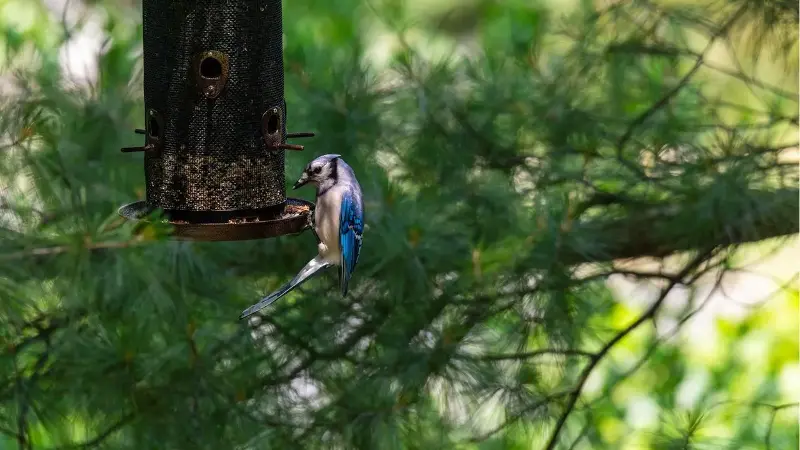
Bird feeders are a staple in the garden if you want to attract and support native birds. But, it's only truly effective if filled with the right food, properly maintained, and placed in an optimal location. The latter factor is often overlooked, but it could be the reason behind a lack of feathered visitors in your yard.
You see, to feed garden birds effectively you need to create a welcoming and safe environment in your yard. Bird feeders (whether its a cage bird feeder, like this on on Amazon, or a tray feeder, like this one from Walmart) should be placed in undisturbed spots, away from the threat of predators, and somewhere the birds will easily spot it.
This means placing a bird feeder right by your back door is not likely to be the most effective position. A quiet corner surrounded by native shrubs with berries and blooms will prove much more enticing to these charming creatures. Here, a bird expert share exactly where to place a bird feeder with five key considerations to keep in mind.
Where to Place a Bird Feeder
Just like where to place a bird bath, there are a few factors to consider with where to place a bird feeder.
Every yard has a different circumstance, but generally speaking, the most ideal spot for a bird feeder is away from the house, surrounded by plants for birds that offer extra food sources..
Of course, smaller yards and more urban gardens may not be able to offer this so easily, but don't fret. Here, Maria Kincaid, an ornithologist from FeatherSnap, shares five key considerations to help you find the right spot for your bird feeder.
1. Avoid Windows – But Follow This Rule if You Can't
Many birds struggle to identify a reflection in a window, which can often result in collisions that cause injury and can even be fatal. For this reason, it's best to avoid placing a bird feeder right in front of a window.
'If possible, it’s a great idea to place it away from the house, but with small yards and in urban areas, that’s not always an option,' says Maria.
'If you’re placing it near your house or windows, it should be within three feet or more than 10 feet away.
'It seems counterintuitive, but placing feeders at these distances from windows help stop window strikes, as the birds either won’t be able to build up enough momentum, or it’s far enough away that the chances of them hitting the window are lower,' she explains.
Another solution is to treat your windows with UV decals (like these anti-collision UV window decals for birds from Amazon).
'This helps birds in your yard know that it’s a hard surface and not something that they can fly through,' Maria explains.
There are other helpful solutions in our guide to stop birds flying into windows.
2. Place Feeders Near Trees – But Be Aware of Predators
Trees and shrubs not only offer perches for birds to rest, but also provide a quick hiding spot to dart to if predators emerge.
'I prefer to place my feeders relatively close to trees or shrubs, which provide a quick and easy place for birds to get away if they feel threatened,' says Maria.
'However, placing them too close to cover can also cause an issue, as those are often also handy hiding spots for predators like cats or squirrels,' she notes.
You can adopt methods to keep squirrels away from bird feeders, such as using a squirrel-proof baffle (like this one from Walmart) and using cayenne pepper to deter squirrels.
'We often talk about the 5-7-9 rule for deterring squirrels, but it’s also handy for deterring predators,' Maria says.
'This rule states that we should place feeders at least five feet off the ground, seven feet from structures like fences or trees, and nine feet from overhanging branches or other structures that squirrels can jump down from,' she explains.
3. Choose Somewhere Quiet – To Provide a Safe Spot
When birds stop in our yards, it's because they're looking for a safe place to rest and refuel in peace. Placing a bird feeder alongside garden paths with a lot of footfall therefore isn't so appealing.
Somewhere towards the back of the garden is likely to provide a quieter space for birds, away from human activity. Likewise, areas away from pets will stop birds being scared off.
At the same time, you want to be able to see the bird feeder from your house or garden bench so you can observe your visitors, so keep the sightline in mind.
'If you’re new to bird feeding, it’s best to be patient before you start moving your bird feeder to a new spot,' Maria advises.
'It can take birds several weeks to first find, and then decide that the brand new feeding station you’ve set up is actually a safe spot for a snack,' she notes.
4. Make Sure It's Accessible – For the Specific Birds in Your Yard
It's important to remember different types of birds have different feeding habits and require not only different types of feeders, but also specific placement for access.
'Some birds prefer to forage on or close to the ground, like Mourning Doves, certain sparrows, Towhees, Northern Cardinals, Dark-eyed Juncos, and American Robins,' Maria notes.
'If you want to attract these birds to your feeder, consider getting a tray or platform feeder (like this one from Amazon) and placing it on or near the ground,' she advises.
For those that feed from traditional cage feeders (like this ornate one from Wayfair), Maria says to 'make sure it’s in an open area, but near cover for birds to get away if they feel unsafe.'
5. Keep it Visible – So You Remember to Refill It
The last consideration for where to place a bird feeder is how easy it is for you to access.
'Your bird feeder needs to be easily accessible for refilling and maintenance,' Maria says. 'Feeders should be cleaned regularly to avoid spoiled food and help to limit the spread of disease,' she explains.
You can aid this by choosing a bird feeder that limits infection, including using a metal bird feeder (like this from Amazon) over a wooden feeder that's more likely to rot in wet weather.
FAQs
Do Window Bird Feeders Work?
Window bird feeders are designed for smaller birds, like finches and chickadees, and make it easy for you to observe them up-close. They do work well, though there is some concern for window collisions. In many cases, window bird feeders (like this one from Amazon) actually reduce collisions by making the window visible to birds. You can enhance this by using a UV window decal.
If you're looking for other ways to support birds in your yard, consider bird feeder alternatives, like growing plants with berries that provide a natural food source.
Love inspiring garden ideas, outdoor advice, and the latest news? Sign up for our newsletter and get the latest features delivered straight to your inbox.
Shop Bird Feeding Accessories for Your Garden
This beautiful green metal bird feeder has multiple perches and holds 3lbs of bird seed.
This ceramic glazed bird bath is sleek and practical. It's UV and frost-resistant for many years of use.
This bird feed mix of fruit and nut is packed with nutrients to support bird health and energy.