



American shoppers may soon see 3D-printed food in grocery store aisles - though its nutritional value remains up for debate.
Steakholder Foods, an Israel-based technology company that uses 3D printers to produce plant-based meat and fish, announced last month that it was bringing its brand, Perfecta, to retail locations in the Northeast.
The rollout includes Perfecta’s plant-based chicken breast, filet mignon, marbled steak, salmon patties and white fish patties. The company says its meat “is produced using advanced 3D printing technology and a blend of plant-based and cultivated ingredients, combined with precise culinary techniques to mimic the sensory experience of traditional meat.”
3D-printed food tastes like any other food because it's made from regular ingredients. The difference lies in its texture and appearance, as chefs and food producers using the machine can take creative liberties they otherwise wouldn’t be able to execute.
“Companies are interested in providing new, interesting textures and shapes that can’t be achieved by the normal extrusion process, so the novelty of 3D-printed shapes is the main draw for consumers,” Dr. Bryan Quoc Le, a food scientist and author, told The Independent.
Steakholder Foods said in a news release that it hopes to address the plant-based food industry’s “most persistent consumer challenges” including taste, texture and “the authentic experience of enjoying a whole cut of meat.”
The company was not specific about where in the U.S. the products would be found. Notably, however, Perfecta’s packaging does not indicate that its products were made with a 3D printer.
Many plant-based meat alternatives such as Beyond Beef or faux chicken, which have skyrocketed in popularity, have generally been viewed as foods that can be part of a healthy diet. Experts at Harvard say that fake-meat products have a better nutritional profile than red meat.
However because 3D-printed versions of these foods are still relatively new, there hasn’t been a lot of research done on their potential positive — or negative — health impacts, Megan Wroe, a registered dietician at Providence St. Jude Medical Center told The Independent.
“What little research there is shows macronutrients like protein, fat and fiber can be pretty well controlled in 3D-printed foods, but the jury is still out on micronutrients like vitamins and minerals and how well they show up in 3D versions,” Wroe said.
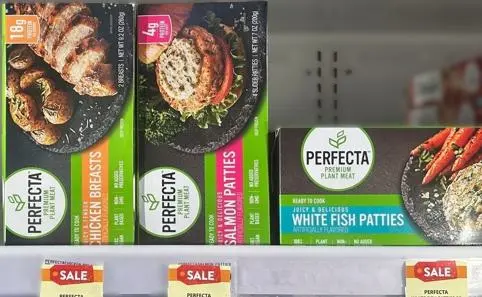
Perfecta notes on its website that its meat is made with “high-quality plant proteins such as soy and pea, natural fats, and a variety of flavor enhancers to create a meat-like taste and texture. Our cultivated meat products also incorporate cultured cells to replicate traditional meat characteristics.”
Many of these 3D-printed foods are made with similar ingredients to their alternatives, though Quoc Le noted that 3D versions of meat alternatives may require additives.
“An example is that there used to be some interest in 3D-printed shapes using pasta, chocolate, or sugar, which are fairly basic and can possess enough structural integrity to be printed. For something like a plant-based meat, there may be additives included to make sure the material survives the 3D printing process,” Quoc Le said.
One concern about 3D-printed foods, such as Perfecta’s offerings, is their use of ultra-processed ingredients, according to Wroe.
“In reading through some 3D meat product labels I see mostly soy flour, rapeseed, oils, binding agents and flavorings. While the macros all look pretty good, these are ingredients I tend to steer my clients away from as they lack micronutrient quality,” Wroe said.
While 3D foods are a new area in food research, Wroe said there are some groups of people who could potentially benefit from their inclusion at the grocery store.
“A population I can say with confidence that definitely benefits from 3D foods are those with dysphagia,” Wroe said. Dysphagia is a medical term for swallowing difficulties.
3D-printed foods would allow people with this condition to experience greater variety and “make their meals look and feel like real meals rather than soups or purees, which of course enhances their overall meal experience and well being,” the dietician said.
Another group who may benefit from 3D-printed food are those who live in food deserts, Wroe added. These foods could help people living in those areas access some nutrients they may not otherwise be able to access.
“Outside of those with dysphagia or significant food access barriers though, I don’t know that anyone should be incorporating 3D foods into their diets,” Wroe cautioned.
“Again, I am incredibly skeptical about the nutritional impact of these hyper-processed foods and have not seen any research as of yet that builds my confidence in recommending 3D foods as a regular part of a balanced diet.”
It remains to be seen where exactly Perfecta products may pop up in the U.S. The Independent has contacted the company for more information.