


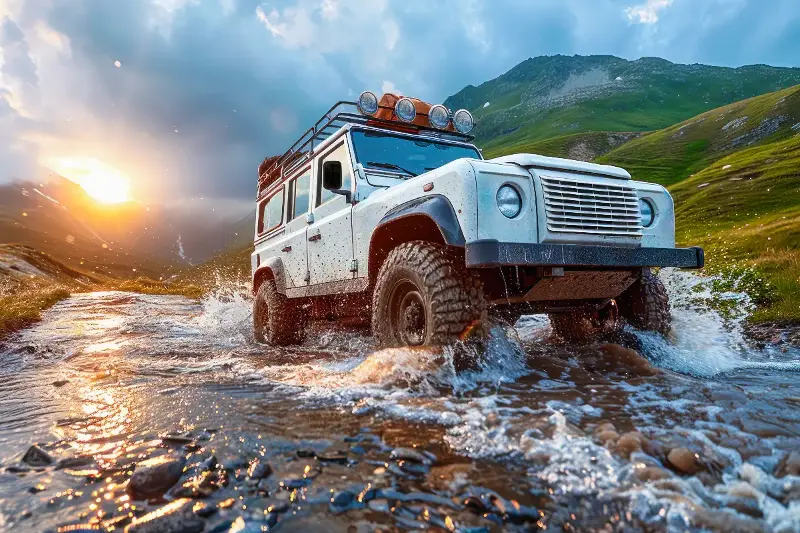
Few machines have earned respect as deeply as the world’s greatest all-terrain vehicles. Their stellar reputations were not built in urban parking lots or glossy advertisements, but on rocky mountain tracks, desert crossings, jungle trails, and remote work sites.
These legendary vehicles come from different countries and eras, yet they share the exact qualities that matter most away from paved roads: robust engineering, dependable four-wheel drive, generous ground clearance, and an incredible ability to keep moving when conditions become challenging.
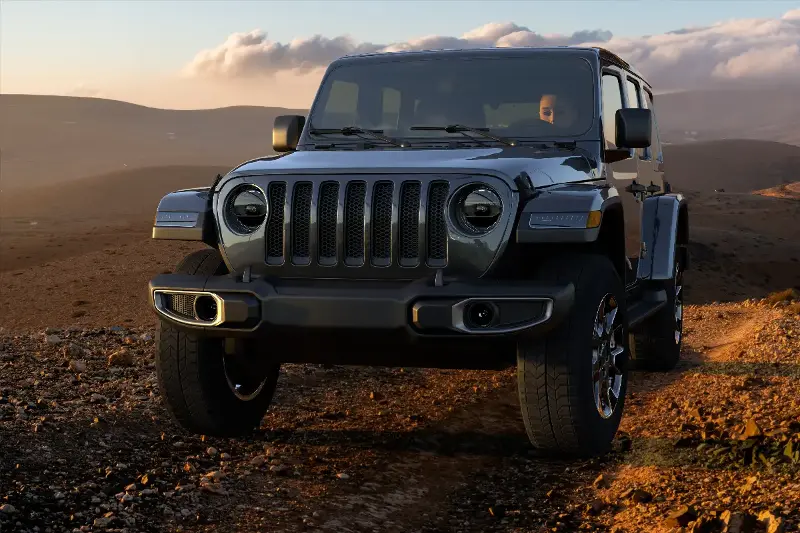
The Jeep Wrangler Legacy
The iconic Jeep story began with compact utility vehicles developed in the mid-20th century. Their lightweight frames, short wheelbases, and simple four-wheel-drive systems made them exceptionally capable on rough terrain, establishing the foundation for modern off-road vehicles.
The civilian models brought that rugged character to farms, forests, and recreational trails, with the Jeep Wrangler remaining a gold standard for outdoor exploration.
- Heavy-duty axles: Built to withstand intense structural stress over severe terrain.
- Low-range gearing: Provides extraordinary crawling power on steep inclines and rocky trails.
- Off-road traction systems: Advanced locking differentials allow wheels to maintain maximum grip when navigating uneven surfaces.
- Compact agility: Short overhangs and narrow bodies allow easy maneuvering along tight woodland paths.
The Classic Land Rover Defender
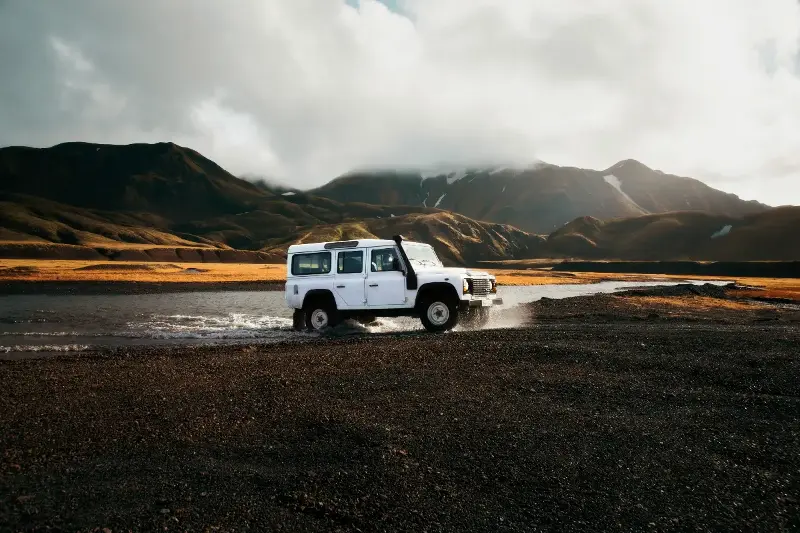
Arriving in the late 1940s, the original Land Rover was designed around practical agricultural and utility needs. Featuring durable aluminum body panels and a sturdy boxy shape, it quickly found vital work everywhere from remote farms to wilderness conservation stations.
The long-running model later known as the Defender became legendary for its unmatched utility and sheer mechanical honesty. Available in multiple wheelbase configurations, it relied on a robust ladder-frame chassis, solid axles, and high ground clearance. It carried people and vital equipment through deep mud, snow, and rough terrain with remarkable determination for decades.
The Toyota Land Cruiser 40 Series
Toyota’s Land Cruiser enjoys one of the strongest reputations in the motoring world, particularly in vast regions where reliability matters more than luxury. The 40 Series, produced from 1960 to 1984, is widely celebrated as the purest expression of heavy-duty engineering.
Known in many markets as the FJ40, this legendary vehicle featured a durable body-on-frame construction and a part-time four-wheel-drive system. Powered by high-torque engines renowned for low-speed pulling power, it served as an essential work truck, rescue vehicle, and transport across Australia, South America, and Africa. Its robust mechanical components earned deep trust in places where replacement parts were scarce.

The Versatile Mercedes-Benz G-Class
The Mercedes-Benz G-Class began life in 1979 as a serious utility and expedition vehicle rather than a luxury statement. Its flat body panels, upright windscreen, and high-strength frame were chosen strictly for visibility and structural resilience.
One of its most valuable technical features is its three independent locking differentials (front, center, and rear). When fully engaged, power is distributed evenly to all four wheels, allowing the vehicle to conquer deep mud, slippery slopes, and jagged rocks. Modern versions retain this extreme trail capability while offering exceptional refinement.

The Unstoppable Mercedes-Benz Unimog
The Unimog is a monumental all-terrain machine engineered for extreme environments. Designed as a universal motorized utility vehicle, it transcends standard vehicle classifications:
- Portal axles: Gear sets elevate the axle shafts above the wheel centers, creating extraordinary ground clearance.
- Flexible chassis design: Engineered to twist over extreme terrain, keeping all four wheels grounded.
- Unrivaled versatility: Serves globally as a forestry vehicle, emergency rescue transport, and deep-wilderness expedition platform.
The greatest off-road vehicles are not necessarily the fastest or most luxurious. They are the dependable machines that keep moving when the paved road ends, proving that intelligent engineering can transform any landscape into an accessible destination.