



Plants may appear quiet and stationary, but they are among the planet’s most inventive survivors. Unable to run from predators, search for shelter, or move toward water, they have evolved remarkable mechanisms to sense danger, capture nutrients, conserve precious resources, and reproduce. From arid desert landscapes to lush tropical forests, every habitat contains specialized botanical experts equipped to overcome environmental challenges.
A plant’s ultimate success often depends on precise timing and sensory awareness. Some detect subtle shifts in light, temperature, touch, or airborne chemical signals, while others form mutually beneficial partnerships with fungi and insects. These abilities reveal a living world filled with sophisticated responses shaped by millions of years of natural evolution.
Desert Masters of Water Conservation
Desert plants thrive in harsh environments where rainfall is scarce and temperatures shift dramatically between day and night. Cacti are iconic examples: their swollen stems store vital hydration, while their leaves have transformed into protective spines. Spines reduce moisture loss, provide shade, and deter hungry animals.
Many desert species utilize a specialized survival mechanism called Crassulacean Acid Metabolism (CAM):
- Daytime conservation: Traditional plants open leaf pores, called stomata, during daylight to absorb carbon dioxide, which causes rapid water loss in hot climates.
- Nighttime absorption: CAM plants open their stomata at night when the air is cool, storing carbon dioxide for daytime photosynthesis while keeping pores tightly sealed.
The remarkable resurrection plant uses another strategy: during severe droughts, it curls into a brown, dormant ball. When water returns, its protective tissues unfurl and resume active photosynthesis within hours.

Plants That Turn Predators Into Meals
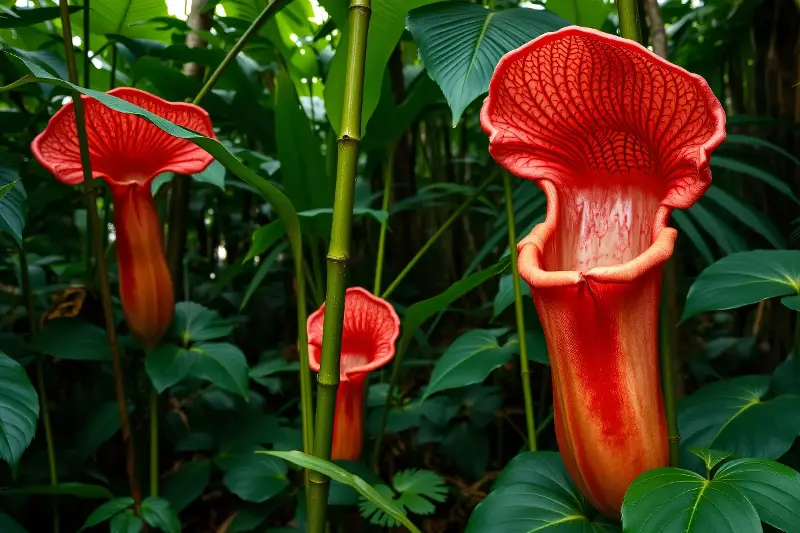
In nutrient-poor bogs and wetlands, carnivorous plants supplement their diet with essential minerals by capturing insects. These plants still photosynthesize, but they rely on prey for vital nutrients like nitrogen.
The Venus flytrap uses sensitive trigger hairs on its hinged leaves to detect movement. When an insect touches two hairs in quick succession, the trap snaps shut in milliseconds, forming a seal to release digestive enzymes while avoiding wasted energy on raindrops.
Pitcher plants take a different approach:
- Slippery traps: Their leaves form deep, fluid-filled tubes lined with waxy surfaces that cause insects to slide inside.
- Unique partnerships: Certain tropical pitcher plants provide sweet nectar to local tree shrews, which perch on the rim and leave droppings behind, giving the plant valuable nutrients without harming the visitor.
Chemical Alarms and Underground Communication
Plants cannot shout when under attack, but they can broadcast powerful chemical warnings. When caterpillars feed on leaves, plants release volatile organic compounds into the air. Nearby foliage responds by boosting internal defenses, while some species attract beneficial insects that prey on the leaf-eating pests.
Underground, plant roots connect with fungal networks known as mycorrhizae. These fungal threads extend far beyond the root system, helping plants absorb water and essential minerals in exchange for photosynthesized sugars. This subterranean partnership forms an interconnected ecosystem that supports plant health across forests and grasslands.

Seeds Built for Remarkable Journeys
Reproduction depends on transporting seeds to safe growing locations using wind, water, animals, or physical force:
- Wind travelers: Dandelion seeds float on parachute-like structures, while maple trees produce winged seeds that spin like helicopters to travel farther.
- Animal hitchhikers: Burdock fruits feature tiny hooks that cling to animal fur—an elegant natural design that inspired the invention of Velcro.
- Forceful dispersers: Species like the sandbox tree produce seed pods that burst open with explosive force, scattering seeds away from the parent plant to reduce competition.

Survival Through Teamwork and Patience
Many plants rely on cooperative relationships. Acacia trees provide hollow thorns for shelter and nectar for resident ants. In return, the protective ants aggressively defend the tree against leaf-eating insects and larger animals.
Patience is equally powerful. Seeds can remain dormant in soil for years, waiting for ideal moisture, light, or temperature conditions. In fire-prone ecosystems, giant sequoias depend on periodic fires to open their cones and clear competing undergrowth, allowing young seedlings to thrive. Through teamwork, resilience, and incredible adaptations, plants prove that evolution produces remarkable solutions wherever life takes root.