


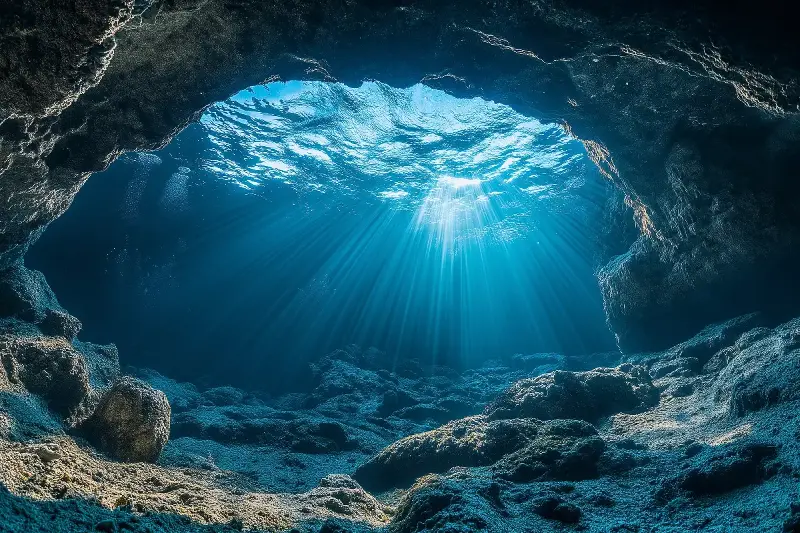
More than 90 percent of the ocean remains unexplored, with its deepest realms hosting some of the most extraordinary environments on Earth. Below roughly 200 meters, sunlight rapidly fades away. By 1,000 meters, the ocean enters permanent darkness, intense cold, and crushing pressures hundreds of times greater than at the surface.
Yet this seemingly hostile world supports an astonishing, vibrant array of life. Far from an empty abyss, the deep ocean is a vast living landscape of underwater mountains, deep trenches, coral gardens, and volcanic vents filled with remarkable creatures.
A World Beyond Sunlight
The ocean is organized into distinct depth zones based on light penetration:
-
Sunlit Surface Zone (0–200 meters): Home to most familiar marine life where photosynthesizing plants thrive.
-
Twilight Zone (200–1,000 meters): Characterized by a faint, fading blue glow where light is insufficient for plant growth.
-
Midnight Zone (Below 1,000 meters): A realm of perpetual pitch-black darkness where sunlight never reaches.
Without light, deep-sea food webs rely heavily on marine snow—a steady drift of organic particles sinking from above. Alternatively, around hydrothermal vents, specialized microbes use chemosynthesis to convert minerals into energy without sunlight, fueling thriving communities of giant tube worms, clams, and crabs.
Creatures That Glow in the Dark
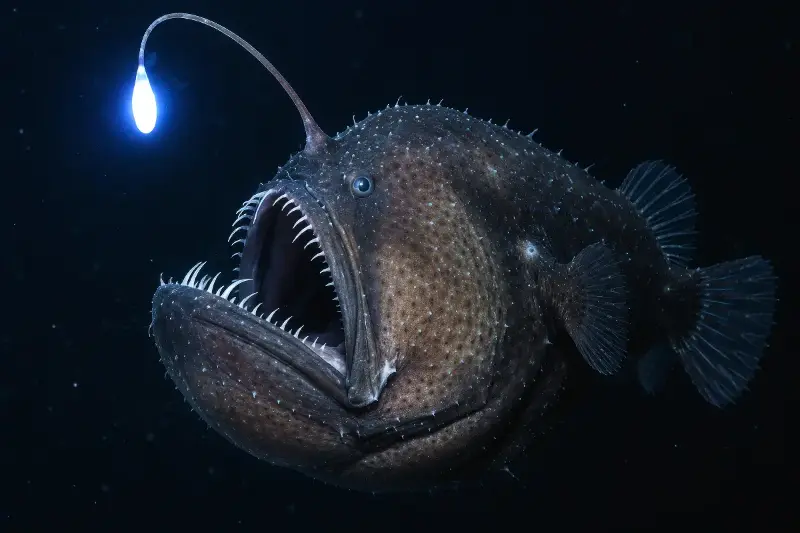
Bioluminescence is one of the deep sea's most spectacular natural adaptations. Animals produce their own light through chemical reactions or symbiotic bacteria to attract prey, confuse predators, or communicate in the dark:
-
The Anglerfish: Uses a glowing lure dangling from its head to draw unsuspecting prey straight into its large, toothy jaw.
-
The Dragonfish: Emits a rare red light that most deep-sea creatures cannot see, acting as an invisible spotlight to hunt undetected.
-
Deep-Sea Squid and Shrimp: Release dazzling, glowing clouds into the water to temporarily blind predators and escape into the blackness.
Unique Adaptations to Extreme Pressure
At extreme depths, water pressure increases by approximately one atmosphere for every 10 meters. Deep-sea creatures have evolved remarkable physical features to survive this intense environment:
-
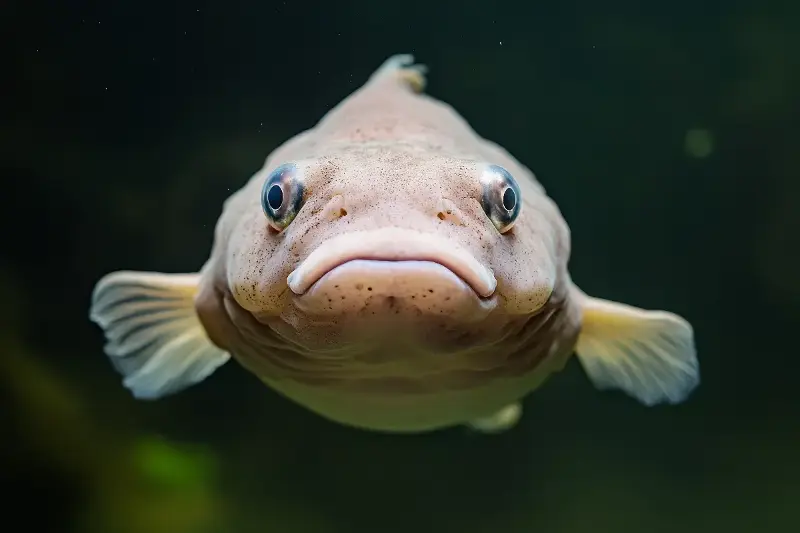
Gelatinous Bodies: Many deep fish lack rigid bones or air-filled swim bladders that would collapse under pressure. Instead, they rely on flexible tissues and natural oils to maintain buoyancy.
-
The Blobfish: Features a soft, jelly-like structure that allows it to float effortlessly just above the seafloor in its high-pressure home.
-
The Barreleye Fish: Possesses a transparent, fluid-filled dome on its head protecting tubular, rotating eyes that look upward for prey silhouetted against faint surface light.
Thriving Ecosystems of the Deep Seafloor
The vast abyssal plain, lying between 3,000 and 6,000 meters deep, is home to sea cucumbers, sponges, and delicate brittle stars. Even deeper are oceanic trenches like the Mariana Trench's Challenger Deep—the deepest known point on Earth—where resilient amphipods and unique microbes flourish despite near-freezing temperatures.
Deep hydrothermal vents, often called black smokers, spew mineral-rich fluids heated by magma beneath the Earth's crust. Giant tube worms growing over two meters tall thrive here without a mouth or digestive tract, relying entirely on internal bacteria to turn vent minerals into vital nutrients.
The deep ocean remains a realm of wonder and constant discovery. From bioluminescent hunters to bacteria-powered ecosystems, these resilient creatures prove that life adapts and flourishes in the most unexpected corners of our planet.