


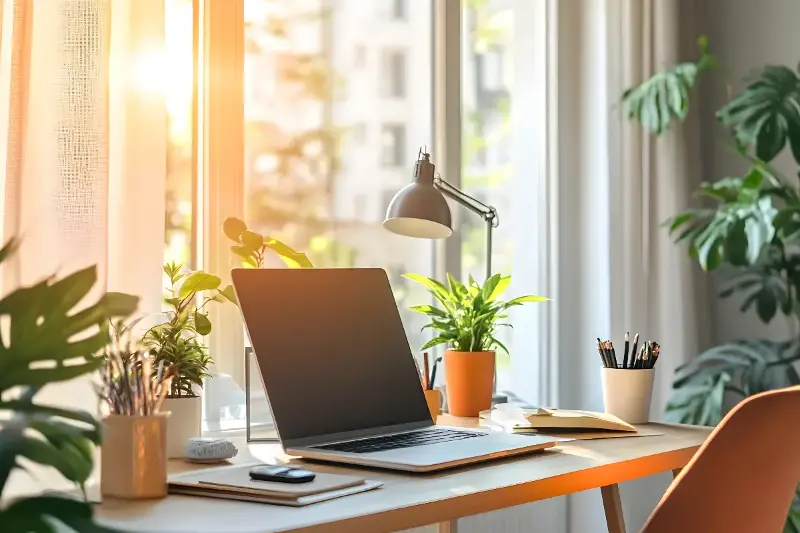
A cozy home workspace is far more than a desk placed near a wall. It is a dedicated personal zone that helps you think clearly, stay comfortable, and maintain a clear boundary between work time and home life. Small design choices can have a surprisingly large effect on concentration. Research on workplace environments repeatedly shows that light, noise, posture, air quality, and visual clutter directly influence energy levels and daily task performance.
The goal is not to recreate a sterile corporate office. A home workspace should feel practical enough for focused tasks while still reflecting the warmth and personality of your home. Whether you have an entire room, a bedroom corner, or a section of the dining table, a few smart upgrades can make your space work much harder for you.
Choose a Focus-Friendly Location
Start with the quietest available spot—ideally one with a degree of visual separation from everyday household activity:
-
Dedicated corners: A compact desk behind a sofa, beneath a staircase, or beside a window can become an effective work area with clear boundaries.
-
Shared room solutions: Use a low bookshelf, folding screen, curtain, or tall plant as a visual divider to signal to your brain that the area has a specific purpose.
Position your desk perpendicular to a window rather than directly in front of or behind it. Side lighting reduces screen glare and creates even illumination during video calls. If sunlight is too harsh, use a sheer curtain to soften brightness without dimming the room.
Build Comfort From the Ground Up
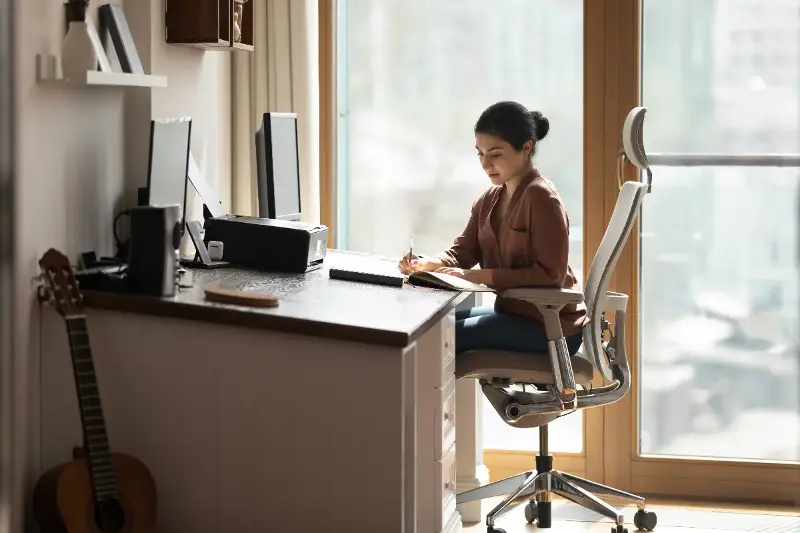
A supportive chair is one of the most valuable investments for desk work. Look for adjustable seat height, lower-back support, and relaxed armrests. Your feet should rest flat on the floor, with knees at roughly a right angle.
Proper desk and equipment ergonomics are equally critical:
-
Elbow alignment: Keep elbows close to your body, bent around 90 degrees, with wrists remaining in a neutral position.
-
Laptop setup: Elevate your screen with a stand or a sturdy stack of books so the top of the monitor sits at eye level.
-
Accessories: Use an external keyboard and mouse to prevent forward-head posture and neck tension.
Incorporate movement by adding a small standing option. A tabletop converter, high counter, or sturdy shelf provides a place to stand during calls or reading sessions. Changing positions regularly keeps energy levels high throughout the afternoon.
Use Lighting That Supports Energy
Lighting affects mood and alertness more than many people realize. Cool, bright light supports focus, whereas overly dim rooms encourage eye strain and fatigue. Aim for layered lighting rather than relying on a single ceiling fixture.
Place an adjustable desk lamp on the opposite side of your writing hand to eliminate shadows. Choose bulbs that offer neutral to cool white light (around 4000 kelvin) for daytime tasks. If your work area shares space with a bedroom or living room, use a dimmable lamp for evening flexibility.
Reduce Clutter Without Removing Personality
Visual clutter competes for mental bandwidth. A desk covered with unopened mail, loose cables, and unrelated household items makes work feel unnecessarily heavy:
-
Organize essential supplies: Use trays and desk organizers for pens, notebooks, and chargers.
-
Tame power cables: Apply cable clips, under-desk baskets, or reusable ties to create a calm, untangled setup.
-
Add natural elements: Introduce low-maintenance indoor plants like pothos, snake plants, or ZZ plants to boost comfort and soften hard furniture lines.
Keep a few meaningful personal items visible—such as a framed photo, a favorite mug, or a travel souvenir—to make the environment feel welcoming.
Control Sound and Digital Distractions
Noise remains one of the biggest challenges when working from home. Soft furnishings like rugs, curtains, cushions, and upholstered chairs help absorb sound and reduce echo. For persistent noise, noise-canceling headphones or instrumental background tracks can create a bubble of concentration.
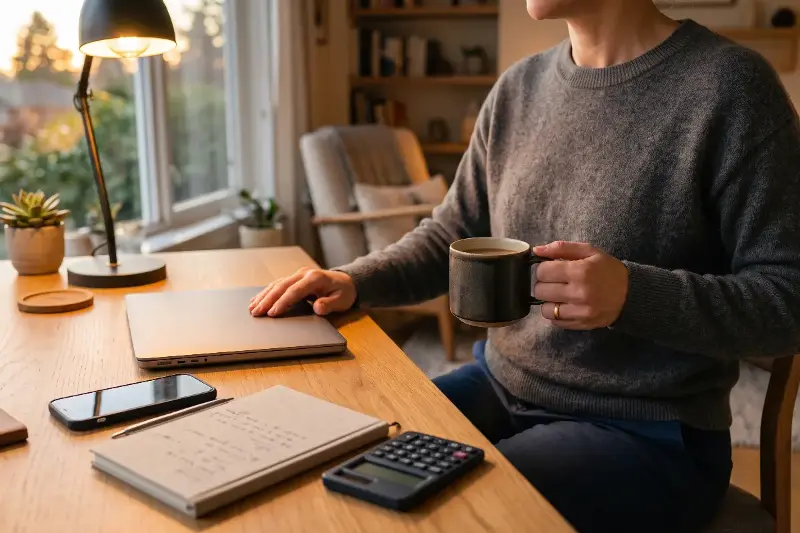
Digital distractions deserve equal boundaries. Keep your phone out of reach during deep work, turn off nonessential notifications, and use full-screen modes. Working in focused blocks of 25 to 50 minutes, followed by short active breaks, helps maintain high productivity.
Your workspace does not need to be perfect on day one. Make one small upgrade at a time and notice what improves your energy and focus. A clearer desk, supportive chair, and thoughtful lighting can quickly turn any ordinary corner into a serene, productive space.