


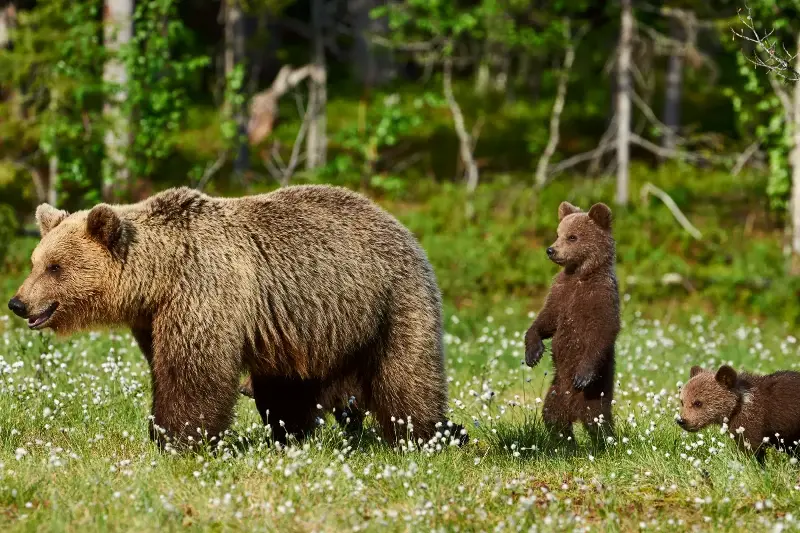
Grizzly bears and polar bears share a powerful family resemblance, yet they have built very different lives in some of the planet’s toughest landscapes. One thrives across lush forests, mountains, and open tundra. The other depends on frozen ocean water, where seals provide the energy needed to survive Arctic cold.
Although polar bears (Ursus maritimus) and grizzlies (Ursus arctos) are close relatives, they are not simply white and brown versions of the same animal. Genetic evidence suggests their evolutionary lines separated 400,000 to 500,000 years ago. In rare northern regions where ranges overlap, they can even hybridize, producing offspring known as pizzly or grolar bears.
Life on the Sea Ice
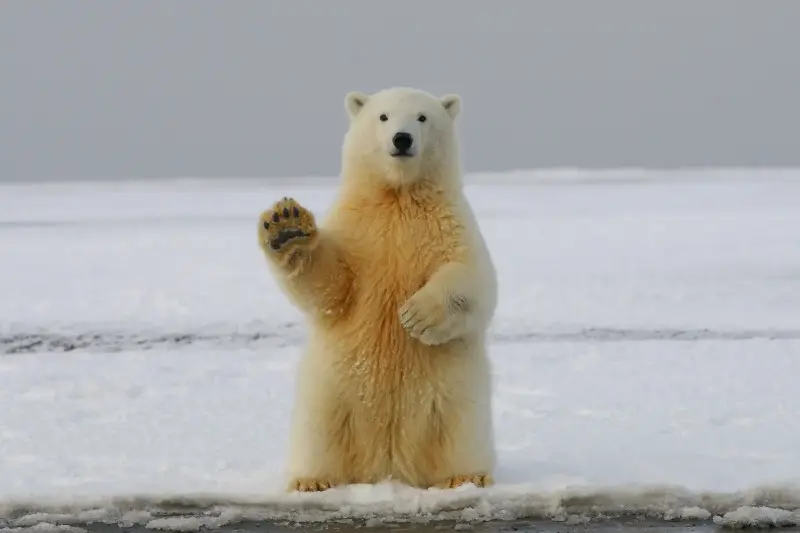
Polar bears are classified as marine mammals because their survival is tied directly to sea ice. The ice acts as a vital hunting platform across the Arctic Ocean, allowing bears to hunt ringed and bearded seals at breathing holes:
- Patience and Power: A bear may wait motionless beside a breathing hole for hours before using explosive strength to catch a seal.
- Caloric Density: Thick layers of seal blubber provide huge amounts of fat, essential for maintaining body heat and energy reserves.
- Specialized Bodies: Black skin sits beneath transparent, light-scattering fur that appears white or creamy yellow.
- Built for the Ice: Broad, partially webbed paws act like natural snowshoes, equipped with rough pads called papillae for traction on slippery ice.
The Flexible Life of a Grizzly
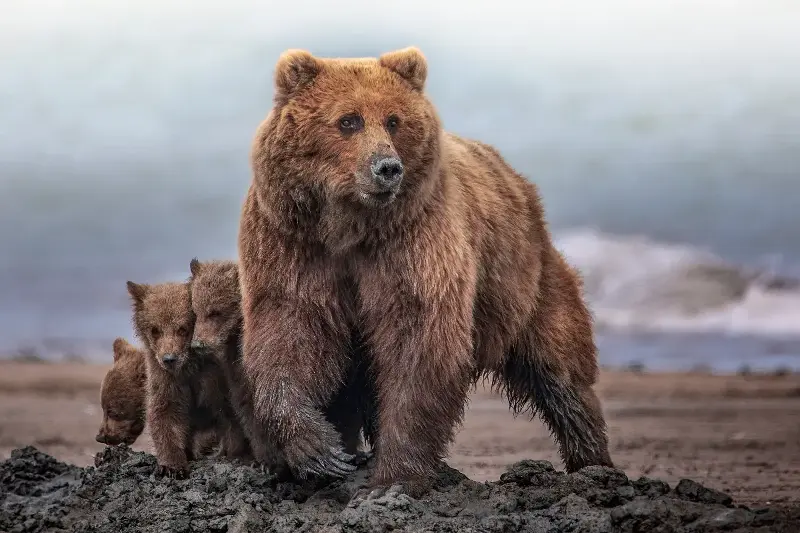
Grizzly bears feature a much more varied menu and a flexible relationship with their surroundings. Living across Alaska, western Canada, and the northwestern United States, they roam coastal meadows, alpine slopes, and salmon-rich rivers.
As true omnivores, their diet shifts seamlessly with the changing seasons:
- Spring: Digging up nutritious roots, grasses, and greenery.
- Summer: Foraging for berries, insects, ground squirrels, and plant shoots.
- Autumn: Feasting on abundant salmon runs to build vital winter fat reserves.
Grizzlies are famous for the massive shoulder hump of muscle that powers their digging. Their long, curved claws are exceptional tools for excavating roots and tearing apart logs, making them perfectly adapted for terrestrial life.
Different Ways to Face Winter
Winter survival highlights one of the clearest contrasts between these apex predators:
- Grizzly Hibernation: Grizzlies enter a deep winter dormancy. Their heart rate and metabolism slow dramatically, allowing them to spend months inside dens without eating or drinking. Pregnant females give birth during this time, nursing tiny cubs until spring arrives.
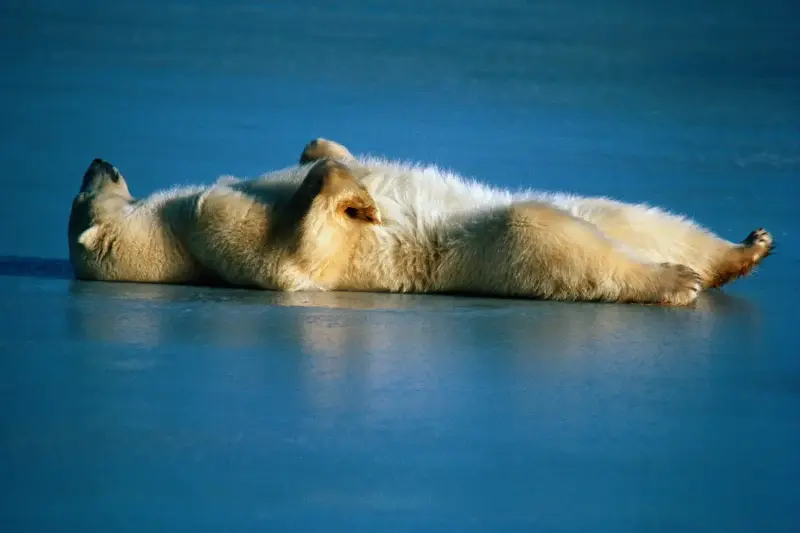
- Polar Bear Activity: Adult males and non-pregnant females remain active throughout the Arctic winter, taking full advantage of peak seal-hunting season. Only pregnant females dig snow dens to give birth and nurse their young.
For polar bears, the toughest period occurs in late summer when sea ice retreats, forcing them onto land to fast until the cold returns.
A Changing Boundary Between Worlds
The Arctic boundary between tundra, forest, and sea ice is evolving. Shorter ice seasons make hunting more demanding for polar bears, while warmer conditions allow grizzlies to move further north into shifting tundra habitats.
Grizzlies succeed through broad adaptability, utilizing forests and river valleys as seasonal food landscapes. Polar bears succeed through high specialization, turning frozen ocean into a productive hunting ground. Both survival strategies demonstrate a timeless ecological lesson: survival is not about being the strongest animal everywhere, but about being perfectly equipped for the place you call home.