


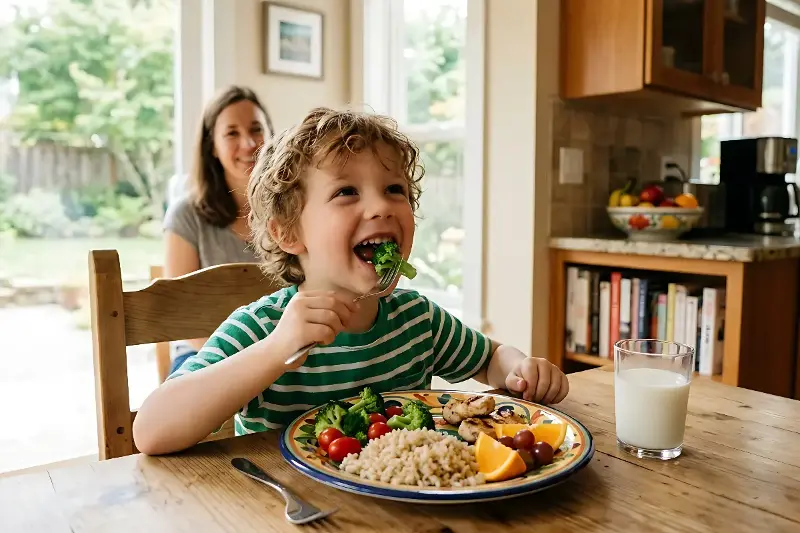
Picky eating is one of the most common family food concerns, especially between ages two and six. It can feel personal when a child rejects a meal prepared with care, but food hesitation is usually a normal developmental stage rather than a sign of bad behavior. Young children are naturally cautious about unfamiliar foods, a trait known as food neophobia. It once helped early humans avoid potentially harmful plants, but at the family table, it can look like an intense dislike of peas, fish, or anything green.
The encouraging news is that curiosity can be cultivated. Children do not need to love every food, and parents do not need to turn every dinner into a negotiation. Small, consistent habits can make new foods feel safer, more familiar, and eventually more appealing.
Making Mealtimes Predictable
Children respond exceptionally well to routine. Offering meals and snacks at roughly regular times helps them arrive at the table with an appetite, without becoming overly hungry and frustrated. Many families find that three meals and two or three planned snacks work well, with water available between them.
To set up a predictable rhythm, consider these simple guidelines:
- Limit afternoon grazing: Avoid allowing continuous access to snacks or juice, which can dull hunger and reduce interest at mealtime.
- Watch liquid timing: Milk is nutritious, but large amounts shortly before dinner can leave little room for other foods.
- Always offer a "safe" food: At each meal, include at least one familiar item your child usually accepts, such as bread, rice, fruit, or plain pasta, alongside a small portion of a new food.
Using the Division of Responsibility
One of the most effective feeding approaches relies on a clear distinction: parents decide what food is offered, when it is offered, and where eating happens—while children decide whether to eat and how much to eat.
This approach instantly removes pressure from the table. Instead of asking for "just three more bites," try a neutral comment such as, "The carrots are here if you want to taste them." Pressure, bribery, and demands can increase resistance because food becomes connected with conflict.
It is also helpful to trust that appetite naturally fluctuates. Toddlers and preschoolers often eat a large breakfast, little lunch, and a lighter dinner, or the reverse. Looking at nutrition over a full week rather than a single meal gives a much clearer, stress-free picture.

Turning Food into a Sensory Adventure
Children often need to see, smell, touch, and play with food before they feel ready to taste it. Research suggests that children may need eight to 15 calm exposures to a new food before accepting it, and some need even more.
You can encourage sensory exploration without stress:
- Offer micro-portions: Start with a single pea, one strip of bell pepper, or a teaspoon of lentils so the plate feels manageable.
- Encourage gentle interaction: Let your child move broccoli with a fork, smell a strawberry, or help rinse beans.
- Use neutral, descriptive words: Talk about a carrot being crunchy, a mango feeling slippery, or roasted sweet potato tasting soft and sweet.
Keeping language observational rather than judgmental keeps the overall experience relaxed and inviting.
Inviting Children into Food Preparation
Children are naturally more interested in foods they helped create. Age-appropriate kitchen tasks build familiarity and confidence while making meals feel less mysterious:
- For younger children: Washing produce, tearing lettuce, stirring batter, or sprinkling toppings onto a tray.
- For older children: Measuring ingredients, using child-safe knives, and helping choose recipes for the week.
A simple visit to the grocery store can also become a food discovery activity. Ask your child to find one fruit or vegetable in an unusual color, such as purple cauliflower, yellow tomatoes, or orange bell peppers. Gardening, even in a small windowsill pot, has a similar positive effect as children watch basil, tomatoes, or peas grow from scratch.

Serving New Foods Alongside Familiar Flavors
Pairing unfamiliar foods with accepted flavors can significantly reduce resistance. This does not mean hiding vegetables in every dish, as children benefit from recognizing foods in their real form. Instead, use familiar combinations: serve roasted cauliflower with a favorite dip, add a few black beans beside rice, or offer apple slices with a familiar spread.
Texture is often as important as flavor. A child may decline steamed broccoli but enjoy it roasted until crisp, finely chopped into an omelet, or served cold with dip. Noticing these preferences without labeling a child as picky creates a path toward broader acceptance. Furthermore, family meals offer a powerful example—when adults eat a variety of foods with genuine enjoyment, children learn that trying new things is normal and safe.
Keeping the Table Calm and Connected
Mealtimes work best when they focus on connection rather than performance. Sit together without screens, talk about the day, and keep meals to a reasonable length—around 20 to 30 minutes for young children. When the meal ends, calmly clear the table rather than extending a standoff.
Avoid making a separate replacement meal after a refusal. If a child chooses not to eat much, they can simply wait until the next planned snack or meal. For most children, patient exposure, predictable routines, and a little kitchen curiosity will gradually transform the table into a place of comfort and discovery.