


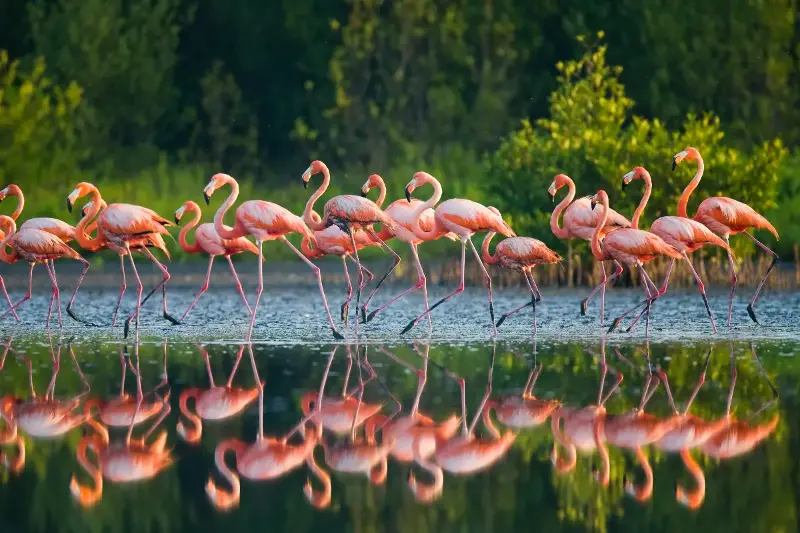
Flamingos are famous for looking effortlessly balanced, often spending long periods standing on a single thin leg with the other tucked neatly into their feathers. To a human observer, this seems like an exhausting stunt. For a flamingo, however, it is one of the most economical ways to stand—a biomechanical solution shaped by anatomy, gravity, and energy conservation.
A flamingo does not stand on one leg through sheer muscular strength alone. In fact, the remarkable part is how little active effort is required once the bird settles. Rather than constantly making tiny muscular corrections, a resting flamingo relies heavily on passive mechanical forces.
A Balance Point Built Into the Body
Every standing animal must keep its center of mass directly above its base of support. For a human, that base is broad and stable; for a flamingo standing on one foot, the base is tiny.
The challenge is solved through body alignment and geometry:
- The Neck as a Balancing Pole: A flamingo's long, flexible neck makes subtle adjustments to keep its compact body mass centered.
- Gravitational Alignment: By placing its leg directly beneath its center of mass, gravity acts almost straight down through the limb, minimizing twisting forces at the joints.
- Controlled Swaying: Gentle swaying while resting is not clumsiness; it is the physical process of maintaining a mechanically stable position against wind or shifting mud.
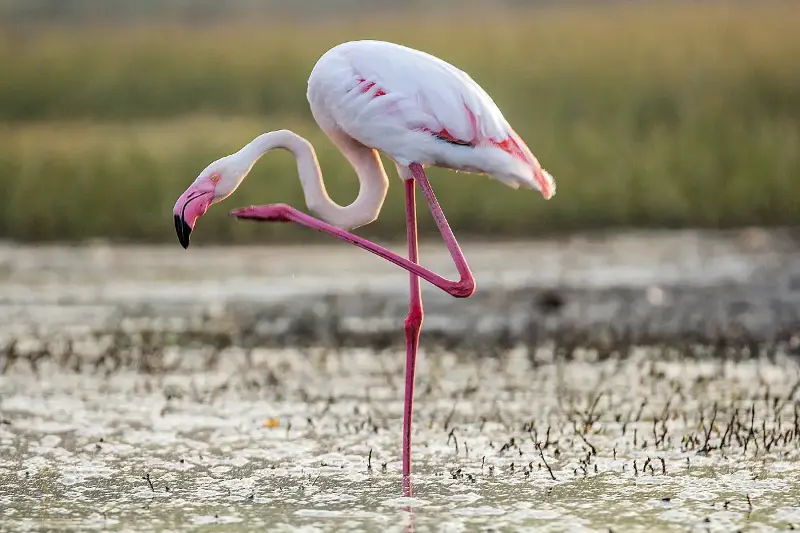
The Leg Is Not Shaped the Way It Looks
A flamingo’s anatomy can be confusing at first glance. The joint that appears to bend backward halfway down its leg is not its knee—it is the ankle. The true knee is located much higher, hidden beneath feathers close to the body.
The unique mechanics of a flamingo's leg provide key structural benefits:
- Elevated Reach: Elongated lower leg and foot bones give flamingos striking height, allowing them to wade into deeper waters while keeping their feathers dry.
- Passive Joint Locking: The geometry of the joints and tension in surrounding tendons create a bracing effect when weight is applied.
- Reduced Muscle Fatigue: Once locked into position, the physical structure holds the body upright without requiring continuous muscle contraction.
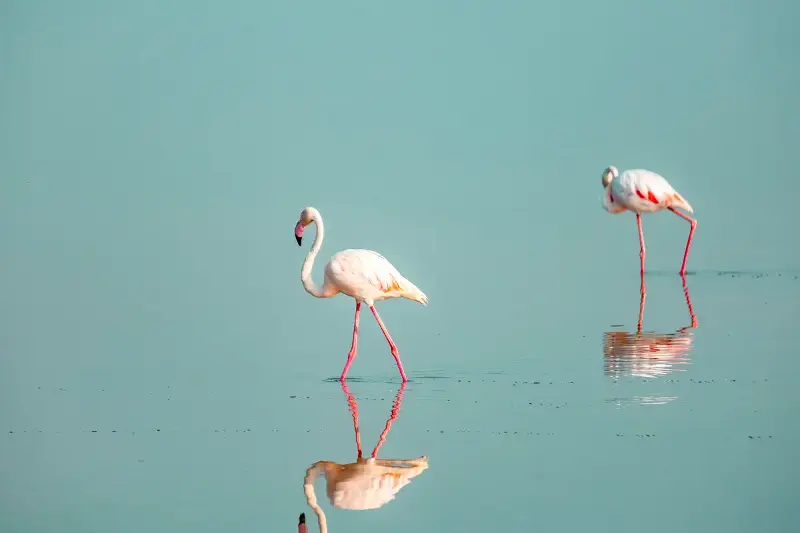
Why One Leg May Be Easier Than Two
Standing on one leg may seem less stable, but for a resting flamingo, it offers a distinct mechanical advantage. When both legs are down, each limb requires active muscular control to prevent unwanted shifting. With one leg tucked, the supporting leg bears the full load in an alignment that fully engages the bird’s passive stabilizing structures.
This explains why flamingos stand on one leg even while asleep. Because sleep reduces voluntary muscle control, an energy-saving, self-supporting posture allows the bird to rest safely without falling over.
Energy Savings in Cold Water
Thermal regulation plays a major role in this iconic behavior alongside biomechanics:
- Heat Loss Reduction: Unfeathered legs lose heat rapidly in water. Tucking one leg into warm body feathers significantly reduces exposed surface area.
- Countercurrent Heat Exchange: Arteries carrying warm blood down the leg run adjacent to veins returning cooler blood, transferring heat back to the body before it escapes through the foot.
However, flamingos also use this posture in warm environments, proving that the stance delivers both thermal regulation and biomechanical efficiency.
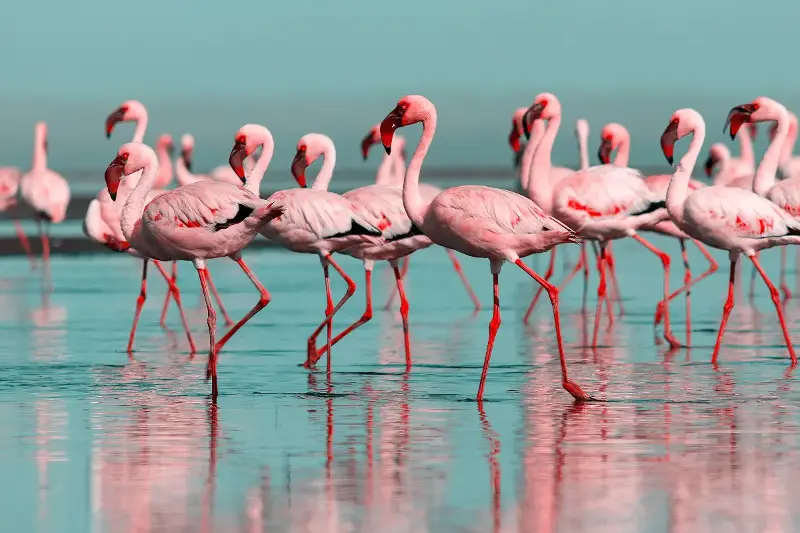
A Posture Refined by Evolution
Living in wetlands, salt lakes, and coastal shallows requires smart energy management. Any energy saved while standing can be redirected toward flying, foraging, and breeding. The flamingo's one-legged stance is an elegant example of biological engineering—letting gravity and anatomical design handle the hard work of remaining upright.