


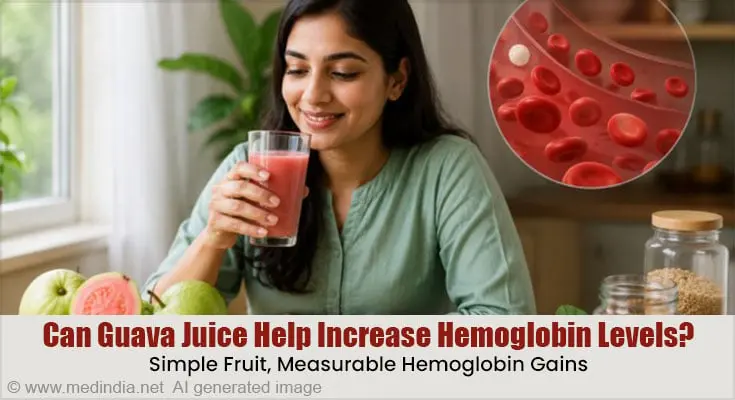
India, June 2 -- People searching online often ask, "Can guava juice help increase hemoglobin levels?" Current evidence suggests that it may help.
A systematic review and meta-analysis involving 726 females found that women and adolescent girls who consumed guava juice generally had higher hemoglobin levels than before the intervention, particularly when guava juice was combined with iron supplementation (1). However, guava juice should be viewed as a supportive dietary strategy rather than a treatment for anemia.
Why Hemoglobin Matters for Good Health
Hemoglobin is the protein inside red blood cells that carries oxygen throughout the body. When hemoglobin levels fall too low, a person may develop anemia, which can lead to tiredness, weakness, dizziness, headaches, and reduced physical performance (2).
According to the World Health Organization (WHO), anemia remains one of the most common nutritional disorders globally and disproportionately affects women, pregnant individuals, and adolescent girls (2).
What Researchers Found About Guava Juice and Hemoglobin Levels
The review examined 17 studies conducted in Indonesia between 2019 and 2024. Together, these studies included 726 participants, mainly pregnant women and adolescent girls (1).
Key findings included:
Average hemoglobin increase of 1.7 g/dL among pooled participants.
Average increase of 1.5 g/dL among adolescent girls.
Average increase of 1.8 g/dL among pregnant women.
Greater improvement when guava juice was consumed alongside iron supplements compared with iron supplementation alone (1).
Most studies lasted between five days and three months (1).
Why Guava Juice May Help the Body Use Iron Better
Guava is naturally rich in vitamin C. This nutrient helps the body absorb non-heme iron, the form of iron found in plant foods and many supplements (1).
Vitamin C converts iron into a form that is easier for the body to absorb. Better iron absorption may support the production of healthy red blood cells and hemoglobin (1).
Guava also contains folate, antioxidants, flavonoids, and polyphenols. These nutrients may contribute to overall blood health, although vitamin C is believed to be the primary mechanism behind the observed benefits (1).
What the Study Does Not Prove
The findings should be interpreted carefully.
All studies were conducted in Indonesia, so the results may not apply equally to every population (1). Most studies were relatively small and used non-randomized designs. Researchers also reported differences in guava preparation, dosage, and intervention duration, which may have influenced results (1).
Importantly, the study does not prove that guava juice prevents or cures anemia. It only suggests that guava juice may support higher hemoglobin levels and better iron utilization (1).
What This Means for Women, Girls, and Families
For people with low hemoglobin levels or at risk of iron deficiency, guava juice may be a simple addition to a healthy diet. This may be particularly relevant in countries such as India and Indonesia, where guava is widely available and affordable.
Do's
Consume guava or guava juice with iron-rich meals.
Follow medical advice regarding iron supplements.
Eat a balanced diet containing iron, folate, and vitamin C.
Seek medical evaluation for persistent fatigue or suspected anemia.
Don'ts
Do not replace prescribed iron therapy with guava juice.
Do not self-diagnose anemia without blood testing.
Do not assume all fatigue is caused by low hemoglobin.
Do not rely on a single food to correct nutritional deficiencies.
Further randomized controlled trials are needed before specific recommendations regarding dosage, frequency, and duration of guava juice consumption can be made (1).