


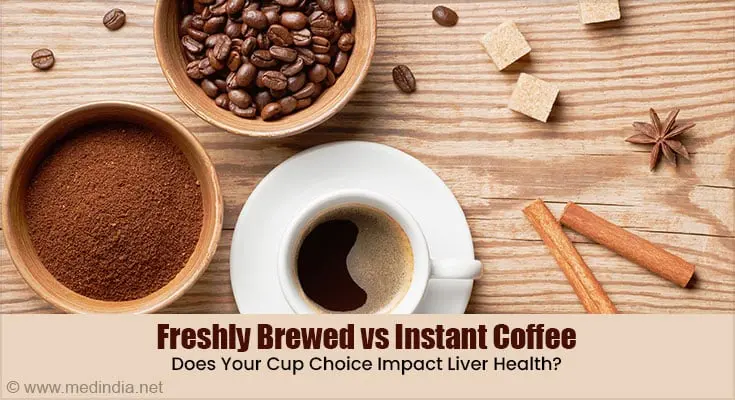
India, May 7 -- A recent lifestyle claim that ground black coffee may be better for liver health than instant coffee has sparked curiosity, after actor Shoaib Ibrahim shared that doctors advised this change for Dipika Kakar. While the suggestion may sound simple, it opens up a deeper scientific discussion: does the way coffee is prepared actually influence its health benefits?
Modern research increasingly shows that coffee is not just a daily beverage but a complex mixture of bioactive compounds that can impact liver health, metabolism, and inflammation. At the same time, differences in processing-such as freshly ground versus instant coffee-may affect how much of these beneficial compounds reach the body.
Is Coffee Actually Protective for the Liver?
Coffee's link to liver health is one of the most consistently studied areas in nutrition science, and recent research strengthens this connection.
A recent scientific editorial highlights that coffee contains over 1,000 bioactive compounds, including caffeine, chlorogenic acids, diterpenes, and melanoidins. These compounds work together to reduce oxidative stress and inflammation-two key drivers of liver damage.
The same research explains that regular coffee consumption is associated with:
Lower fat accumulation in the liver
Improved liver enzyme levels
Reduced risk of conditions like fatty liver disease, cirrhosis, and liver cancer
Additionally, a review in Foods confirms that compounds such as caffeine and chlorogenic acids have antifibrotic (anti-scarring) effects and may slow the progression of chronic liver disease (2).
What makes this particularly important is that liver diseases often develop silently over years. Coffee is therefore being explored as a simple, lifestyle-based preventive factor rather than a treatment.
How Does Fresh Brewing Change What's Actually in Your Coffee?
Coffee beans contain a complex matrix of bioactive compounds, including polyphenols, chlorogenic acids, diterpenes, and caffeine, all of which contribute to their physiological effects.
However, the presence of these compounds in the final cup is not fixed-it is shaped significantly by how the coffee is processed and prepared.
Recent analytical evidence demonstrates that brewing coffee from freshly ground beans enables more efficient extraction of these compounds.
A recent study reported that brewed coffee can deliver high concentrations of phenolic compounds, flavonoids, and chlorogenic acids, which are central to its antioxidant activity.
Grinding increases the surface area of the beans, allowing water to interact more effectively with the coffee matrix and extract these compounds into the beverage (3).
In contrast, instant coffee undergoes a sequence of industrial steps, including extraction, concentration, drying, and rehydration.
While these processes preserve caffeine and some antioxidants, they can alter the overall chemical profile. In addition, commercially available instant variants often include added sugars, creamers, or flavoring agents, which may dilute the concentration of naturally occurring compounds.
As a result, freshly ground black coffee represents a preparation method that preserves a more intact and less modified chemical composition, making it a closer representation of the original coffee bean.
Liver Failure - Types, Causes, Symptoms, Complications, Diagnosis, Treatment & PreventionLiver Failure - Types, Causes, Symptoms, Complications, Diagnosis, Treatment & Prevention
Liver failure occurs when the liver loses its ability to perform its normal functions of regeneration or repair. It can be a gradual or a sudden process.
Does Processing Change Coffee's Health Value?
The current scientific literature does not establish a direct clinical hierarchy between ground and instant coffee with respect to measurable liver outcomes. However, differences in processing provide a meaningful basis for comparison at the compositional level.
The biological effects of coffee are primarily driven by its bioactive components-particularly chlorogenic acids and caffeine-which influence oxidative stress, inflammation, and metabolic pathways.
These compounds are sensitive to heat, storage, and processing conditions, meaning their concentration and activity can vary depending on how coffee is manufactured.
Less processed coffee tends to retain a broader spectrum of these compounds in their original proportions. This explains why freshly ground black coffee is often described in scientific and clinical discussions as a more compositionally intact option.
The distinction is therefore rooted in compound preservation and processing intensity, rather than in direct evidence of superior clinical outcomes.
Coffee, brewed, prepared with tap water - Nutrition FactsCoffee, brewed, prepared with tap water - Nutrition Facts
Know nutrition and calorie facts in 100gms of Coffee, brewed, prepared with tap water. Includes - total fat, carbohydrates, proteins, vitamins and minerals.
How Much Coffee Is Actually Beneficial for Health?
Large-scale nutritional analyses provide consistent insight into how coffee consumption relates to health outcomes.
Coffee contains not only caffeine but also a range of micronutrients and plant compounds, including polyphenols, magnesium, and vitamin B2, all of which contribute to its overall health profile.
Epidemiological data suggest that moderate coffee consumption-typically between three and five cups per day-is associated with a reduced risk of several chronic conditions. This level of intake corresponds to approximately 400 mg of caffeine per day, which is considered safe for most healthy adults (4).
Coffee Intake and Associated Health Effects
Daily Coffee Intake What Happens in Your Body What It Means for You
1-2 cups/day Mild boost in energy and focus Good for alertness, but limited health impact
3-5 cups/day Strong antioxidant effect, supports metabolism and organ health Best range for health benefits, including liver support
More than 5-6 cups/day Too much caffeine can overstimulate the body May cause sleep issues, acidity, anxiety - benefits start to drop
The data indicate a dose-dependent relationship in which benefits increase up to a moderate range and plateau thereafter. Beyond this point, the adverse effects of caffeine intake become more pronounced, underscoring the importance of maintaining consumption within recommended limits.
Can Coffee Intake Really Influence Fatty Liver Risk?
Recent epidemiological research has further clarified the relationship between coffee consumption and liver health. A study analyzing data from more than 8,000 individuals reported that coffee intake was inversely associated with the prevalence of non-alcoholic fatty liver disease (NAFLD) (5).
The findings indicated that individuals who regularly consumed coffee exhibited lower hepatic fat accumulation and improved metabolic markers. Among women, an intake of approximately two cups per day was associated with the most favorable outcomes.
Mechanistically, these effects are thought to be mediated through improvements in insulin sensitivity, reductions in oxidative stress, and modulation of inflammatory pathways. Coffee's bioactive compounds appear to influence lipid metabolism in the liver, thereby limiting fat deposition and slowing disease progression.
These observations reinforce the role of coffee as a dietary factor with measurable associations in real-world populations.
When Does Coffee Start Doing More Harm Than Good?
While coffee demonstrates a favorable health profile, its effects remain dose-dependent. Excessive consumption has been associated with sleep disturbances, gastrointestinal discomfort, increased heart rate, and heightened anxiety.
High caffeine intake may lead to restlessness, insomnia, and jitteriness, particularly among individuals with lower tolerance levels.
In addition, the nutritional profile of coffee can vary substantially depending on the preparation method. The addition of sugar, cream, or flavoring agents may increase caloric intake and offset some of the beverage's inherent benefits.
Taken together, these findings position coffee as a beneficial dietary component when consumed in moderation and in minimally processed forms.
What's the Bottom Line on Ground vs Instant Coffee?
The growing body of evidence supports a consistent association between coffee consumption and improved liver health, driven by its rich bioactive compound profile. Preparation methods influence the extent to which these compounds are retained, with freshly brewed coffee offering a less processed and more compositionally intact profile.
At the same time, current research does not establish a definitive clinical advantage of ground coffee over instant coffee. The distinction lies primarily in processing, compound preservation, and overall nutritional quality.
In practical terms, both preparation method and quantity of intake shape coffee's health impact-making simpler forms and moderate consumption the most reliable approach.