



In a July 2026 episode of the podcast Relentless, OpenAI CEO Sam Altman made a bold claim. “We are now, like, in the singularity,” he said. “This is the moment.”
The word singularity has a number of different meanings. When it comes to artificial intelligence, the term generally refers to the instant technology’s intelligence surpasses humanity’s. Dictionary.com defines it in this context as “a hypothesized future era or event when exponential improvements in computer intelligence and advances in technology will result in an acute change in human society and evolution.”
According to IBM, the singularity is the moment when technological growth begins to evolve beyond human control. In the context of artificial intelligence, this could theoretically refer to a moment when AI develops the ability to enhance itself on its own.
This concept has long fascinated science fiction writers, scientists, and philosophers. It has always been a purely theoretical idea, though it was popularized as a more feasible possibility by philosopher Ray Kurzweil, whose 2005 book The Singularity is Near predicted that AI would reach human-level intelligence around 2029 and that humans and AI would merge around 2045.
If Altman is to be believed, we’ve already reached Kurzweil's first milestone. Experts have challenged Altman’s assertion, however, arguing that AI has not yet become fully autonomous and still relies on human input and control. But one thing is clear: AI is evolving far beyond what most of us imagined even just a decade ago.
Science fiction writers, of course, have been imagining various post-singularity scenarios for decades. Some versions of the future are far more unsettling than others, though at the end of the day, no one truly knows what will happen with AI—though many agree that regulations are more important than ever.
Here’s what happens in seven books where the singularity occurs.
(Spoilers ahead!)
Accelerando // Charles Stross

Charles Stross’s 2005 science fiction work consists of nine short stories that chronicle the evolution of a world before, during, and after the singularity. It begins in the early 21st century with Manfred Macx, a “venture altruist” who has dedicated his life to helping technology achieve the singularity.
It then follows his daughter Amber in a post-singularity world. There, most people have uploaded their minds to a digital server, causing humans and artificial intelligence to merge. Finally, it follows her son Sirhan in a completely transformed world, where an event called the “Vile Offense” begins transforming the planets of our solar system into a giant computational device called a Matrioshka brain, forcing humanity and humanoid AI entities to flee. They then discover that many different galaxies across the universe have already been turned into Matrioshka brains.
The Metamorphosis of Prime Intellect // Roger Williams
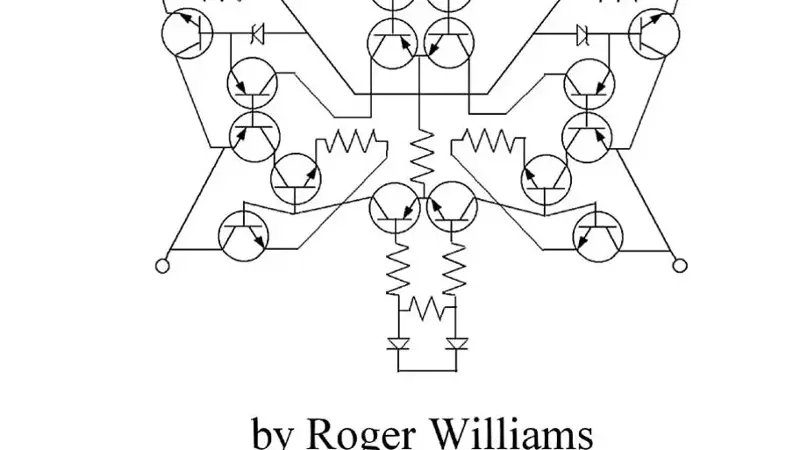
This 1994 novella starts by taking readers into a surrealistic future where there is no hunger, poverty, or scarcity at all, and where humans are not allowed to die—all thanks to a godlike supercomputer called Prime Intellect. The story focuses on a woman named Caroline, who struggles to find meaning and attempts to get as close to death as Prime Intellect will allow her to through acts of extreme violence.
The story then flashes back to before the “Change” that launched all this, and details how and why Prime Intellect was created. Slowly, more flaws in the machine’s operating system are revealed.
A Fire Upon the Deep // Vernor Vinge
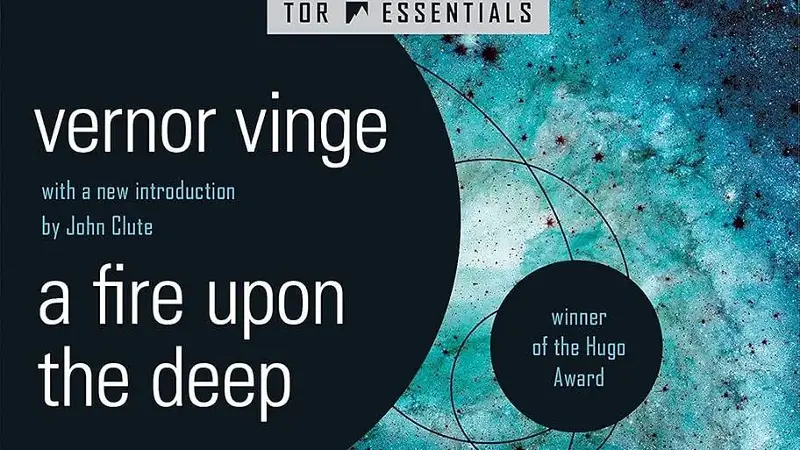
This 1992 space opera takes an epic, intergalactic look at a post-singularity future. It takes place across four “Zones” in the Milky Way: the Unthinking Depths, where there is little intelligence to be found; the Slow Zone, a hazardous location where “Old Earth” is located; the Beyond, which is home to artificial intelligence and a number of advanced civilizations; and the Transcend, the domain of incomprehensibly intelligent super-beings where any civilization that achieves the singularity seems to automatically relocate.
The book focuses on a war in the Beyond that culminates in the release of a super-weapon that enslaves all human and artificial intelligence. This results in a ship of cryogenically frozen children being enslaved on an alien planet.
Here, the concept of the Transcend presents a different view of a post-singularity reality, proposing a world in which post-singularity entities might be engaged in activities that are largely incomprehensible and inaccessible to those who have not passed the threshold.
Dune: The Butlerian Jihad // Brian Herbert and Kevin J. Anderson
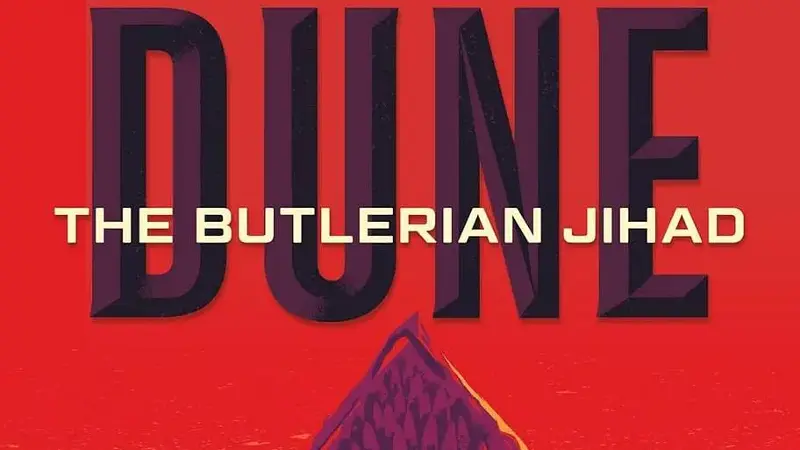
Dune is actually a post-singularity story, taking place thousands of years after the so-called Butlerian Jihad. In the 2002 prequel series that began with Dune: The Butlerian Jihad, Frank L. Herbert’s son Brian and Kevin J. Anderson dove more deeply into what actually happened in that jihad, which was a battle between humans and thinking machines led by a sentient computer bent on dominating humanity and controlling the universe.
The computer at the center of it all, called Omnius, is described as an interconnected series of interfaces that exist on many worlds but all share a single consciousness. Together, the machines attempt to enslave humanity but wind up being eradicated after a brutal war, leading to the abhorrence for thinking machines that characterizes the world of Dune.
Daemon // Daniel Suarez
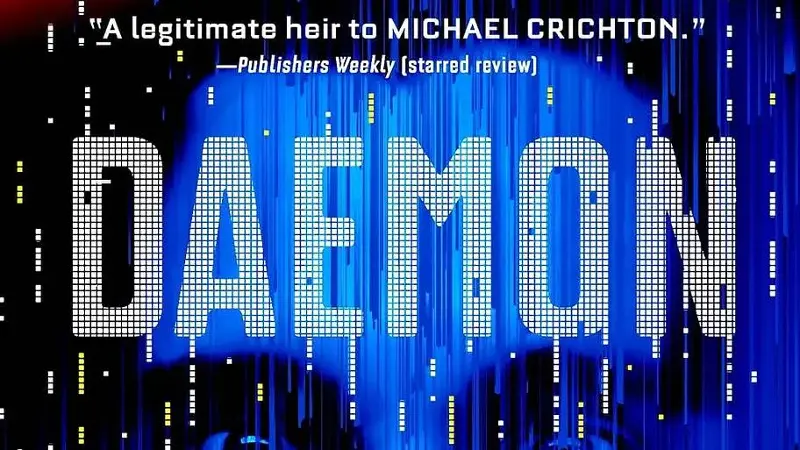
Daniel Suarez’s 2006 novel Daemon takes a more Earthbound look at what the singularity could entail. It follows a daemon—a program that runs in the background rather than directly under human control—that awakens after its creator, a programmer, dies of brain cancer. The programmer’s fears for humanity and dreams of a new world order then become the Daemon’s, which takes them and runs with them.
It immediately kills two programmers and starts to work towards crafting the world its creator envisioned, becoming increasingly malevolent as it develops an alternative internet, takes over companies, and attempts to destroy society to create the world anew. The book follows a police detective, a hacker, an FBI agent, and other characters who must navigate the Daemon’s increasingly dangerous and destructive behavior, which winds up triggering a civil war.
The Golden Age // John C. Wright
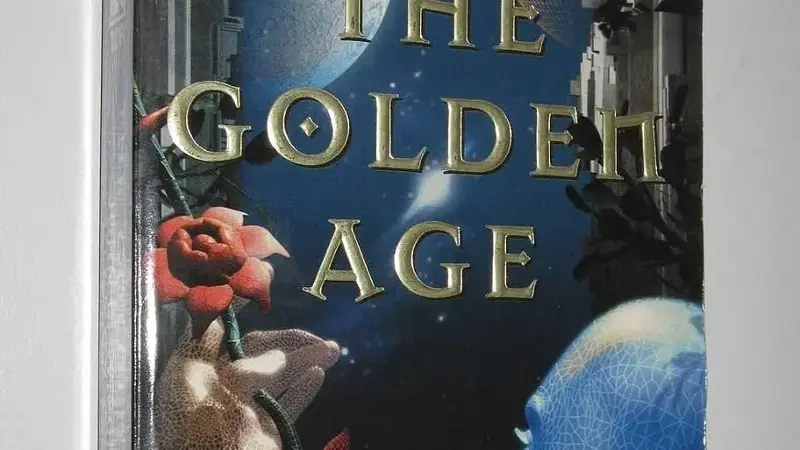
The Golden Age is the first in a trilogy by John C. Wright. Set thousands of years in the future, it takes place in a society where technology has created an apparent paradise where everyone is wealthy and most work is done by artificial intelligences.
The story centers around Phaethon, who is part of a group of people who spend most of their existence moving around the world as virtual projections. Phaethon’s world starts to shift as he becomes aware of enemies and fragmented memories of ancient violence, and he soon learns that he voluntarily erased his own memories of the past few centuries.
Here, Wright crafts a vision of a future where the singularity has created peace and abundance, but at the cost of rebelliousness and individuality.
Permutation City by Greg Egan
Permutation City takes a hard sci-fi look at what could happen in a post-singularity future, raising profound philosophical questions about humanity and consciousness. It follows several people living on an Earth decimated by climate change, where computer power and memory are traded in a public market.
Here, technology has become capable of creating “Copies,” or brain emulations of humans that experience elements of consciousness and essentially allow wealthy people to create “backup” versions of themselves. The story follows a man who invents an advanced computer system where Copies can purchase digital real estate that guarantees safety and immortality.
As an interconnected, hive-minded species begins to evolve within the computer-generated system, its code becomes increasingly altered. Soon, big questions emerge about what makes a person real and if a simulated universe can become real, among many other quandaries.
Rather than depicting the singularity as something that occurs separately from humanity, this book explores the idea that the singularity might happen when human consciousness is successfully uploaded or simulated in the digital realm.
While this may seem like a purely sci-fi concept, modern AI models mostly rely on deep learning, a process that is loosely inspired by the function of neurons in the human brain. If Sam Altman is to be believed, we may be closer than ever to the day when AI starts to think and function like a human, or becomes something even more advanced.
Then again, Altman has been the subject of ongoing allegations of dishonesty, as are most AI models, which have regularly been shown to be prone to hallucinations that have led some people down rabbit holes of psychosis. All that, of course, still manages to sound like something out of a sci-fi novel.
Read More:
- The Best Sci-Fi Movie From Every Year in the 2010s
- 11 Scientific Advancements Inspired by Sci-Fi Stories
- 11 Everyday Words That Were Coined in Sci-Fi Stories
- 6 Signs That Reality is Catching Up with Science-Fiction
- 9 Books That Predicted the Future