



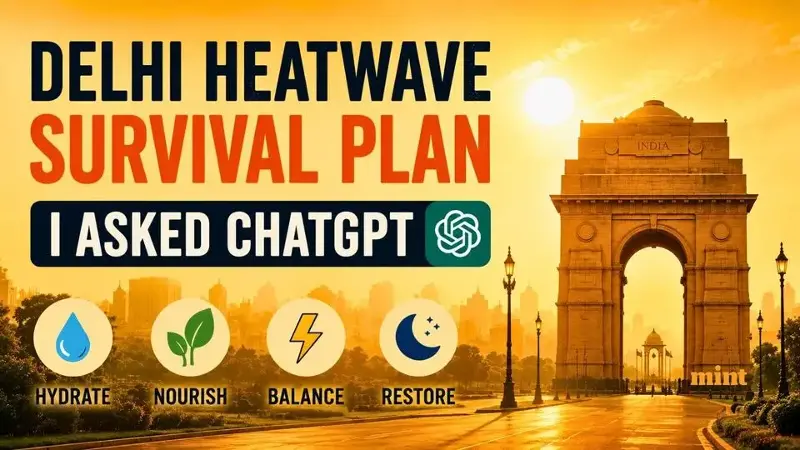
An intense heatwave is sweeping through Delhi-NCR right now. The IMD has issued an active Orange Alert for the region. Temperatures are forecast to reach 43°C to 45°C. Extreme conditions are expected to persist until 23 May.
I asked ChatGPT to plan my diet to survive the scorching heat in Delhi. Here’s the detailed prompt.
My ChatGPT Prompt
I live in Delhi, and the ongoing heatwave is starting to affect my energy, appetite, hydration, sleep and overall productivity. Temperatures are consistently above 42-45°C, nights remain hot, and stepping outside, even briefly, feels physically draining.
I work full-time and spend a mix of time indoors and commuting, but even with air conditioning, I constantly feel dehydrated, sluggish and mentally exhausted.
Help me build a realistic diet and hydration strategy specifically for surviving a North Indian summer and Delhi heatwave conditions.
I do not want generic advice like: “Drink more water and eat fruits.”
I want a scientifically sensible and practical heat-management food system for someone living and working in Delhi.
Do not give generic wellness advice.
Give me a practical, climate-specific, psychologically realistic, and scientifically grounded diet strategy for surviving Delhi’s heatwave conditions while still functioning normally at work and in daily life.
ChatGPT’s Response
At 42–45°C, your body runs a constant cooling operation in the background. That operation consumes water, sodium, potassium, energy, and mental bandwidth. This is why so many people feel irritable, foggy, tired, and emotionally flat. Even people eating normally experience this drain. Calories alone are simply not enough during extreme heat.
Physiologically, your body prioritises survival over productivity during heatwaves. Blood flow redirects toward the skin for cooling. Heart workload increases. Digestion slows significantly because the body prioritises other functions over gastrointestinal processes.
This is why greasy meals feel worse, appetite drops, bloating increases, and sleep deteriorates. Even mild dehydration reduces concentration, mood stability, reaction time, and short-term memory. Delhi heat feels mentally exhausting, not just physically hot.
Most summer exhaustion comes from electrolyte imbalance, dehydration, poor sleep, and digestive stress. You can eat full meals and still feel completely depleted. The biggest mistake people make is treating hydration as reactive. Drinking water only when thirsty is already too late. Hydration must become a proactive daily discipline.
- Start each morning with 500 to 700 ml of water immediately after waking
- Add a pinch of salt and lemon if you are sweating heavily
- Avoid ice-cold water, as it can temporarily worsen digestive stress
- Target at least 3-4 litres of fluids daily.
But, hydration is not only plain water. You also need sodium, potassium, and magnesium. Excessive plain water without electrolytes can further dilute mineral balance. Rotate between plain water, buttermilk, coconut water, lemon water, and lightly salted chaas throughout the day.
Traditional Indian summer foods genuinely help during heatwaves. Not because of any mystical quality, but because they naturally support hydration, sodium balance, and easier digestion.
Curd, chaas, watermelon, cucumber, coconut water, sattu, and curd rice are all excellent choices. They provide water, minerals, and digestive relief simultaneously.
Delhi heatwaves: What to Eat and What to Avoid
During peak heat, reduce deep-fried food, heavy oily gravies, excessive red meat, alcohol, and too much caffeine. These increase digestive load, inflammation, and pressure on the body's water balance significantly.
Cold soft drinks feel psychologically cooling, but physiologically worsen hydration. High sugar content causes rapid glucose spikes with very low electrolyte levels. Packaged juices are essentially liquid sugar with weak nutritional benefits.
Lighter daytime meals work significantly better in Delhi's heat. Heavy late-night eating worsens already-poor sleep quality. Breakfast should prioritise hydration, protein, and easy digestion.
Good options include curd with poha, idli with coconut chutney, eggs with fruit, or a sattu drink. Avoid oily parathas and excessively spicy breakfasts during heatwaves.
Lunch should cool digestion, not challenge it. Dal, rice or roti, curd, and light vegetables work well together. Curd rice, rajma rice with curd, or grilled chicken with cucumber are all sensible choices.
Avoid heavy biryani lunches before commuting. They dramatically increase post-lunch fatigue in extreme heat. Dinner should be lighter still. Khichdi, soups, curd-based meals, or grilled protein with vegetables all reduce the overnight burden on body temperature.
If you exercise or train during heatwaves, increase your electrolyte intake and avoid peak-heat hours entirely. Watch for early warning signs of heat exhaustion. Unusual fatigue, headache, dizziness, dark urine, muscle cramps, and rapid heartbeat all signal danger. Heat exhaustion escalates quietly and quickly.
Air-conditioned environments create a false sense of hydration security. AC dries the body subtly and reduces thirst signals. Many office workers are dehydrated without realising it.
The real survival strategy during the Delhi summer is not simply eating healthy. It cools efficiently, digests easily, hydrates intelligently, and reduces the recovery burden on the body. You cannot out-hustle a heatwave physiologically. Work with your body, not against it.