



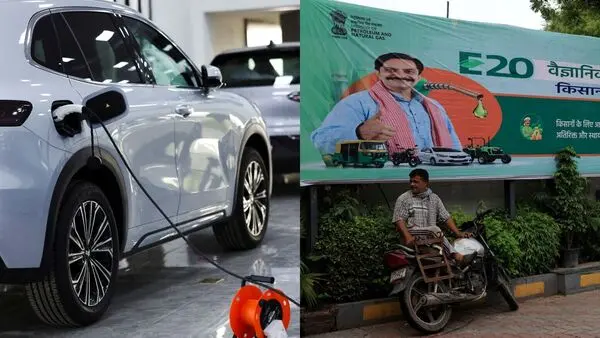
For the first time, the sale of alternative fuel vehicles has outpaced petrol cars in India’s passenger vehicle market. According to the monthly retail registration data from the Federation of Automobile Dealers Associations (FADA), in August, of the 24,23,201 units retailed in India, compressed natural gas (CNG), hybrid, and electric vehicles together accounted for 41.95%.
Of this, CNG vehicles accounted for 25.28%, Hybrid for 9.04%, and EV for 7.63%. In contrast, petrol vehicles accounted for 40.85% of passenger vehicles sold in the same period. Notably, petrol remains the largest single fuel in the market.
What caused the shift?
But according to industry observers, the shift in customer preference is clear.
“This shift was bound to happen,” Sai Giridhar, FADA vice president, told Reuters.
According to him, while E20-related concerns may have initially accelerated buyers' shift away from petrol, the trend was sustained by a wider choice of alternative-fuel models, improved EV range, and a gradual expansion of charging infrastructure.
Vehicle dealers also say that the shift towards CNG, hybrids and EVs is driven by running-cost economics rather than purchase price.
Ethanol blending
This also comes at a time when ethanol blending in petrol remains a highly contentious topic in the country. The government continues to push E20 petrol even as vehicle owners and critics blame the ethanol blending for reduced performance and increased engine-related issues.
According to the government, the push for E20 aims to reduce massive crude oil import bills, enhance energy security, lower carbon emissions, and boost farmers' incomes through domestic agricultural feedstocks.
The government has also repeatedly tried to reassure vehicle owners that mileage is influenced by a variety of factors beyond fuel type alone.
These include driving habits, maintenance practices such as oil changes and air filter cleanliness, tyre pressure and alignment, and even air conditioning load.
What the August auto sales data show
The FADA also showed that India's automobile retail sales rose 17.5% year-on-year in August to 2.4 million, a record for the month.
This was despite leading auto companies rolling out price hikes this year to cope with elevated input costs.
But according to Giridhar, further price hikes risked eroding gains from last year's tax reforms aimed at boosting consumption.
India is heading into its annual festive season, a period that typically spurs big-ticket purchases.
Giridhar said that despite inflationary pressures and price increases, dealers remain optimistic about sales.
Passenger-vehicle inventory increased by five days from end-July levels to about 38–40 days, FADA said.