



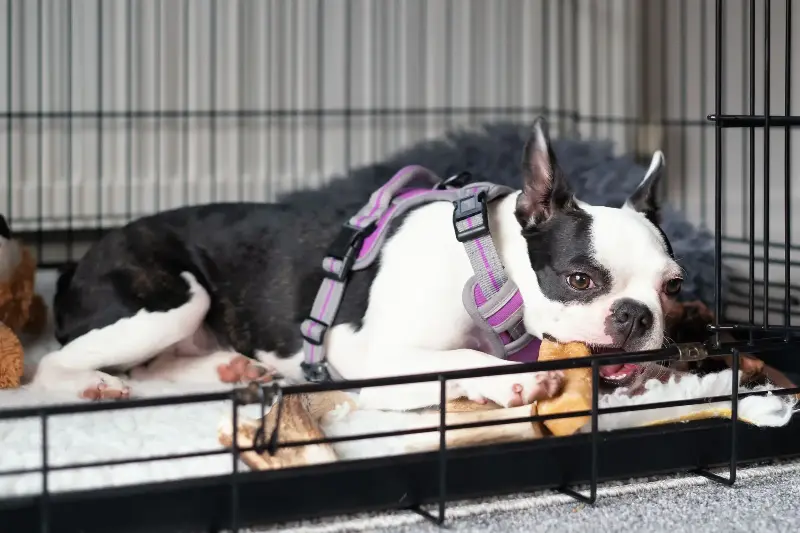
Crates can be an invaluable tool for helping new dogs settle into a home, but knowing when it’s time to leave them behind, if ever, is less obvious.
Owners often turn to crates to aid in training a puppy, prevent destructive chewing, provide a safe place for dogs to rest and make travel or veterinary visits less stressful. For many, the next challenge is figuring out when their dog is ready for more freedom around the house.
Moving too quickly can lead to accidents, damaged belongings and training setbacks, while waiting too long may mean a well-behaved dog is ready for privileges that haven’t been given. So how does a pet parent know when it’s time for their dog to graduate from the crate?
Ali Smith, a dog trainer and founder of Rebarkable, told Newsweek there are four key milestones owners should look for before making the transition.
1. Your Dog Is Reliably Potty Trained
One of the clearest signs that a dog is ready for more freedom is completing potty training.
For Smith, that doesn’t simply mean a dog has gone a few days without an accident. Instead, a pup understands when and where they’re supposed to relieve themselves and can reliably hold their bladder or bowels when given appropriate opportunities, both when home alone and when free-roaming under light supervision.
More often, puppies will be confined to a crate because they do not have the physical bladder control that older dogs do.
2. They Know What They Can—and Can’t—Chew
Dogs also need to distinguish between acceptable chew toys and household belongings.
Smith said owners should look for “low destructive tendencies,” meaning their dog consistently chooses appropriate items to chew.
“They know that a chew root is a legal chew and the chair leg is not,” she said.
If shoes, furniture or electrical cords are still regular targets, the crate may remain an important management tool while training continues.
3. They Can Stay Home Alone Calmly
Before leaving the crate behind, dogs should be comfortable spending time home alone without becoming distressed.
However, Smith warned owners not to assume their dog can immediately stay loose in the house for the same amount of time they previously spent crated, a common mistake among pet parents.
“When you start leaving them out of the crate, you should expect the time they’re happy to be alone to effectively reset,” she said.
Beginning with a three-hour absence simply because a dog previously tolerated three hours in a crate is a “huge error” Smith sees dog parents make. She recommends starting the transition gradually and overnight, when owners are more likely to hear if their dog starts chewing, wandering or getting into trouble.
Dogs that can remain relaxed while their owners are out, rather than barking excessively, panicking or getting into mischief, are generally better candidates for spending time outside the crate.
4. They’ve Already Proved They Can Handle More Freedom
The final test comes while owners are still at home.
Smith advises pet parents to ask themselves how long their dogs can roam freely before the need to intervene. If an owner is constantly correcting unwanted behavior—”Fido, no!” or “Drop that!”—it is a sign they are not quite ready.
Instead, dogs should be able to spend time outside the crate with only minimal supervision, demonstrating reliable potty habits and appropriate behavior around the home. This allows owners to build trust gradually.
“Trustworthiness takes some time too,” she said. “Most dog parents aren’t at the point where they can trust their dog much earlier than six months. But more commonly you’re looking at nine to 12 months.”
Why Your Dog Should Still Be Comfortable in a Crate
Even if a dog no longer sleeps in a crate every night, Smith recommends continuing to reinforce crate training.
A canine that’s comfortable in a crate is often easier to transport, board or take to the groomer or veterinarian. Crate familiarity can also be beneficial during emergencies, such as hurricanes or wildfires, as many evacuation shelters require pets to be safely confined.
While crates can be useful for management, Smith said they are not a substitute for training. Dogs displaying aggression or separation anxiety still need those underlying issues addressed.
For many dogs, graduating from the crate doesn’t mean saying goodbye to it forever—it simply becomes another safe, familiar space they can use whenever needed.