



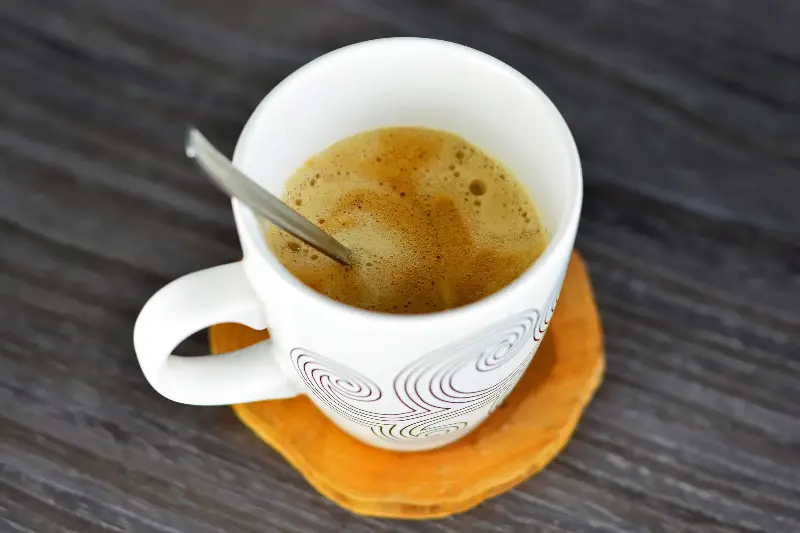
For millions of Americans, the day doesn’t start without coffee. It’s a ritual, a comfort, and—according to research—often a surprisingly healthy habit. But while coffee itself has been linked to healthier aging and even less visible facial aging, what many people add to their cup may be quietly working against their skin.
A 2019 survey found that almost 80 percent of Americans add coffee creamer, sugar or other additives rather than drinking it black. The liquid or powdered dairy substitute has steadily grown in recent years in America, according to Statista’s analysis of U.S. Census and Simmons National Consumer Survey data.
Statista’s analysis shows that about 182.45 million Americans used coffee creamers in 2020, with that number expected to rise to 187.25 million by 2024. Newsweek spoke to cosmetic dermatologist Dr. Nora Jaafar about the ingredient that may be speeding up your skin’s aging process.
“Caffeine has a genuinely dual relationship with skin,” she said. “Topically, it’s a vasoconstrictor and antioxidant, reducing puffiness and neutralizing free radical damage. Internally, moderate intake has anti-inflammatory benefits.
“The problem is excess, elevated cortisol breaks down collagen, worsens inflammatory conditions, and its diuretic effect leaves skin visibly dehydrated and dull.”
Indeed, coffee itself isn’t the problem. Studies have found that the hot caffeinated drink may add two years to your life and even less facial skin aging, suggesting that higher coffee consumption may actually help protect the skin.
What’s Inside Coffee Creamer?
You might find the following ingredients in a creamer:
- Hydrogenated oils — created by adding hydrogen to unsaturated fats to turn them into saturated or solid fats, improving shelf life and stability.
- Corn syrup solids — a dried, powdered form of corn syrup produced by removing water through hydrolysis, commonly used in powdered foods.
- Emulsifiers — additives used to improve texture, taste and shelf life, which have been linked to cancer.
What Do These Ingredients Do to Your Skin?
Jaafar, based in London, told Newsweek: “Hydrogenated oils compromise the skin’s lipid barrier, leaving it dry and reactive.
“Corn syrup solids spike blood glucose, triggering glycation, a process that degrades collagen and elastin and accelerates visible aging.
“Synthetic emulsifiers disrupt the gut microbiome, and that imbalance almost always surfaces on the skin as inflammation, congestion, or flares of acne and rosacea.
“Essentially, these ingredients attack skin health from multiple angles simultaneously.”
What Should You Drink Instead?
If you can’t kickstart your day without a coffee, then Jaafar suggests ditching the creamer entirely.
“Full-fat dairy or unsweetened oat milk alongside food is a far kinder option for your skin,” she said.
She recommends matcha, as it contains caffeine plus L‑theanine—“a unique amino acid, primarily found in green and black tea leaves, known for promoting relaxation without drowsiness.”
“[When drinking matcha you get a] steady energy without the cortisol spike, and rich in EGCG, one of the most potent skin-protective antioxidants we know of,” she said.
She adds that natural substances like herbs, or mushrooms with ashwagandha or maca are excellent for stress-driven skin concerns.
Reference
Liu, Xuanchen, et al. “Beverage Consumption and Facial Skin Aging: Evidence from Mendelian Randomization Analysis.” Journal of Cosmetic Dermatology, vol. 23, no. 5, May 2024, pp. 1800–07. PubMed, https://doi.org/10.1111/jocd.16153.
Newsweek's reporters and editors used Martyn, our Al assistant, to help produce this story. Learn more about Martyn.