


MANILA, Philippines — Contact lenses were invented to work as an alternative for eyeglasses. They serve as corrective lenses that are meant to help a person see better and clearer when worn. You put on these round glass lenses on the eyes manually and remove them manually, too. It’s a “tedious” process that involves constant touching of the eyes themselves in one way or the other for someone who does not want to wear eyeglasses for corrective purposes.
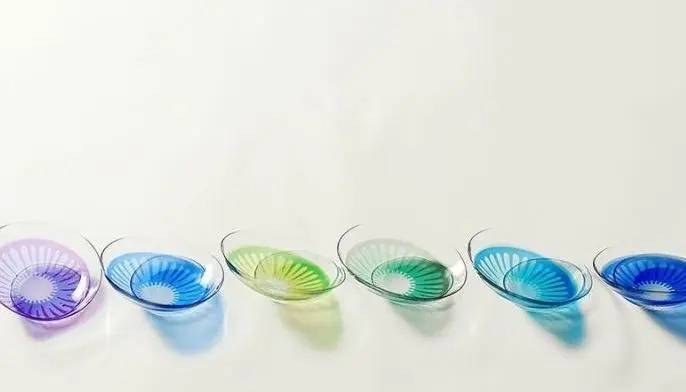
But, now, contact lenses are no longer just worn as corrective lenses these days. Teenagers and young adults wear them as fashion accessories, as cosmetic colored contact lenses meant to help them achieve a beauty goal — that of turning the usual black or brown eyes of Filipinos into foreign-looking green or blue eyes, and with patterns to boot.
They have become a beauty staple worn by persons with no vision problems and no need for corrective lenses whatsoever. They promise a striking “Caucasian” look that is as easy to achieve as taking a short walk to the neighborhood beauty store or ordering it online. The purpose may have changed, but putting these colored contacts on is still done manually and still involves constant touching of the eyes that can put a strain on them.
While colored contact lenses complement your makeup and get-up and make you look prettier and more fashionable, the question is: Does doing so cause harm on your eyes and, in the long run, will it be worth it?
The urgent message from eye care professionals from Makati Medical Center (MakatiMed): Cosmetic contact lenses can put your eyes at serious risk.
Risks
Contact lenses are, above all, a medical device. When prescribed to help correct a refractive error, such as nearsightedness or astigmatism, a trained eye care professional evaluates the patient’s eye health, fits the lens precisely to the cornea’s dimensions, and provides detailed safety guidance. It’s a carefully managed risk which experts take because of the potential benefit of improved vision for the patient. But must you run the risk of harming your eyes by using colored lenses purely for cosmetic effect?
“If your eyes are healthy and you have no refractive error, putting on a pair of contact lenses introduces an unnecessary foreign body onto your cornea. You are accepting all the risks of contact lens wear with absolutely none of the clinical benefit,” explained Mary Ellen Sy, MD, Cornea and External Eye Disease Consultant at MakatiMed’s Department of Ophthalmology.
Dr. Sy added that even properly prescribed, quality-controlled lenses carry serious risks when not used correctly. Wearing contact lenses may bring about complications, such as corneal hypoxia or when the cornea doesn’t get enough oxygen; microbial keratitis or when bacteria, fungi, and amoebae colonize contact lenses and cause corneal infections that are difficult to treat; corneal abrasions, which is often caused by an ill-fitting lens or improper handling; and chronic inflammation and dry eye.
If these complications occur even among patients who have already received professional guidance and used regulated lenses, every one of these possible issues get amplified for cosmetic lens wearers.
Dr. Sy pointed out that colored contact lenses are designed differently from the usual corrective ones, emphasizing that the tint on a lens adds another layer of risk for users.
“The colored pigment layer is thicker than a clear lens, which further reduces oxygen transmissibility to the cornea. And if obtained without a prescription, they are never fitted to the individual’s corneal curvature and diameter, which creates micro-trauma to the corneal surface,” the doctor explained.
She further explained that many cosmetic contact lenses are sold through fashion stores, novelty shops, and online marketplaces with no regulatory oversight. This means that users have no way to verify the safety of the materials, pigments, and manufacturing process. If the lenses are purchased without an eye health specialist, users would also not receive hygiene and safety instructions, which include safe wear duration and proper cleaning and information on the warning signs that require urgent medical attention.
“We have seen young, otherwise healthy patients develop corneal ulcers from cosmetic lenses purchased at a market stall. Some have required corneal wearing transplantation. This is preventable blindness, and that is what makes these cases so heartbreaking,” Dr. Sy warned.
Thus, Dr. Sy recommends that, as a general rule, all contact lens users must seek immediate medical attention if they experience eye pain or increasing discomfort; redness that persists after removing the lens; discharge, excessive tearing, or sensitivity to light; blurred or reduced vision; a persistent sensation of having a foreign body in the eye; and any whitening or opacity on the cornea.
“Do not wait for symptoms to improve on their own. Corneal infections can progress from mild irritation to permanent vision loss within 24 to 48 hours,” revealed Dr. Sy, who encourages everyone to first get guidance from an ophthalmologist or licensed optometrist when it comes to contact lens use, whether it’s for cosmetic or corrective purposes.
“Insist on a proper prescription specifying lens brand, base curve, and diameter suited to your individual corneal measurements, and purchase only from reputable, regulated sources. Never buy contact lenses from novelty stores, market stalls, or unverified online sellers,” she added. “Follow all professional instructions on insertion, removal, cleaning, storage, and replacement schedules exactly. Attend regular eye examinations so that any early signs of corneal damage can be detected and managed promptly.”
“No cosmetic trend is worth the permanent loss of vision. If you have questions about contact lens safety or are experiencing any eye symptoms, please seek professional care without delay,” Dr. Sy ended.