



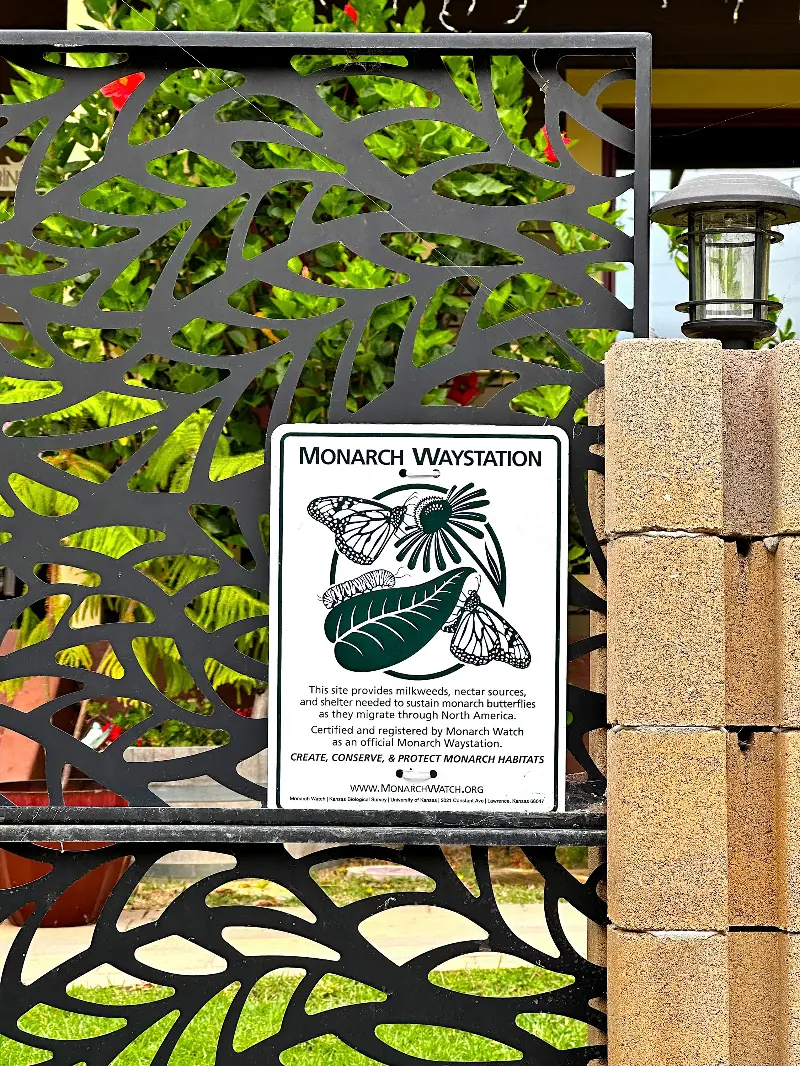
PITTSBURGH — When Sarah Hunter and her husband bought their Hempfield Township (Pa.) home, its yard was mostly lawn with a few shrubs and no garden. Not even a hosta.
Six years later, there are beehives and at least six species of butterflies are spotted in what is now certified as a Monarch Butterfly Waystation.
“The gardens are not just for us,” she said. “This is how pollinators survive. I think people forget that. It's just not about aesthetics, but their survival, and their survival impacts our survival.”
Hunter’s property is among the waystations sponsored by Penguin Court of the Brandywine Conservancy in Laughlintown, Pa. It’s part of a consortium of two dozen nonprofits covering Cambria, Fayette, Somerset and Westmoreland counties in southwestern Pennsylvania.
Penguin Court is about halfway to reaching its goal of 250 monarch waystations this year to celebrate the nation’s 250th birthday.
To become certified, a site can have as little as 10 plants, including some milkweed species and a variety of nectar-producing plants in bloom throughout the growing season.
Conservation groups have been rallying to save the pretty orange-and-black butterfly that was once abundant.
Monarch butterfly populations have plummeted since the mid-1990s, according to the U.S. Fish & Wildlife Service, which has proposed listing it as “threatened” under the Endangered Species Act.
“We can change and support the environment one yard at a time. Your yard matters,” Hunter said. “It doesn’t have to be expensive.”
Her Westmoreland County yard is one of 2,765 certified monarch waystations in Pennsylvania and over 57,000 waystations nationally, according to Monarch Watch, a conservation, research and education program at the University of Kansas.
The program was founded in 1992 by Dr. Orley “Chip” Taylor, who started a monarch tagging program that tracks the butterflies’ incredible migration from the United States and Canada to Mexico.
“Monarch waystations provide milkweed and nectar sources to support their life cycle. Any habitat that is providing milkweed and nectar plants and has a sustainable plan in place to manage that habitat helps monarchs,” according to Jess Anderson, communications coordinator for Monarch Watch.
The nation loses about 6,000 acres of monarch and wildlife habitat daily, she said by email.
Waystations and other programs establishing more wildlife habitat can help to mitigate that loss, Anderson said.
Monarchs in Western Pa.
In the Laurel Highlands, many organizations are trying to increase the number of monarch waystations. Penguin Court is one of about two dozen organizations comprising the Westmoreland Pollinator Partners.
To learn more about Penguin Court and Westmoreland Pollinator Partners butterfly waystations, visit them online at brandywine.org and download the form to register your garden as a monarch waystation.
The groups ran a similar campaign for more monarch waystations for Westmoreland County’s 250th anniversary in 2023 and reached their goal.
“It was so well received and we had a lot of interest outside of the county,” said Melissa Reckner, Penguin Court program manager for Brandywine Conservancy.
For this year’s U.S. anniversary, Reckner and others saw an opportunity to make a push in other Laurel Highlands counties.
To fund education and certification, Penguin Court/Brandywine Conservancy secured almost $15,000 in grants from the Laurel Highlands Conservation Landscape, administered by the Pennsylvania Environmental Council, and First Energy.
The program supports butterflies and other pollinators through landscaping.
Growing milkweed is crucial because its leaves are the only things monarch caterpillars eat, and monarchs almost exclusively lay their eggs on milkweed. But other native nectar-producing plants are necessary for a garden to be certified as a waystation.
“As monarchs fly over 3,000 miles, you need corridors of safe habitat for monarch butterflies to visit,” Reckner said.
Adult monarchs need nectar-producing plants through the growing season. The plants must be free of pesticides and insecticides.
“In the autumn, when the monarchs are flying south, they need to refuel in September and October,” Reckner said.
Butterfly waystations should measure at least 100 square feet to “be meaningful,” Reckner said.
Plants should be installed in “drifts” — with the same species grouped together to make it more efficient for the feeding insects.
“We want to support monarchs as caterpillars and adults. We also want to build a sense of community ecologically and socially,” Reckner said.
Too many food deserts
Her gardens at her home in Windber, Somerset County, were certified as a monarch waystation years ago. But Reckner knows that a natural landscape goes against tradition in some places.
“There’s so much pressure to continue suburban landscaping with manicured lawns that create food deserts for pollinators and native wildlife,” she said.
Although many people grow some native plants, the challenge is to convince land owners to convert a portion of their property to native pollinator and butterfly gardens.
Start small, Reckner advised.
“When we bought our house, we ripped out the ornamentals and planted trees and native plants. Over the years it has congealed like a lava lamp. It’s a years-long process.
“Every day in my garden, seeing the insects and birds, it’s just fun. My garden is full of life.”
DIY butterfly garden
Six years ago, Hunter, 36, an artist, and her husband, James Kuhns, bought their two-story suburban home on a quarter-acre lot. It was a blank canvas for gardening.
First, they removed invasive species like burning bush. They bought native plants such as butterfly milkweed at Penguin Court and learned about the waystations there. They also became beekeepers, with two hives in their backyard.
Now, the couple tends hundreds of plants of more than 50 species, including more than 30 hydrangeas, 30 peonies, 10 blueberry bushes, five fig trees and six red twig dogwoods.
“It was interesting to notice the increase of butterflies in my yard in six months,” she said.
Hunter encourages people to find which milkweed species grow best in their yards. She admits growing it from seed can be difficult and suggests buying or swapping milkweed plants instead.
If you buy them from a nonprofit like Penguin Court or the Audubon Society of Western Pennsylvania or Penn State master gardeners, they can advise on the best plants to grow on your property.
Hunter tries to spread the word about butterfly and pollinator gardens to her neighbors. She gives them plants and sometimes a taste of the honey from their beehives. People are curious, she said.
She reports that at least one neighbor has refrained from spraying the lawns for weed control because it would affect the couple’s honeybees.
Hunter only has four mature milkweed plants and four newer ones. Given her sunny yard and dry soil, she has found butterfly milkweeds do well.
"You can have a small area and control it. The monarchs love the coneflowers and white panicle hydrangea,” she said.
Her property is always buzzing with bees, butterflies and other pollinators.
“My goal was to inspire the neighbors that you can do a lot with a little,” Hunter said.