



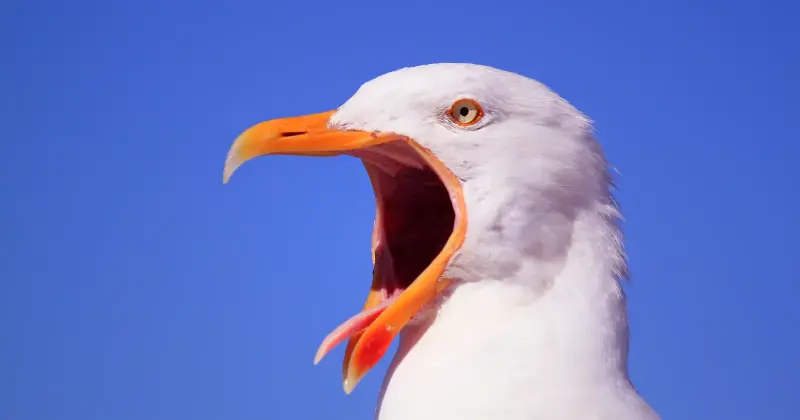
The pigeon on the windowsill is a dinosaur. Not the descendant of one. One.
This is not a rhetorical flourish. It is the plain consequence of how biologists now classify living things. Birds sit inside the group Theropoda, the same branch that produced Tyrannosaurus and Velociraptor, and under the rules of modern classification a group includes all the descendants of its common ancestor. Birds never left it. They are the part of that group still alive today.
We are writers, not palaeontologists, and what follows is a reading of the published work rather than any claim of our own. The reading is not difficult, and the conclusion is less strange than it first sounds.
What “birds are dinosaurs” actually means
The idea has a long history. In 1861, a fossilised feather turned up in the Late Jurassic limestone of Solnhofen in Germany, and a nearly complete skeleton followed soon after. It was named Archaeopteryx: part bird, part something older, carrying teeth and a bony tail alongside its feathers. For more than a century it stood as the bridge between reptiles and birds.
What settled the placement was cladistics, the method of grouping organisms strictly by shared ancestry. On that method, birds fall well inside the theropod dinosaurs, within a subgroup called Maniraptora that also contains dromaeosaurs such as Deinonychus. A 2014 review in Science, led by Xing Xu, put it plainly: the fossil finds of recent decades overwhelmingly support birds as maniraptoran theropods, and the shift from ground-living dinosaur to flight-capable bird now counts among the best-documented major transitions in the history of life.
The fossil evidence has piled up in one direction. Feathered dinosaurs recovered from Liaoning in north-eastern China through the 1990s and after carried feathers, wishbones and specialised wrist joints on animals that were plainly not birds. The features we think of as avian appeared in dinosaurs first, for reasons that had nothing to do with flight.
The consensus is not quite unanimous. A small number of researchers, most prominently Alan Feduccia, have argued for decades that the origin of birds is less settled than the mainstream allows, and that some feathered “dinosaurs” may be secondarily flightless birds instead. That dispute is real, but it is a minority position, and it turns on the fine sequence of events rather than the basic placement of birds among the dinosaurs.
How a handful of lineages got through the asteroid
If birds are dinosaurs, then the asteroid that struck near Chicxulub about 66 million years ago did not spare them so much as miss a few of them.
The great majority of bird lineages alive in the Cretaceous died with everything else.
The most developed account of why comes from a 2018 paper in Current Biology led by Daniel Field, then at the University of Bath, working with palaeobotanists and other specialists. The team combined the fossil pollen record with the ecology of ancient and living birds and proposed that the impact triggered a collapse of forests worldwide, lasting perhaps a thousand years. In that window, they argued, tree-dwelling birds had nowhere to live.
The birds that made it through, on this reading, were ground-dwellers. Every tree-dwelling bird alive today descends from ancestors that lived on the ground and only later returned to the branches, once forests had regrown.
Four lineages survived to seed everything that came after: the group containing ostriches and their relatives, the waterfowl, the ground fowl, and the large assemblage called Neoaves that holds most familiar birds. From those four came the more than 11,000 species counted today. Field has been candid that this was a near thing; writing for a general audience in The Conversation, he noted that the survival of birds through the extinction looks, on current evidence, to have been highly improbable.
From four survivors to more than 11,000 species
The number itself is worth stating with care, because until recently there was no single answer to give. For decades, competing global checklists recognised different totals, depending on how each treated closely related populations. That changed in June 2025, when a working group drawn from BirdLife International, the Cornell Lab of Ornithology, the International Ornithologists’ Union and others published AviList, the first unified global checklist. It recognises 11,131 species, and the older IOC and Clements lists have stopped issuing their own rival counts. The figure will keep moving as populations are split or merged, but for the first time it moves from a single agreed baseline.
Counting the birds themselves is harder still. A 2021 estimate in the Proceedings of the National Academy of Sciences, led by Corey Callaghan, drew on citizen-science sightings to put the world’s wild bird population at roughly 50 billion individuals across about 9,700 species. The authors were plain about the uncertainty. The figure is a central estimate with wide error bars, not a headcount.
The word most easily misread here is “descended.” Birds are routinely described as having descended from dinosaurs, as though they emerged from the group and now stand outside it. The cladistic logic runs the other way. Birds did not leave the group and set up on their own; they are inside it, one surviving branch among the many that did not last.
What the fossil record can and cannot show
The forest-collapse hypothesis is a strong idea built on sparse material. Bird bones are thin and hollow and fossilise poorly, and the record spanning the end of the Cretaceous and the start of the Palaeogene is patchy. The 2018 paper reads its evidence carefully, but it offers a hypothesis to be tested against future finds, not a closed case. Discoveries since then, including the small early bird nicknamed the “wonderchicken” that the same group described in 2020, have added detail without overturning the picture.
What is not in serious dispute is the larger claim. Under the way biologists now define animal groups, the dinosaurs did not all die out 66 million years ago. A few small, ground-living branches ate what seeds they could find, survived the worst of it, and went on to produce everything from the ostrich to the finch at the feeder.
The post Birds are not descended from dinosaurs — they are dinosaurs, a living branch of the theropod family that survived the asteroid and now fills the world with more than 10,000 species appeared first on Space Daily.