




A coronal mass ejection is the Sun throwing a piece of itself at the rest of the solar system. Roughly a billion tons of magnetised plasma, torn loose from the corona, launched at speeds that can top three million kilometres per hour. When one of those clouds is aimed at Earth, the 150-million-kilometre gap between us and our star can close in under a day. The fastest CMEs on record have crossed this distance in well under 24 hours.
The number that matters is the mass. Space weather forecasters describe coronal mass ejections as massive releases of solar plasma and magnetic fields traveling through the Solar System, often measuring billions of tons of material. That is not a metaphor. It is a measurement.
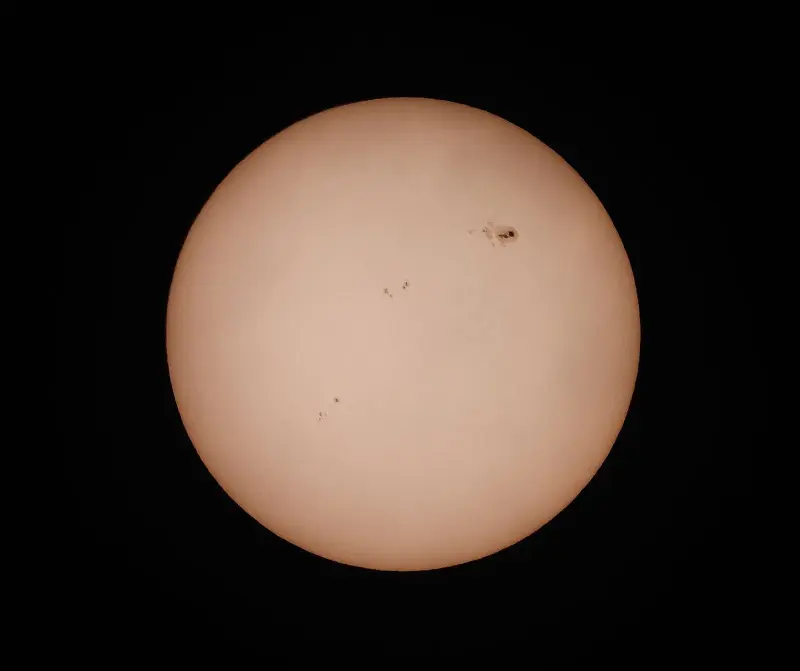
What actually leaves the Sun
The corona is the Sun’s outer atmosphere, a haze of ionised gas held together by magnetic field lines that loop out of the surface and back down again. Sometimes those loops snap. When they do, the plasma trapped inside them is flung outward as a self-contained bubble of charged particles and frozen-in magnetic field.
NASA’s heliophysics division classifies these eruptions alongside solar flares as the two most energetic phenomena the Sun produces. A flare is the flash of light. A CME is the mass. They often come together, but they are not the same thing, and only the mass matters for the grid.
A typical CME contains between one billion and ten billion tonnes of material. For scale, that is the mass of about 3,000 fully loaded oil supertankers, moving at a few percent of the speed of light.
The eight-minute warning and the days-long warning
Light from a solar eruption reaches Earth in about eight minutes and twenty seconds. That is the fastest anything from the Sun can ever get here. Instruments like NASA’s Solar Dynamics Observatory see the flash almost immediately and can tell operators on the ground that something has happened.
The plasma cloud itself is slower. A slow CME might take three or four days to cross the 150 million kilometres between the Sun and Earth. A fast one, moving at more than 2,000 kilometres per second, can arrive within a day or two.
The Carrington event of September 1859 remains one of the fastest and most powerful on record. The July 2012 CME, which narrowly missed Earth, was comparable in speed and intensity.
Even with modern monitoring, the warning time can be insufficient. It is enough time to see the storm coming. It is nowhere near enough time to disconnect a continental grid, reroute satellites, or move transformers into shielded storage.
How a billion tons of gas breaks a power line
The plasma does not touch the surface of the planet. Earth’s magnetic field deflects the vast majority of it. What gets through is the disturbance the CME creates in that field as it slams into it.
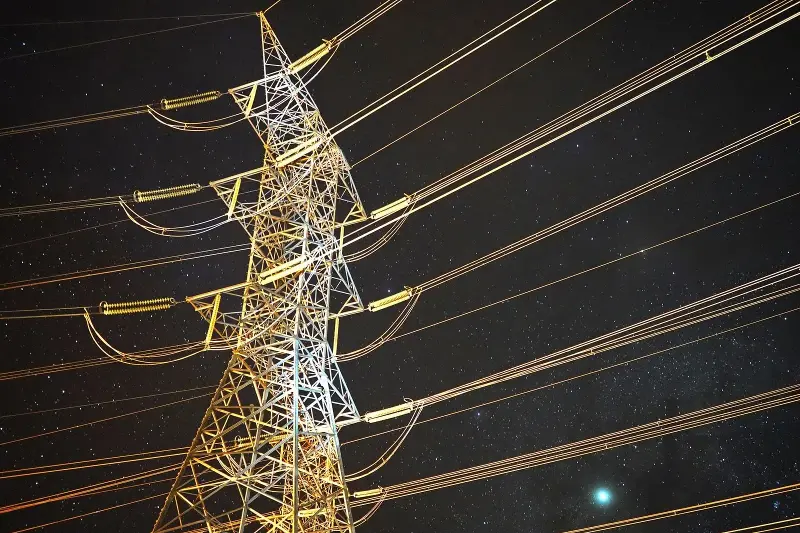
A rapidly changing magnetic field induces electric currents in any long conductor sitting inside it. This is the same principle a bicycle dynamo runs on, scaled up to continental size. Every high-voltage transmission line, every pipeline, every undersea cable becomes an unintended antenna.
The currents are called geomagnetically induced currents, or GICs. They are slow-varying, closer to direct current than the alternating current the grid is designed for. Transformers were built assuming they would never see anything like this. When GICs push through them, the iron cores saturate, the transformer overheats, and in the worst cases the windings melt.
That is what happened in Quebec in March 1989. A moderate CME, not even close to Carrington-scale, drove enough current through the province’s grid to collapse it rapidly. Millions of people lost power. The event is now the textbook case, and environmental historians studying the record of solar storms treat it as a mild preview of what a Carrington-class event would do to a modern grid.
Cannibal CMEs and recent solar activity
The Sun is currently near solar maximum, the peak of its roughly eleven-year activity cycle. Recent solar activity has included sequences where multiple X-class flares launched their own CMEs in rapid succession, each faster than the one before.
When a faster CME catches a slower one already in flight, the two merge into what forecasters call a cannibal CME — a compound storm that hits Earth harder than either component would alone. The spectacular G5 aurora storm of May 2024, visible as far south as Texas, was one such compound event.
Recent sequences have produced similar compound CMEs. Models suggest these ejections can converge on Earth almost simultaneously, and forecasters have warned of possible G5 events — the top of the severity scale. The Sun is loaded, and this is what a loaded Sun looks like on a routine week.
What the plasma does to everything above your head
Below the atmosphere, the effect is induced current in metal. Above it, the effect is direct. Satellites in low Earth orbit sit inside the CME as it passes. Their electronics get bombarded with charged particles. Their solar panels degrade faster. The upper atmosphere heats and expands, dragging on satellites and pulling them down.
Geomagnetic storms have demonstrated the ability to knock newly launched satellites out of orbit before they can raise their altitudes. The atmosphere can puff up just enough to catch them.
GPS positioning degrades during major storms because the ionosphere, which the signals pass through, becomes turbulent. High-frequency radio, used by transatlantic aviation, can black out entirely. NOAA space weather specialists have described the cascade of disruptions to satellites, GPS and power grids that even a moderate storm can trigger.
The Chandrayaan-2 orbiter around the Moon recently produced the first direct measurement of a solar superstorm inflating the Moon’s thin atmosphere, showing how far a single CME’s reach extends. The same event that dims your phone signal is also, at that moment, puffing up the exosphere of a body 384,000 kilometres away.
The 3I/ATLAS collision
CMEs are not aimed. They erupt in whatever direction the magnetic loop happened to be pointing. Most of them miss Earth entirely, spraying into empty solar system.
Sometimes they hit unexpected things. Earlier this year the Sun launched a CME directly at 3I/ATLAS, the interstellar comet passing through the inner solar system. The plasma cloud crossed the comet’s path in what SpaceWeather.com described as a rare direct collision, and astronomers are still parsing what it did to the object’s tail.
The 3I/ATLAS story is a reminder of the scale. A billion tons of plasma, launched with enough energy to be worth chasing an interstellar object across 200 million kilometres to hit it. That is the same object that can shut a Canadian province down in minutes when it happens to be pointed the other way.
The probability problem
The probability of a Carrington-class event striking Earth in any given decade remains a subject of ongoing analysis. The exact odds are debated, but the order of magnitude suggests such events are rare on human timescales but inevitable over longer periods.
The 1859 storm arrived when the most sensitive piece of infrastructure on the planet was the telegraph network. Operators reported sparks jumping from equipment. Some telegraphs kept working after being disconnected from their batteries, running purely on the induced current from the sky.
The same storm today would find a civilisation that has wired itself into the atmosphere. Ten thousand active satellites. Continental power grids linked by transformers that take considerable time to manufacture and cannot be stockpiled at scale. Submarine cables carrying essentially all intercontinental data traffic. GPS timing signals that banking, aviation and telecommunications synchronise against.
The number of satellites in orbit continues to increase. Every one of those objects sits in the path of whatever the Sun sends next. The exposure of critical infrastructure to space weather is only rising.
Why the lights stay off
The frightening part of a Carrington-scale strike is not the rapid collapse. It is the years of restoration.
Extra-high-voltage transformers, the ones that step grid voltage up and down between long-distance transmission and local distribution, are custom-built. Each unit weighs several hundred tons. Very few countries manufacture them at scale. Lead times run twelve to twenty-four months in normal conditions. If a geomagnetic storm burned out even a few hundred of them simultaneously across a continent, the replacement queue would stretch past the point where refrigeration, water treatment and fuel distribution could hold together.
This is the part that gets less coverage than the auroras. The Sun does not need to hit Earth with a genuinely rare event to cause serious damage. It only needs to hit the right transformers at the right time. And it takes the shot, on average, once every few decades.
The Sun in 2026
The current solar cycle, number 25, is running hotter than forecasters predicted at its start. Sunspot counts have exceeded early projections. X-class flares have become routine. Recent years have seen some of the most powerful flares of the current cycle, followed within months by comparable events.
Solar maximum is expected to persist through late 2026 and into 2027. During that window, the Sun will keep launching billion-ton plasma clouds at whatever happens to be in the way. Most will miss. Some will graze. One, statistically, will not.
The gap between the Sun and Earth is 150 million kilometres. Light crosses it in eight minutes. A fast CME can cross it in a matter of hours. Whatever the Sun launches today, if it is aimed correctly, will be here before tomorrow’s evening news.
The post The Sun ejects roughly a billion tons of charged plasma in a single coronal mass ejection — and it can cross 150 million kilometers to Earth in under 18 hours appeared first on Space Daily.