



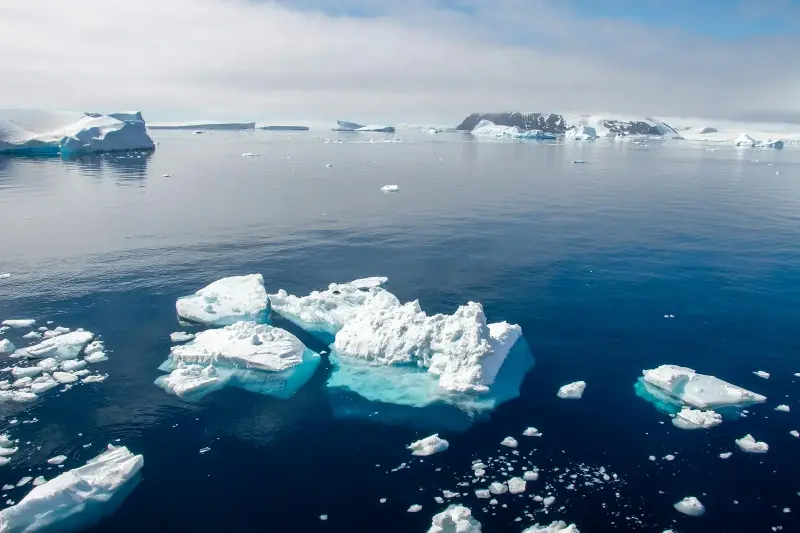
Earth appears to be collecting radioactive stardust from a stellar explosion that happened millions of years ago, and part of the evidence has been frozen in Antarctic ice for tens of thousands of years. Researchers reported that the solar system’s current passage through the Local Interstellar Cloud is likely depositing iron-60, a rare radioactive isotope produced in supernova explosions, onto our planet.
The finding addresses a question that has lingered since iron-60 first turned up in fresh Antarctic snow. Where was this material coming from, given that no nearby star has exploded recently?
The answer, researchers argue, is that the cloud itself is the carrier. It appears to have held debris from an ancient stellar death for a very long time, and the solar system is now moving through it.
Reading an interstellar fingerprint in ice
The Local Interstellar Cloud is a thin parcel of gas and dust that the solar system entered several tens of thousands of years ago. It is expected to leave the cloud in a few thousand more. Right now, the solar system is near the cloud’s edge.
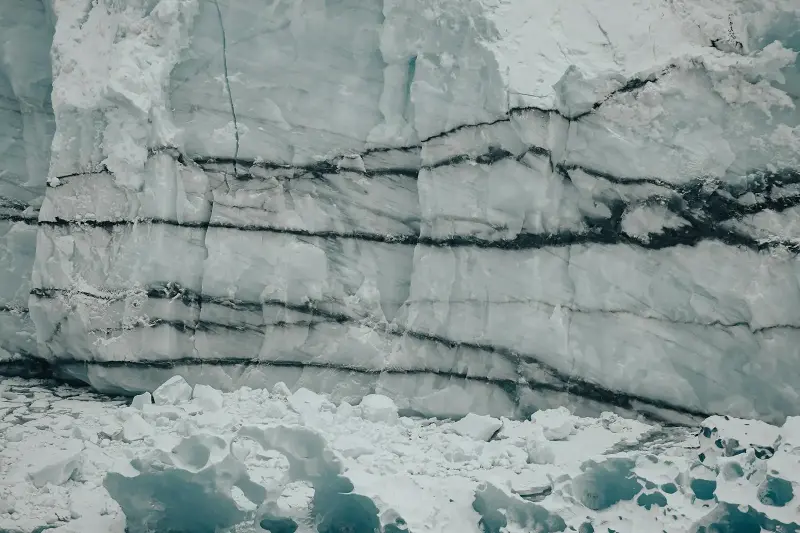
To test whether the cloud was the source of the iron-60 reaching Earth, researchers analyzed ice from roughly 40,000 to 80,000 years ago, around the suspected period when the solar system entered the cloud. The iron-60 content in those older layers was lower than in modern snow and more recent deep-sea sediment samples.
That gradient matters. If the iron-60 came only from the slow fade of a million-year-old supernova signal, the influx would not be expected to shift so clearly over a few tens of thousands of years. A signal that changes that fast points instead to structure within the cloud: denser pockets, thinner regions, and changing material as the solar system moves through it.
Researchers had hypothesized that the Local Interstellar Cloud contains iron-60 and can store it over long periods. The new ice-core analysis makes that explanation more likely, though it still leaves open questions about the cloud’s detailed structure.
A needle in 50,000 stadiums of hay
The measurement itself is the kind of feat that defines a generation of accelerator mass spectrometry. The team shipped roughly 300 kilograms of ice to Dresden, then chemically reduced it to a few hundred milligrams of dust. From that, they had to isolate single atoms of iron-60 from a sea of about 10 trillion other atoms.