



SUMMARY
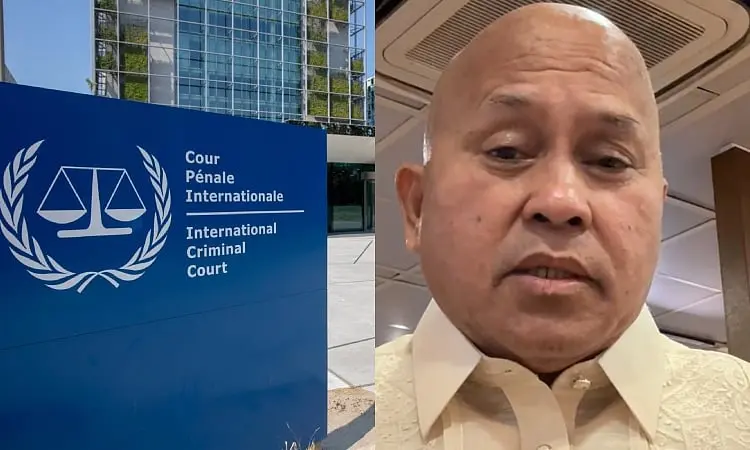
ICC counsel Victor Villagonzalo confirmed the arrest warrant for Senator Ronald “Bato” dela Rosa remains legally valid despite gunfire and a security lockdown at the Senate complex on May 13, 2026.
The Supreme Court declined to issue a temporary restraining order to stop the warrant's implementation, instead ordering government officials to comment on Dela Rosa’s petition following an unsuccessful NBI arrest attempt.
Attorney Villagonzalo stated that while the ICC retains jurisdiction over past drug war incidents, the warrant's local enforcement depends entirely on cooperation from Malacañang and the Philippine Interpol office.
A CEBUANO lawyer and counsel accredited before the International Criminal Court (ICC) said the arrest warrant issued against Sen. Ronald “Bato” dela Rosa remains legally valid, stressing that its enforcement in the Philippines ultimately depends on the cooperation of the Marcos administration.
The statement came after chaos erupted at the Senate building where dela Rosa had been holed up on Wednesday night, May 13, 2026, after gunfire rang out amid heightened security at the complex.
Supporters of Dela Rosa speculated that authorities might attempt to arrest the senator after he failed to secure a temporary restraining order (TRO) from the Supreme Court on Wednesday to stop the implementation of the ICC warrant against him. Instead, the court ordered government officials to comment on his petition.
Speaking “with caution and reservation, academically and legally,” given the sensitive and evolving nature of the issue, ICC counsel Rameses Victorius Villagonzalo said the warrant remains effective despite the Senate incident.
“The warrant is deemed valid,” he said in an interview with SunStar Cebu.
He added that what transpired on Wednesday night does not affect the standing of the ICC process against the senator, even as a series of gunshots were reportedly fired within or near the Senate premises in Pasay City, prompting security lockdowns and public concern.
ICC jurisdiction
The incident unfolded amid mounting speculation that authorities could move to enforce an ICC-related arrest against Dela Rosa, one of the key architects of former President Rodrigo Duterte’s anti-illegal drug campaign during his term as Philippine National Police chief.
Dela Rosa has repeatedly rejected the ICC’s authority over him, insisting that the tribunal no longer has jurisdiction over the Philippines after the country formally withdrew from the Rome Statute in 2019.
However, Villagonzalo pointed out that the ICC has already addressed jurisdiction-related arguments in previous rulings involving Duterte.
“As to jurisdiction, we may refer the issue as to the ICC ruling with Duterte,” he said.
The ICC earlier ruled that it retains jurisdiction over crimes allegedly committed while the Philippines was still a state party to the Rome Statute, particularly incidents that occurred before the country’s withdrawal officially took effect in March 2019.
Villagonzalo further explained that ICC warrants are generally considered enforceable internationally, although implementation depends on the cooperation of sovereign states.
“The ICC warrant of arrest is practically enforceable anywhere,” he said.
Still, he clarified that actual enforcement in the Philippines remains heavily dependent on the position of Malacañang and local law enforcement agencies.
“As to cooperation, it always depends on the head of state where the warrant is to be implemented or enforced,” Villagonzal said.
He cited ICC-related situations involving Russia and Israel as examples of how state cooperation affects enforcement.
He added that any possible implementation locally would likely involve coordination between the Philippine government and the Philippine office of the International Criminal Police Organization or Interpol.
“Enforcement of the ICC warrant depends on the cooperation of Malacañang and RP Interpol station,” he said.
The lawyer also weighed in on discussions surrounding Dela Rosa’s possible resistance to arrest should authorities again attempt to serve the warrant.
The National Bureau of Investigation (NBI) attempted but failed to serve the arrest warrant of Dela Rosa as he made a comeback on Monday, May 11, after being absent for six months.
According to Villagonzalo, refusal or resistance does not necessarily weaken the case before the ICC.
“Such a refusal does not affect the merits of the case against any respondent,” he said.
He acknowledged, however, that Dela Rosa has the right to exhaust all available legal remedies under Philippine law.
“As to legal bases, the courts will have to rule on that matter, but as to Senator Bato’s right of availing all legal remedies, that is his option,” Villagonzal added.
He also noted that the dramatic events at the Senate could trigger constitutional and legal debates from both supporters and critics of the ICC process.
“Anyone on either side can make an issue, constitutional or legal, out of that incident,” he said.
Villagonzalo stressed that beyond legal arguments, the practical limitation of ICC enforcement in the Philippines remains political cooperation from the government itself.
“The only limitation is whether or not the President or government cooperates,” he added.
The ICC investigation covers alleged crimes against humanity linked to thousands of killings tied to Duterte’s anti-drug campaign, which drew international condemnation over allegations of extrajudicial killings and police abuses.
Dela Rosa, a former police chief and one of Duterte’s closest allies, has long been associated with the implementation of the controversial campaign.
He has repeatedly maintained that the anti-drug operations were legitimate law enforcement actions and has denied allegations of systematic abuses. / CAV