


Geneva, Switzerland - The El Niño weather phenomenon gripping the planet could be off the charts, the United Nations warned Wednesday, saying countries should take urgent action to prepare for the worst.
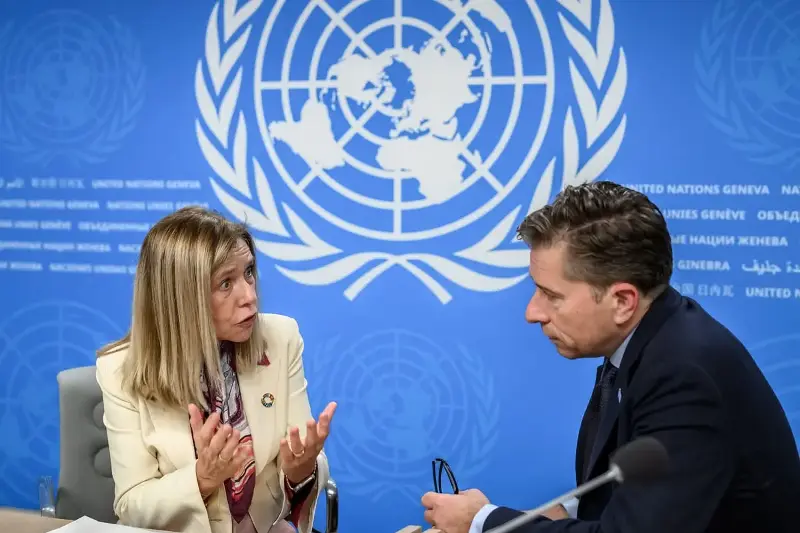
"The current El Niño event could be unprecedented in strength. Literally off the monitoring charts that we have used for the past four decades," Celeste Saulo, head of the UN's World Meteorological Organization, told a press conference in Geneva.
"El Niño will peak towards the end of 2026, but its impacts will be felt long after that."
She said the WMO's latest global seasonal climate updates forecast that sea surface temperatures in the tropical Pacific Ocean – the epicenter of El Niño – may rise to 3.8C (38.8F) above average during November to January: way out of line with typical El Niño figures.
"This will have far-reaching consequences for weather patterns across the world," said Saulo.
The naturally occurring weather phenomenon is set to bring higher temperatures to much of the planet, the UN's weather and climate agency said, with its impact compounding the effects of man-made climate change.
Saulo was joined by the UN aid chief Tom Fletcher.
"Today, we are issuing a joint call for urgent and coordinated anticipatory action... We cannot stop El Nino, but we can prevent many of its worst human consequences," she said.
Fletcher said El Niño was set to be a "wrecking ball" of extreme heat, droughts and floods in different parts of the world, triggering "massive humanitarian consequences".
"The damage will not stay in the countries in the immediate path of this El Niño," he warned. "It will create economic shocks for the global economy and drive further conflict, displacement, migration.
"I am sounding the alarm that the humanitarian system... cannot alone cope with a threat on this scale."
UN expert says El Niño will be a global "wrecking ball"
He called on countries, development banks, and international financial institutions to get money moving "before that damage is done, not afterwards".
"The choice is clear: we can wait for disaster, or we can invest in resilience. We cannot prevent El Niño, but we can be serious about the challenges ahead."
Fletcher said he had released $50 million to help 11 countries on the frontline, including Chad, El Salvador, Ethiopia, Somalia, and South Sudan.
El Niño warms surface temperatures in the central and eastern equatorial Pacific Ocean, bringing worldwide changes in winds, pressure, and rainfall patterns.
It typically takes place every two to seven years and lasts around nine to 12 months.
Conditions oscillate between El Niño and its opposite La Niña, with neutral conditions in between.