



Dear A&E,
My daughter is obsessed with expensive iced coffee drinks – every time I see her she is clutching some absurd concoction while complaining about how she never has any money and can’t afford to get on the property ladder or go on holiday. Last time we saw each other I made a comment suggesting that she hold off on the coffee for a bit to save for things she really wants and now she is furious with me. I think she is being irresponsible. How can I tell her?
– Aggrieved
Dear Aggrieved,
We understand your instinct: listening to someone you love panicking about their financial future and how they feel unable to hit any of their hoped-for markers is unsettling. So many expect to work hard and be rewarded with the traditional societal signifiers: property ownership, a holiday, whatever. That is what many of us worked towards.
We are not surprised you are nervous for your child. And in that nervousness you are looking for a reason, an excuse as to why it might be harder for her to get on top of things. You look for a comparison, a key difference in the way she is leading her life, and iced coffee is where you have landed.
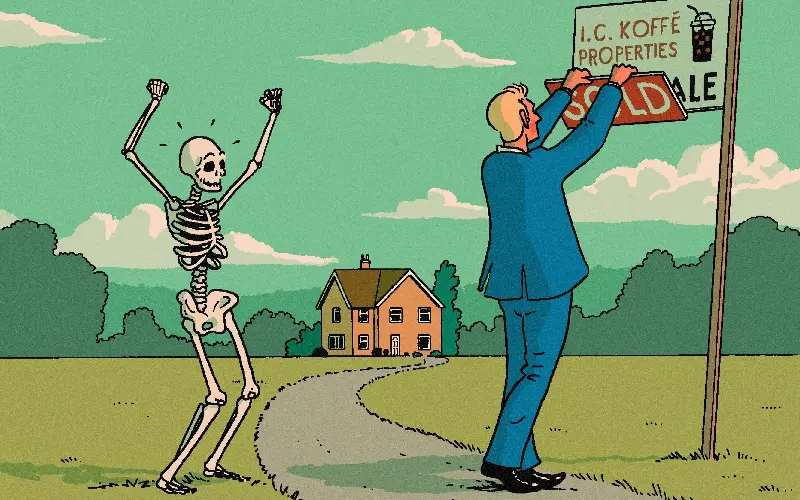
But allow us to alert you to something: IT’S NOT THE COFFEE. Don’t believe us? There are multiple studies on this. Take this open banking platform (no, we’re not sure what that is either) called Cheddar, which decided to tackle the much-repeated assumption that if Gen Z were to stop buying expensive coffee, i.e. indulging in unnecessary, frivolous expenditures, they would be able to save for a deposit.
It found (in 2024) that Gen Z could indeed get on to the property ladder if they gave up their expensive coffee habits for several hundred years. Then, the average deposit needed for a property in the UK had reached £62,664, which would have meant that for your daughter to get on the housing ladder, she would have to refrain from enjoying her café habits for more than 600 years. In London, over 1,000.
Now these numbers are extreme, provocative and do not take into account more significant money-dieting. There are lots of ways that people can lead more frugal lives, orientated towards saving, to give themselves a better chance. It is certainly true that each generation has a progressively different relationship with money, saving, mending and making do.
But today’s financial landscape is entirely different – and changing nearly every day. Gen Z is not afforded the same guarantees that we took for granted. For every person reading this thinking “I didn’t pay off my mortgage by wasting money on stupid beverages”, we hope that there are others acknowledging that the property ladder is looking more fantastical than ever.
We understand your panic and reflexive judgment because the urge at this point is to try and fix it, knowing full well that it is, at least for the moment, unfixable. So, say the coffee goes. So what? It doesn’t sound as if your daughter is maxing out credit cards, gambling or buying £2,000 handbags. She’s just allowing a little bit of joy into her life. It is probably worth noting here that we also do not understand Gen Z’s relationship with these sorts of drinks: they are part of their identity, a way of signalling to the world and themselves that they are in control. Sounds absurd? Who are we to judge?
Indeed, the problem here is (again) not the coffee, but rather that your concern has been interpreted as a judgment. Sometimes, when we are offering advice, even with the best, purest and most wonderful of intentions, the person we are talking to hears it as a criticism of the way they are running their life, and as a sign that the giver of advice thinks that they cannot handle themselves. That is deeply frightening for them, and, as a result, they react defensively.
Even though she is an adult, it is possible that your daughter just wants you to listen to her complain about how hard things are, to be a non-judgmental space where she can dump all her worries. That’s not to say that you should collude with destructive behaviour, but do you really think that an iced matcha is the difference between success and failure? Do you think that she is being irresponsible? That’s a big word.
Because, dear Aggrieved, while we understand your frustration and desire to help, if you want to stop her talking to you, if you want her to stop communicating any worries she has, and if you want her to feel monitored, then by all means continue with your advice-giving.
Probably, she could save and that would make some parts of her life easier, but we are not sure it would make the chink in a deposit that you think it would. Perhaps it’s time to bring in an old joke: “Doctor. Doctor, if I give up drinking, smoking, sex, and sugar, will I live longer?” “Not necessarily, but it will certainly feel like longer.”