



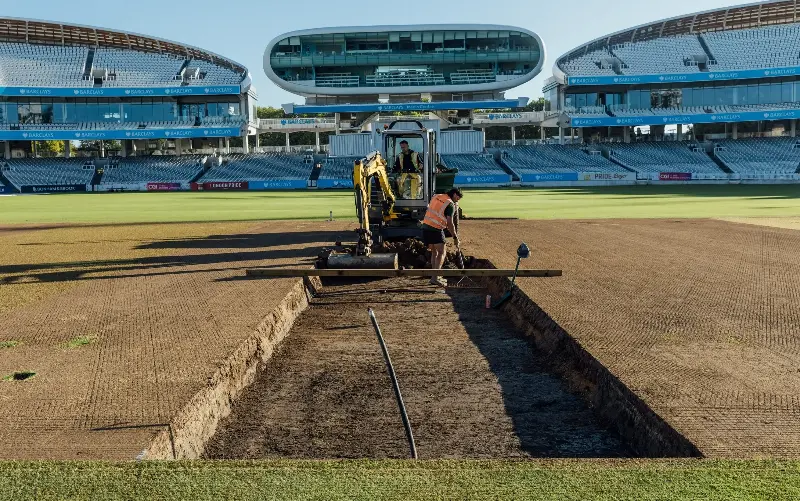
Earlier this month, for the first time since the turn of the century, there was a big hole in the middle at Lord’s. It was a little more than 22 yards long and 12 inches deep. “Pitch 9” was gone.
That pitch is one of 20 on the Lord’s square, but a crucial one, being central enough to host the very grandest matches.
It was the pitch for England’s first Test of this summer, the shoot-out with New Zealand, which is remembered for its first ball bobbling through to the wicketkeeper and the infamous “Bethell ball”, a shooter that bowled England’s No 3 on the second day. Ben Stokes, the England captain, described the pitch as “not good” for Test cricket.
As Stokes’s Rex Rooms saga dominated the discourse in the following days, Lord’s and its owner, Marylebone Cricket Club (MCC), were reeling. It received its first-ever “unsatisfactory” rating and demerit point from the International Cricket Council, a grave blow to the Home of Cricket’s standing and pride.
Pitches had been a creeping problem at Lord’s for years and were at the heart of MCC’s new strategy, published in January, but the New Zealand Test was a reckoning. Since, pitches have dominated hours of committee meetings, a steering group has been set up to manage the issue, external experts have been brought in, and a seven-point plan has been unveiled.
“This couldn’t be being taken more seriously,” says Rob Lynch, MCC’s director of cricket and operations, who is ultimately responsible for the square. “It’s being managed at the very highest level.”
For a conservative club like MCC, the action taken has been radical.
What has been done?
In 2025, I spent a day “working” with groundsman Karl McDermott and his team during England’s Test against India. That pitch was criticised for being sluggish, but the sun shone and the match reached a thrilling climax, with England winning on day five.
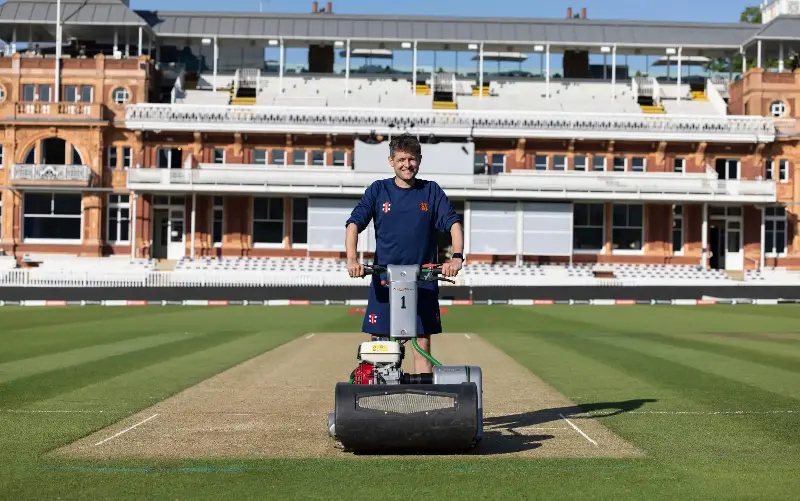
Like the 2019 World Cup final, the ends justified the means: the game was close, fans were happy, and so were the bean-counters and pitch inspectors. The undercurrent, though, was that all was not quite right. “The question for us at Lord’s is: are we ready to relay pitches? That would be the ultimate commitment to changing things,” McDermott said.
That moment was reached less than a year later. Digging up a pitch and relaying it used to be common practice, but it has not happened at Lord’s since 1999 because of English cricket’s mushrooming schedule, which includes the rise of the women’s game and the emergence of the Hundred.
When relaying a pitch, it goes out of commission for three years. Losing one of the five major match pitches, it was felt, would lose the club a major match each year for three years, a decision potentially worth £10m across that period. Doing so was a last resort.
The New Zealand Test forced everyone at Lord’s to accept that the square’s soil had deadened through overuse. “If you batter something for so long without refreshing it, it will become tired,” Lynch says.
They had to start somewhere, and their first ever “unsatisfactory” pitch seemed as good as any.
Pitch 9 had not been dug up since 1996. The relaying process took almost five days. The old soil was dug out, 12 inches deep.
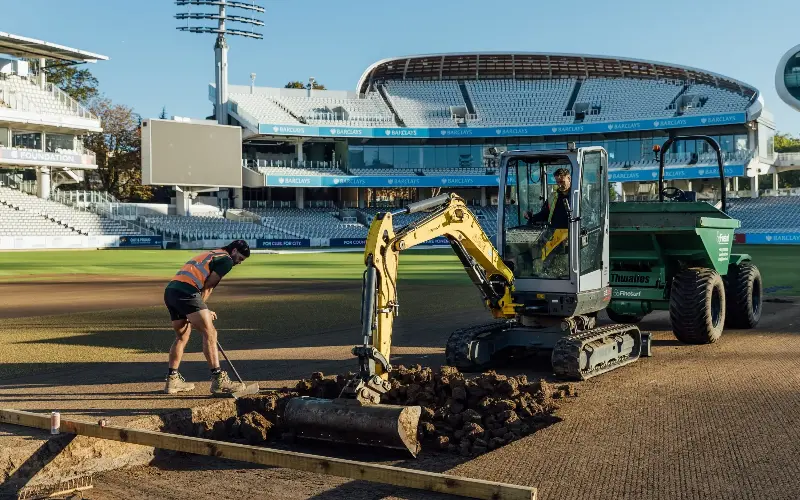
A four-inch base layer of gravel was put in, then flattened, before eight inches of soil, Ongar loam, was placed on top and rolled.
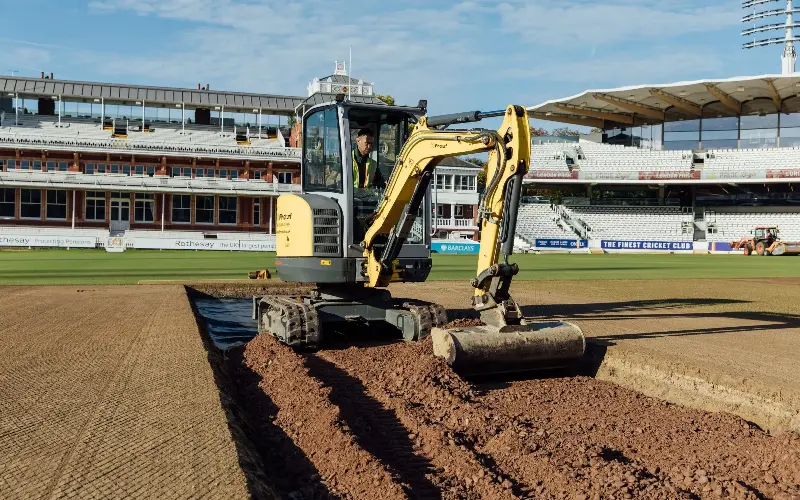
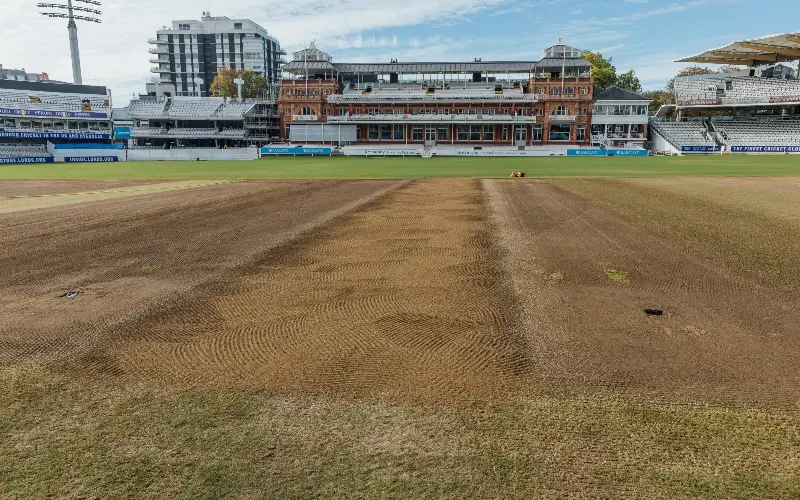
That pitch will host no cricket until 2029, when a domestic match will be played on it, with international action to follow in 2030.
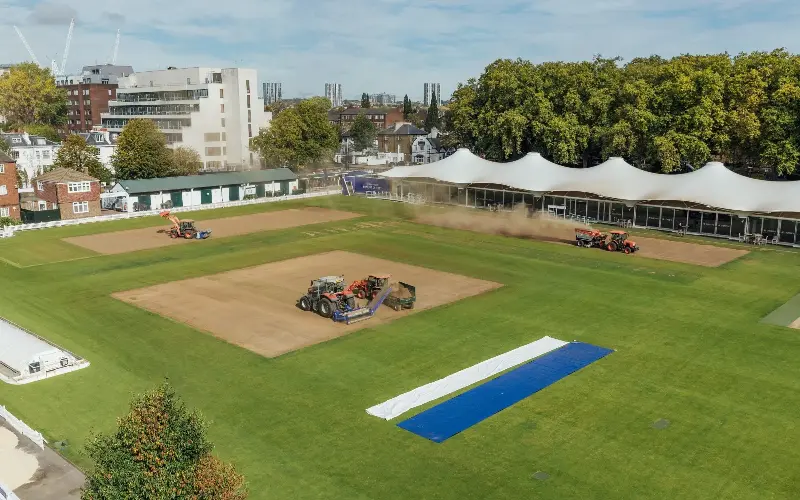
The plans are not limited to Pitch 9. In the coming weeks, three trays designed to house drop-in pitches will be installed on the Nursery Ground at Lord’s.

They have been built at a factory in Lincolnshire and are eight inches deep. The pitches will bed in on the Nursery Ground for two years, before being moved to the middle, where they can be used the following summer (2029) for domestic action.
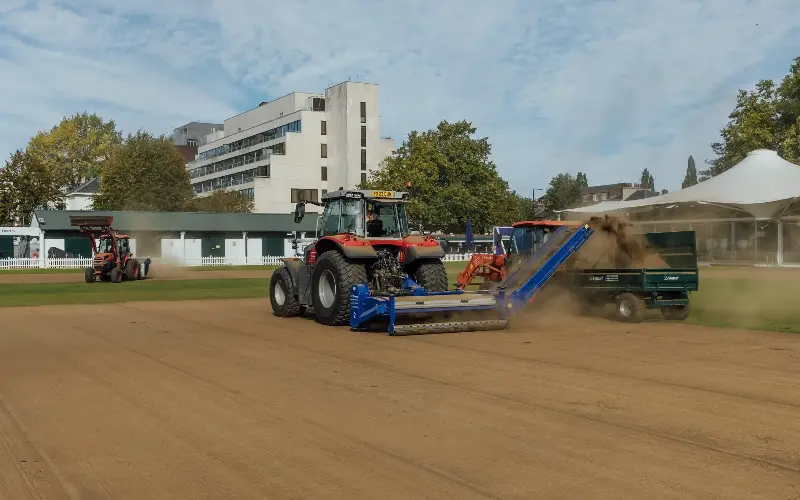
Drop-in pitches are a new concept in this country. MCC calls these ones “permanent drop-in pitches”; unlike the pitches in Australia, which are dropped in and out each summer, these would be grown elsewhere, then dropped in, remaining in place for between 10 and 15 years before being replaced. The whole process would allow a staged relaying of the tired square over the next decade.
Lynch describes cricket pitch preparation as being like a shepherd’s pie recipe, passed from generation to generation, but not the same in any two places. Compared with other sports, it remains unscientific, not especially analytical, and judgments by outsiders – media, fans and to a lesser extent players – are made on outcomes, as per that India Test and the 2019 final.
MCC has enlisted CricViz’s Freddie Wilde, who is also an analyst at London Spirit, to help improve its pitches through data, and has spoken to its tennis counterparts at Wimbledon, a very different venue, but one working at a “different level” in terms of analysis.
It has also sought feedback from players, including Joe Root, the England Test captain. Perhaps most influential is enlisting Blair Christiansen, who runs pitches at Auckland’s Eden Park but was also Fifa’s pitch manager for the World Cup final in New Jersey this summer, to support McDermott. Lynch wants to use the Nursery Ground as a “laboratory” for pitch research, given the problem is not limited to Lord’s.
There is another important change. Next summer centres on the Ashes Test on June 30. The eyes of the cricketing world will be on the first ball of that match, whether bowled by Jofra Archer or Mitchell Starc, and how it reacts to the surface. MCC officials will hope it does not do what Matt Henry’s delivery to Ben Duckett did in June, and scuttle through to the wicketkeeper.
Before the Test, McDermott and his team will have at least 18 clear days with no cricket at Lord’s to work on the Ashes pitch (it is being decided whether Pitch 10, 11 or 12 will be used).
Before the New Zealand Test, there were fewer than 10 days, and they were filled by what Lynch describes as “the perfect storm” of weather conditions, with a heatwave, then torrential rain. To mitigate that, McDermott and his team have been granted an extended period of preparation to get the pitch absolutely right for the biggest occasion in English cricket’s calendar.
Overall, they will also have less cricket to prepare for in 2027. Every summer, the Lord’s diary starts with around 80 days of cricket on the ground (for context, Australian grounds can have less than 30 days of cricket each summer). The 80-odd gets whittled down; in 2026, there were 63 days.
While the full schedule is yet to be announced, it is understood there will be no more than 56 days of cricket at Lord’s in 2027, with four of them in the Blast. MCC’s partnership with Wormsley helps alleviate some fixture pressure, all in the name of improving the pitches.
“The best pitches are when you have time on them,” McDermott told me. Next year, he will have it.
Why is MCC doing this?
The playing surface is more important to cricket than any other sport, because it dictates the balance between bat and ball. And no cricket ground is held to a higher standard than Lord’s, given its standing within the game. Lynch calls it “the most scrutinised 22 yards of grass in world sport”. The eight-foot slope that runs across Lord’s from the Grandstand to the Mound Stand makes things more complicated.
New Zealand was the straw that broke the camel’s back. Visiting players love Tests at Lord’s for the history, prestige and the tick on the bucket list. England players love that too, and the legendary lunch, but had come to grumble about the cricket the pitches served up.
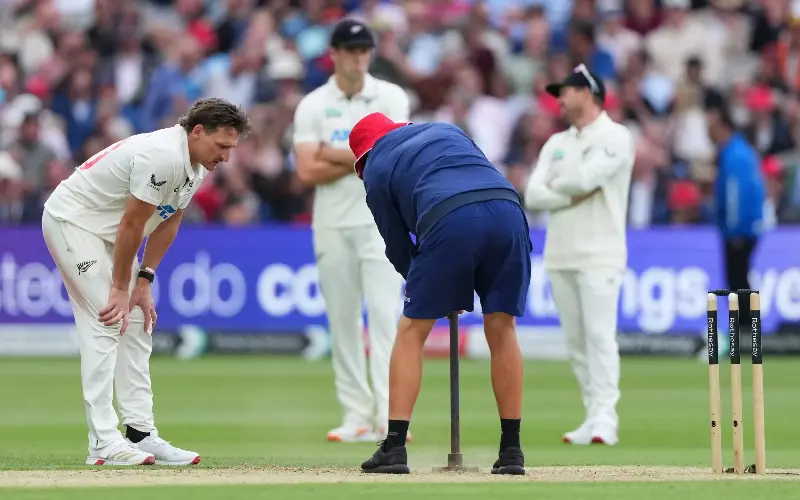
While the stereotypical complaint was that Lord’s pitches were slow and lacked bounce, Lynch believes a more accurate summary of the complaints would be that the Lord’s pitches were “unpredictable”, with players turning up not knowing what they would get from match to match. That is especially problematic for home teams, be that England, Middlesex or London Spirit, looking to build a strategy and exploit home advantage.
More than that, players crave pace and carry from English pitches. So do fans, who also want cricket that is not attritional, which it has often been in recent years at Lord’s, in all formats. Something had to give.
What is at stake?
In the weeks after the New Zealand Test, MCC received another blow, with next year’s World Test Championship (WTC) final quietly shifted across the Thames to the Oval. Lord’s had done a good job of hosting the 2025 event and felt it was the lucrative showpiece fixture’s natural home.

But Richard Thompson, the chairman of the England and Wales Cricket Board, said this month: “That allocation was down to wickets, in terms of losing the World Test Championship, it had nothing to do with anything [else]”.
Instead, Lord’s was given England’s early-summer Test against Bangladesh. This is not all bad news; it has opened up the breathing space in the schedule that allows McDermott’s team a long lead-in to the Ashes.
It has, though, led to questions about whether Lord’s should have a right to two men’s Tests per summer, as per its unique staging agreement with the ECB, which runs until 2031. There has been no indication that the ECB is considering changing it, but a few more poor pitches would only turn the volume up, especially after the backlash to there being no northern Ashes Test next summer.
In a letter to members outlining the changes last week, Mark Nicholas, MCC chairman, warned: “We should all be braced for the scheduling challenges these plans will bring in the coming years.”
This problem does not just relate to the quality of the cricket at Lord’s, or the ground’s reputation, it is financial.
MCC has managed not to lose a game from its schedule next summer, which is lighter on cricket than 2026, when it hosted three Tests (two men’s, and its first women’s), four women’s World Cup matches, a men’s ODI, and five matches in the Hundred (including the final).
Its big dates in 2027 are: Bangladesh, the Ashes, a women’s Ashes ODI, a men’s ODI, and the Hundred final. The next two summers look more challenging. In 2028, Lord’s is scheduled to host two men’s Tests, while in 2029, India are in town for Test cricket and the WTC final will be back on the table. At best, Lord’s may have to host high-profile domestic matches on less central pitches.
We will not find out overnight whether Lord’s biggest problem is fixed. That will take years. But there is no question the wake-up call has been heard and radical action is being taken.