



The first thing to say about the latest Michael Schumacher documentary out on Netflix is that it was made with the close support of the Schumacher family. So anyone expecting a warts-and-all look at the German and his maiden title campaign – particularly the controversial denouement in Adelaide that year, when “Schumi” punted Britain’s Damon Hill off the track after damaging his own car – can think again.
The clue is in the title: Schumacher ’94 – The Birth of a Legend. There is no doubt what story the producers are trying to tell here.
Nor do they deny it. At a media screening of the trailer in the Schumacher Lounge at Monza last month, Schumacher’s long-time manager, Sabine Kehm, and Janek Romero, the film’s executive producer, spoke about the project, about how they got Schumacher’s wife, Corinna involved, and how they hoped it would be received by a new generation of F1 fans.
“It’s lovely to be able to tell this story, and it’s great that it clearly still moves people and remains relevant,” said Kehm, who described 1994 as “the season in which [Schumacher] drove his way into the living rooms and hearts of the world”. “People are still inspired by the way Michael tackled things,” she added, “and they also tend to understand better just how many adversities he had to overcome in his career. At times he didn’t know how to deal with all the media attention, and you can see that in the 1994 season too.”
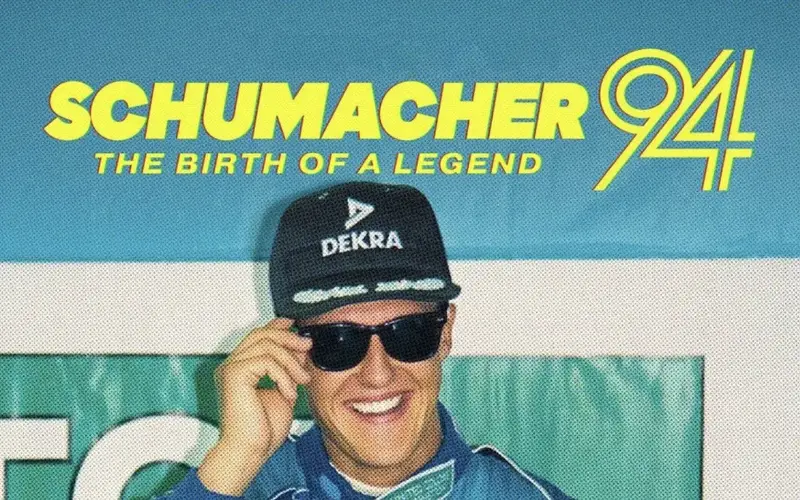
This film, then, is something of a reframing of Schumacher as the young ingénu, the provincial kid from Kerpen who had to fight his corner in a cut-throat sport where everyone was out to get him – from the established teams and drivers, to the governing body, to the British press and even the German tabloids.
So that is the first thing to remember. Hill, who initially gave Schumacher the benefit of the doubt for Adelaide but who later claimed in his 2016 autobiography Watching the Wheels that the then-Benetton driver deliberately drove into him once he realised his own car was terminally broken from hitting the wall, is not even interviewed. Although to be fair to Romero, he said he did ask the 1996 world champion more than once.
Either way, it is a soft-focus tribute to one of the sport’s most successful and controversial figures. There is no reference to his later controversies, to Schumacher’s sometimes uncompromising nature, the 1997 collision with Jacques Villeneuve in Jerez, for instance, where the German was stripped of his championship points, or his “parking” at Rascasse in 2006. If anything, the film is an attempt to explain why he had to toughen up and drive that way.
But as long as you accept that as the starting point, there is much to enjoy in Romero’s film.
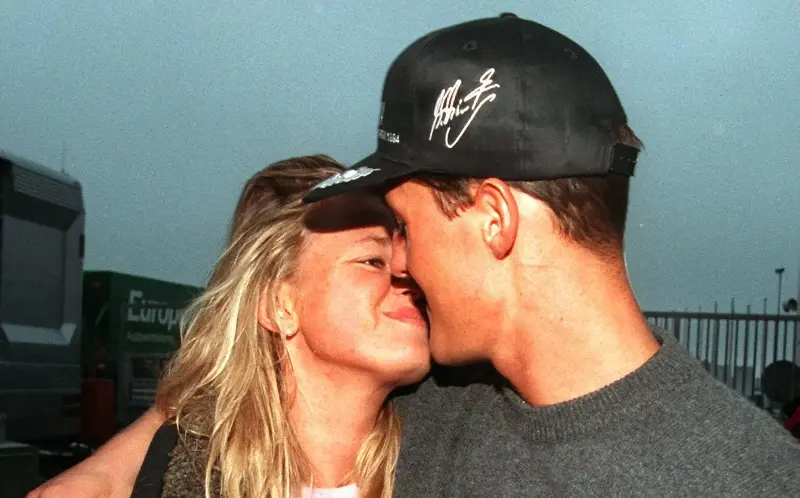
Not least the contributions of Corinna, who is undoubtedly the documentary’s trump card. Her memories, her perspective on the season, as well as the extensive use of home videos and photos, lend the film emotional heft and intimacy.
Anyone hoping for an update on Schumacher’s health and current status will be left disappointed. Where 2021’s Schumacher, the streamer’s last look at the seven-time champion’s career, took a broader view, and Corinna and their children referred to his 2013 skiing accident and the devastating brain injury he suffered (“I miss him every day, but Michael is here,” Corinna memorably said at the end of that film), this focusses very much on 1994. But you still watch through the prism of that accident, knowing how their lives have turned out, and it is no less moving for it.
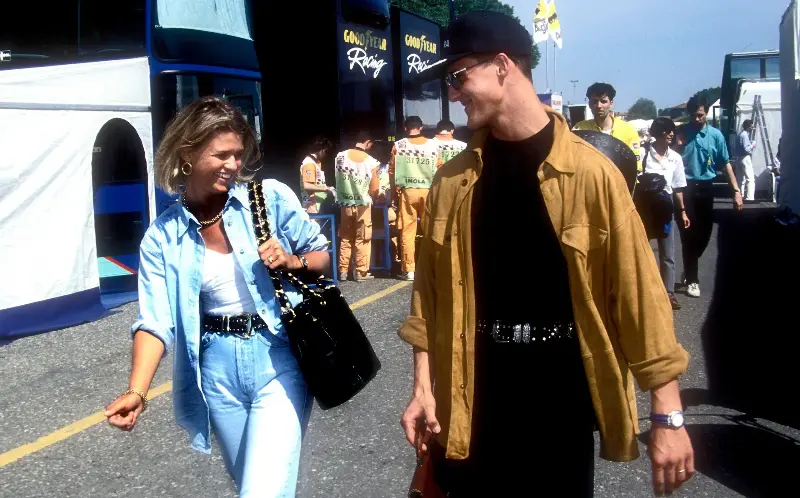
Netflix trailed their love story as a big part of the film and there was plenty of insight on that front. She tells the story of how she met her future husband – they married in 1995 – at the kart circuit in Kerpen where he kept “bumping the others off track”, how they both navigated his sudden rise to fame, how to this day she will cry when their song (Rush, Rush by Paula Abdul if you’re wondering) comes on the radio. She also discloses that a girl called Jutta kept sending Schumacher her underwear.
Christin Freitag, the director, does her best to sex things up, with a smiling Corinna asking at one point: “What do you do when you’re 21?” Another scene features some steamy mirrors as Corinna reveals they used to head back to the hotel for baths together.
Other talking heads include former Benetton team principal Flavio Briatore, former F1 chief executive Bernie Ecclestone, Schumacher’s former manager Willi Weber, former driver David Coulthard and veteran German broadcasters Kai Ebel and Heiko Wasser.

Formula One fans will enjoy spotting F1 figures still roving the paddock today such as Ross Brawn, Alan Permane, Pat Symonds, veteran photographers and journalists too. There is a montage of grid girls and short skirts played against Pulp’s Common People (which actually came out the following year) and some great footage from the German Grand Prix at Hockenheim featuring Europop and Jägermeister and interviews with diehard “Schumi” fans incandescent that their man has been banned for two races for ignoring black flags at Silverstone.
But as with the denouement in Adelaide, the film does not add a whole lot new to that or the other big controversies that year. Briatore and Symonds continue to deny the allegations of Benetton cheating with the use of banned traction control, for instance (Weber: “The traction control was sitting in the car and his name was Schumacher.”). Although we do get Max Mosley, then FIA president, addressing that rumpus in German, which is quite fun.
The most moving scenes concern Imola and the deaths of Roland Ratzenberger and Ayrton Senna. There have been so many documentaries and films made about that tragic weekend it might have felt a little samey. But again Corinna’s input is crucial as she speaks emotionally about that weekend from a personal perspective and admits she questioned whether to stay together. “If it had been anyone but Michael, I wouldn’t have gone along with it. I mean, I only have one life too. I would only have done it for someone who was absolutely worth it.”
Ultimately, the narrative they push is that Schumacher was forced to “grow up” that year. He had to become tougher, steelier, to clench his jaw when faced with a hostile press, to fight his own corner, thus sowing the seeds for his future behaviour perhaps (although this is left unsaid).
Through no fault of his own, he was painted as the bad guy, representing the grid’s upstarts and possible “cheats” Benetton, portrayed as cold-blooded because he didn’t attend Senna’s funeral. He was dragged into a “good vs evil” battle with Hill, while being repeatedly criticised by the FIA and its “dictatorial” leader Mosley, not only with the aforementioned two-race ban for ignoring black flags at Silverstone, but also the disqualification for plank wear in Belgium. Even Germany’s press coverage is criticised. Bild is given both barrels by Corinna.
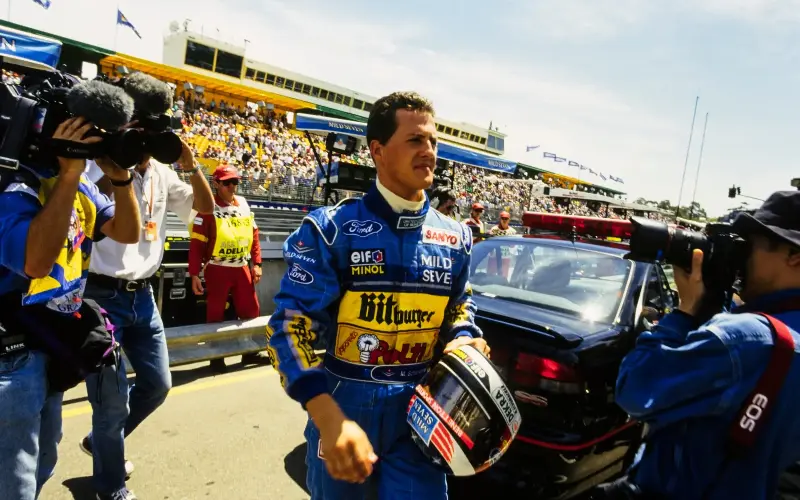
As with Schumacher’s driving in Adelaide, this is all told from his perspective, with little allowance made for the fact that he or the team might have themselves to blame for some of it. As Corinna says after he finally seals his title and Hill is left licking his wounds: “People might complain and say that this or that wasn’t right or was unfair. But Michael had 12 races, the others had 16. Need I say more? He did a great job.”
Enough water has gone under the bridge now for F1 fans to acknowledge that Schumacher was a legend. A tainted one perhaps, but a legend. This film tells only one side of that story, but it’s a good watch nonetheless.