




Our regular gardening column, Personal Growth, is not about plant names and weeding tips (although a few might come up). It is about reflections, memories and feelings.
Many people who love their garden don’t consider themselves gardeners – so what draws them so strongly to that green patch outside the back door? This week, author Sir Alexander McCall Smith tells us about his gardens in Edinburgh and Argyll.
Sir Alexander McCall Smith, 78 (b. Aug 24, 1948), is the author of the award-winning No 1 Ladies’ Detective Agency series, which has sold more than 25 million copies alone. To date, he has written over 120 books, and he divides his time between two Scottish homes – one just outside Edinburgh, the other in a remote corner of Argyll.
“Pumpkins were not invented to make pumpkin pie,” declares Sir Alexander McCall Smith. “I always say to my American friends that what they do with pumpkin is terrible. I eat them in the only way that is proper. Boiled and mashed with a bit of butter, salt and pepper. Nothing else.”
Dressed in a pinstriped blue blazer, light blue checked shirt and smart jeans, he is proudly standing next to a new vegetable patch in his garden in Merchiston, a suburb of Edinburgh. “We’ve already got tomatoes, cucumbers and grapes in the greenhouse, but this patch is for salad greens and root vegetables. No pumpkins, but it does have a row of squash.”
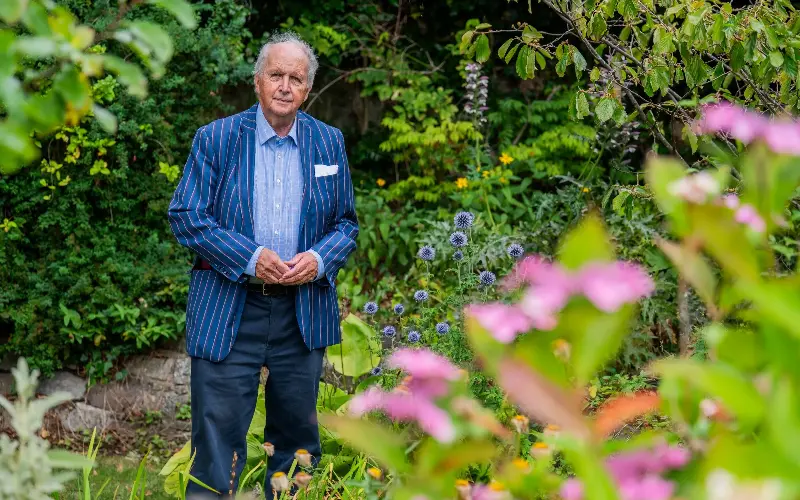
Although McCall Smith owns some fancy gardening gloves, he admits they don’t see much action in Merchiston. “Weather permitting, I love hanging about in the garden. My wife, Elizabeth, is far more involved, but our long-standing gardener Alan Brown deserves all the credit. He’s a former miner from West Lothian who retrained as a gardener. I can’t heap enough praise on him.”
Fans of McCall Smith’s award-winning series, The No 1 Ladies’ Detective Agency, will know that his last instalment was called In the Time of Five Pumpkins, so he has more than a passing interest in this large colourful fruit (technically). So, it seems likely that Alan will need to add Atlantic Giants to his next list of seed packet purchases.
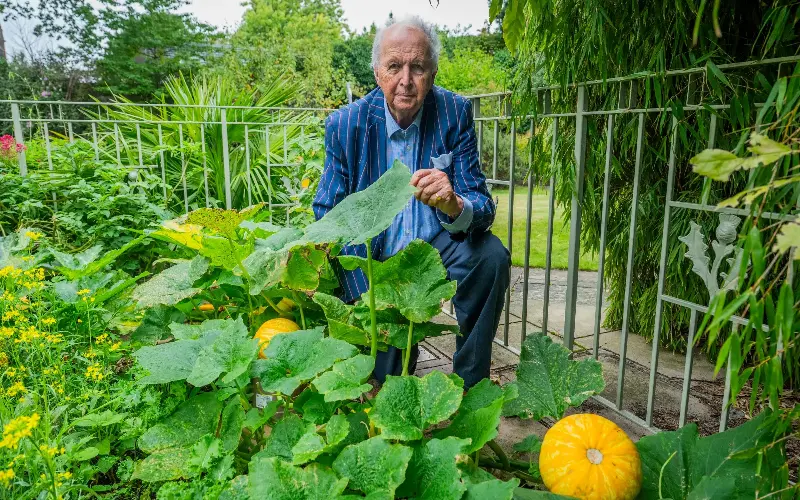
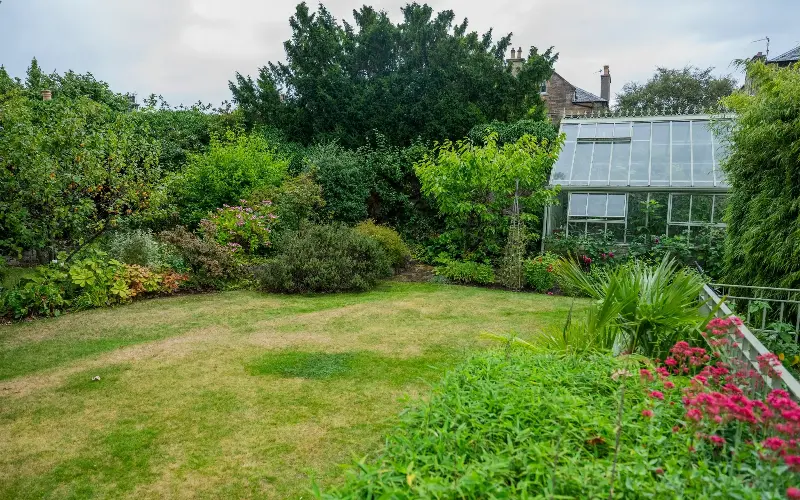
The garden covers half an acre and includes a plum, apple and espalier pear tree, all of which Elizabeth uses to make tarts, puddings, jams and sauces. “There’s also a big fig tree, but it only gets three figs, and that’s on a good year,” he laughs. “Our yellow Cape gooseberries and greengages make up for it.”
The couple have lived in this Victorian villa for 40 years. “When we first moved in, the house was divided into two flats, as often happened with large houses in the 1950s. We had the top flat, and eventually acquired the ground, allowing us to turn it back into a single house again.”
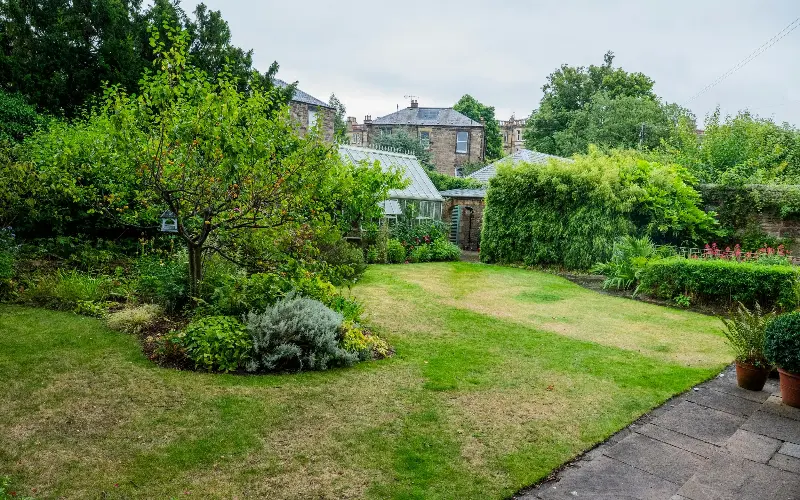
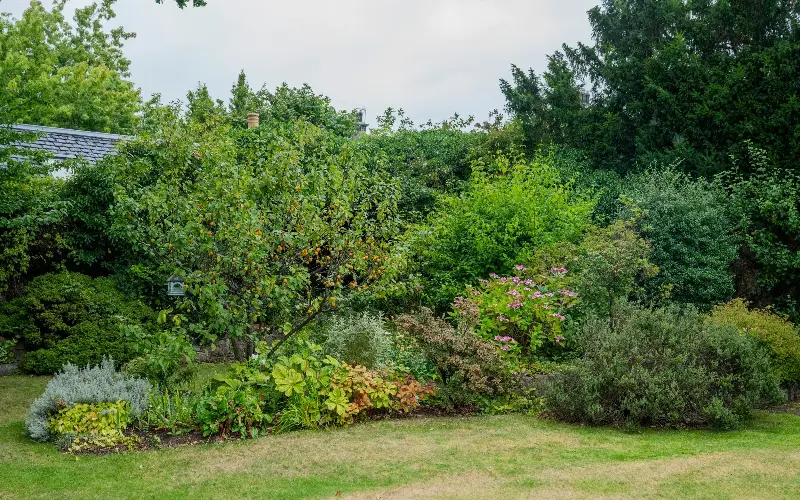
This is where he and his wife raised their two daughters, who now bring their children round to play in the morning room which is scattered with toys and spills out onto the back garden. It is surrounded by a high stone wall and is filled with magenta-coloured salvias, valerian and climbing roses in summer and chrysanthemums, anemones and hydrangeas in the autumn. Lilacs and camellias follow in spring.
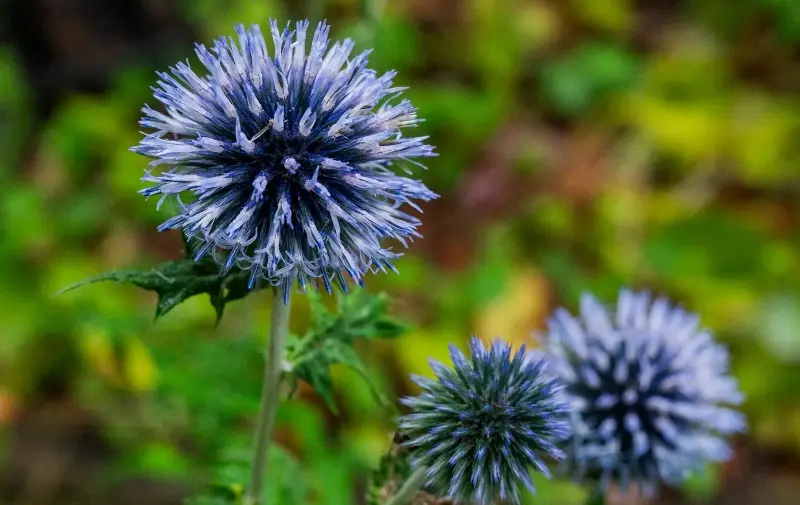
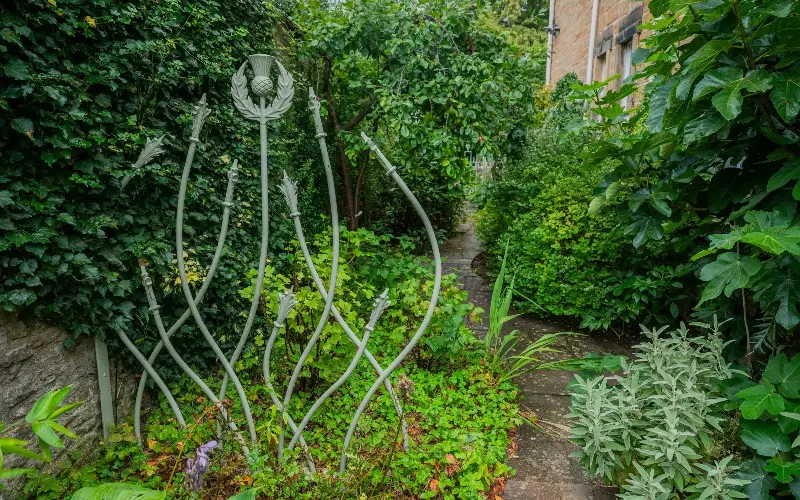
Small blue globe thistles are also dotted about, a nod to Scotland’s floral emblem but also to a man who lived in the house before they did. When they moved in, they found the cast iron fireplaces, bannisters and light fittings all had thistle motifs on them. They turned out to be the work of Thomas Bodie, one of Edinburgh’s fireplace manufacturers, who also happened to live in the upper flat before them. To keep up the tradition, the couple added thistle motifs of their own, including those on the garden’s elegant iron gates and railings.
Although he was raised in Southern Rhodesia (now Zimbabwe), McCall Smith’s father was originally from Scotland but accepted a post of public prosecutor in Bulawayo. The author moved to Edinburgh to study law at the university, which is where he met Elizabeth, who was studying medicine and is now a retired GP.
His roots, as well as his love of Scotland, run deep. And, even if his gardening gloves don’t get much city use, they do come in handy at their second home in a remote part of Argyll, in the northwestern corner of Scotland, which they bought 17 years ago.
“It’s a five-hour drive from Edinburgh, and four minutes across Loch Linnhe on the Corran ferry,” he explains. “When the wet weather comes in off the Atlantic, it crosses the Isle of Mull where it hits a range of mountains. We’re on the other side of the mountains, so it falls straight on us. We get over 90 inches of rain a year!
“From the front of the house, we look straight over to Ardnamurchan and see Ben Hiant, which is Gaelic for holy mountain. It’s so beautiful… mountains, waterfalls, wildlife, the sea. The area also has something quite rare in Western Europe,” he says excitedly. “A temperate rainforest! It’s covered in mosses and the most gorgeous lichens. We’ve even had experts to look at them.
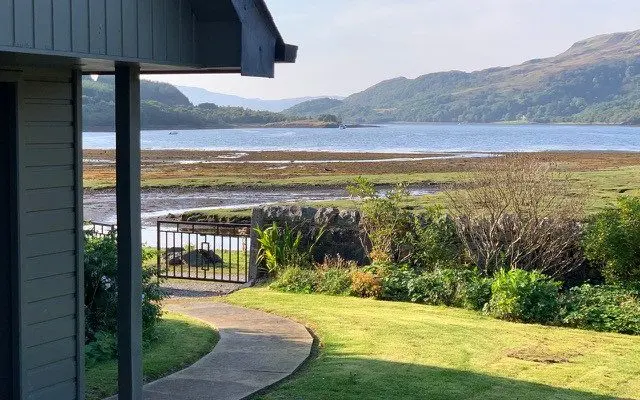
“Nearer to the house, we’ve got another veg patch, which is fenced to keep deer out, and where we grow lots of garlic. Great for sauces, soups and stews; I even munch on it at my writing desk. I think it grows well because of the seaweed we use to fertilise the soil. We collect it from the shore at the bottom of the garden.”
As it turns out, McCall Smith is quite the expert on seaweed. He’s even become a shareholder in a local seaweed farm which specialises in kelp. “It’s grown by putting seeds into ropes on the seabed, just offshore. When I go out in my boat, I pass the farm’s floats. I’d love to help with the harvest, but they just haven’t asked me yet,” he laughs.
Forget the gardening gloves, I now have visions of the impeccably suited author in a heavy-duty hooded bright blue Gill Verso drysuit!
Moss, lichens and seaweed aren’t the only green things he’s embraced. In a bid to be as environmentally sustainable as possible, the McCall Smiths have gone off grid. Almost. “Our own water supply comes from a burn, or stream, up the hill, which we collect in a reservoir that goes into a buried storage tank. It comes down to the house in a pipe which I then put it through an ultraviolet light system to destroy any organisms.
“We also have discreetly positioned solar panels which feed electricity into battery storage to give us about half our electricity – the other half comes from the grid – and our underfloor heating comes from a deep ground heat source harnessed using an electric pump that goes down 300ft into rock.”
On top of all that, they also own a tiny group of uninhabited islands in the Hebrides – the Cairns of Coll. They are home to a huge variety of birds and seals and full of white sandy beaches. McCall Smith says that, in future years, they will be held in trust for the nation.
It’s a world away from his routines in Edinburgh where he goes to his local coffee shop every morning for a semi-skimmed latte, then sits and writes for an hour. He sometimes squeezes in a trip to the gym to lift weights.
If he’s not up against another deadline, he might pop into a bookshop or a garden centre. “Who doesn’t like going to a garden centre,” he whispers. “They’re such great places. But I shouldn’t advocate them. Garden centres, book shops and Italian delis are three places you avoid if you don’t want to go broke!”
McCall Smith still writes at least a couple of books a year and at 78, has no intention of slowing down. Just before I say goodbye, I’m curious to know what books McCall Smith has beside his bed. The Seaweed Revolution? The Complete Off-Grid Survival Manual? The Official Pumpkin Spice Café Cookbook?
“I’m reading a book on silence,” he replies. “It has become a bit of a luxury these days. But I know one place I’ll always find… in the garden.”
Sir Alexander McCall Smith’s latest No 1 Ladies’ Detective Agency novel, The Big Cats Dance Party is out now, as is the new paperback version of the No 1 Ladies Detective Agency novel, In the Time of Five Pumpkins