



A humpback whale stranded for weeks in the Baltic Sea has begun an extraordinary voyage back towards the Atlantic.
Nicknamed “Timmy” by German media, the whale was first seen near the country’s Baltic coast on March 3, far from its natural habitat.
Since then, Timmy has repeatedly become stuck in shallow waters, its condition visibly deteriorating as rescuers attempted to guide it into deeper seas.
The 32ft whale had also been found trapped in fishing nets in the shallow waters of the Baltic Sea as it tried to make its way to the Atlantic.
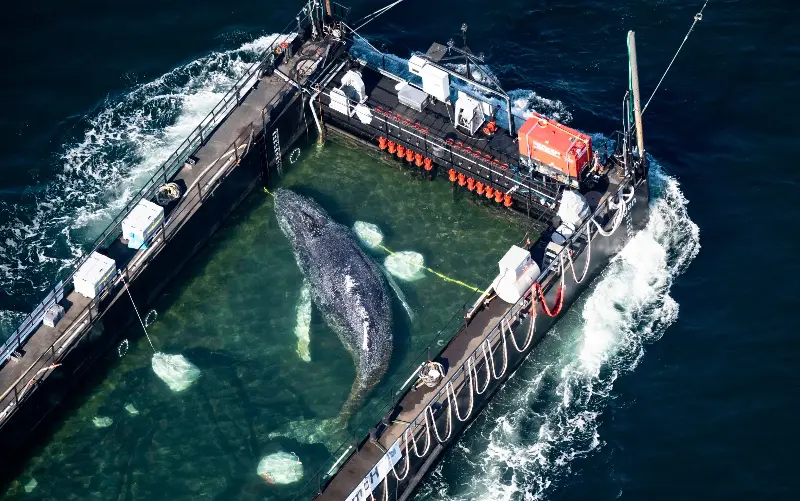
On Tuesday, teams hauled the whale onto a flooded barge using heavy-duty straps and a specially dredged channel, according to German press agency DPA.
By Wednesday, it had reached Danish waters, embarking on a slow journey around the northern tip of Denmark via the Skagerrak Strait towards the North Sea.
“Something like this has never happened before in Germany, where a lifesaving operation of this kind has been carried out,” said Till Backhaus, environment minister for the northern region of Mecklenburg-Vorpommern.
“And this was an experiment, and the experiment was a success, and that’s wonderful.”
He added that the whale appeared to be stabilising, noting it had been “resting peacefully” and had vocalised overnight, a sign that it was doing well.
However, the operation has been far from universally supported. Mr Backhaus approved the rescue attempt, which received the backing of a private initiative, despite warnings from some scientists that the stress could prove fatal.
For weeks, the whale’s plight has fuelled a wider debate over whether the intervention was justified.
Activists gathered on beaches near the northern city of Wismar, demanding its release, while others proposed increasingly elaborate plans to return it to open waters.
Earlier this month, Thilo Maack, a marine biologist at Greenpeace, said: “I believe the whale will die very soon now. And I would also like to raise the question: What is actually so bad about that?
“Yes, animals live, animals die. This animal is really, really very, very, very sick. And it has decided to seek rest.”
Some scientists believe the whale sought out shallow waters deliberately because of its own weakness, while veterinarians involved in the operation maintain it is fit for transport.
Much of the rescue has been live-streamed, allowing animal lovers to follow its progress online.
Whales are rare in the Baltic Sea, though they occasionally appear in the area in search of food such as krill, herring or sardines.