



A spacecraft is to be sent on an 80,000-year journey to the nearest star outside the Solar System in mankind’s first step to interstellar travel.
The Fermi Explorer mission, which is due to launch in 2028, will carry scientific instruments for research en route to the star Proxima Centauri, which is 4.4 light years away from Earth.
Scientists have been warned that they will never see the fruits of their experiments because it will take millennia for the craft to travel the approximately 25.8 trillion miles to its destination.
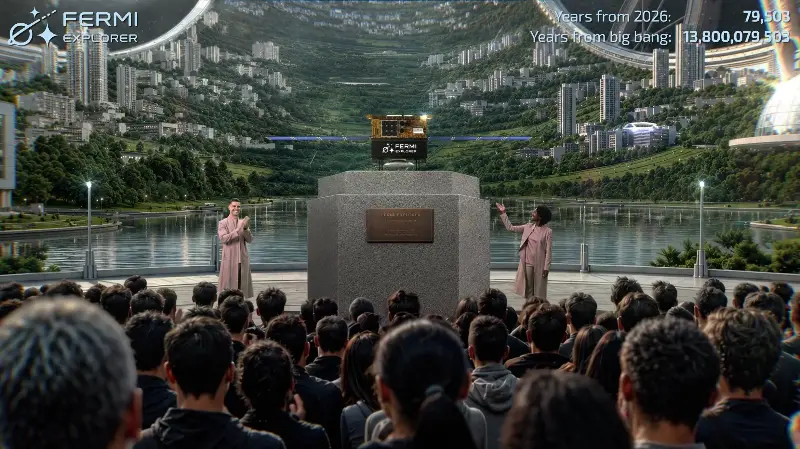
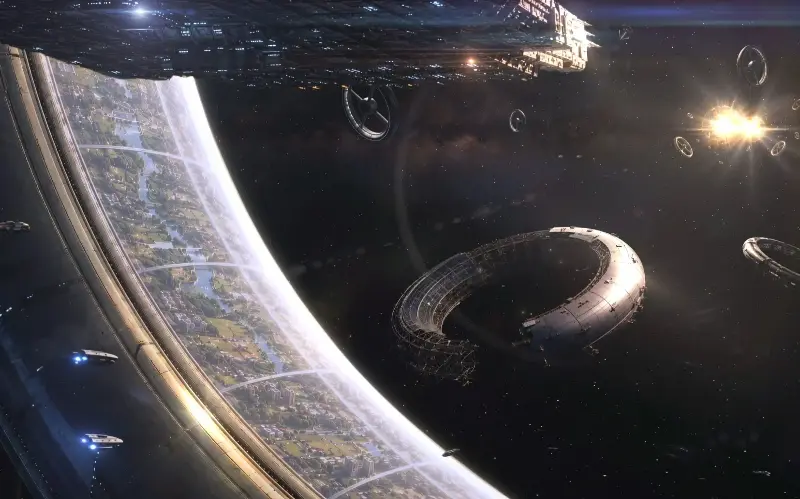
A concept video shows the craft reaching a futuristic space station floating in the Alpha Centauri system around AD 81,528, where it is greeted by future humans and celebrated as an important artefact from the dawn of spaceflight.
The mission was outlined by Kam Ghaffarian, a co-founder, at the Starmus Festival in Tenerife.
Mr Ghaffarian is also the founder of Axiom Space and Intuitive Machines, which are working with Nasa to provide the spacesuit for Artemis astronauts and robotic lunar landers for the Artemis mission.
“I believe humanity’s destination is to become interstellar,” he said.
“Our idea is in 2028 we’re going to launch the first satellite ever from Earth to Proxima Centauri. It’s going to take many thousands of years but the idea is to inspire the next generation.”
Speaking about the future of space travel, he added: “A lot of people think the destination is the Moon, and I’m here to say that the Moon is not the destination. It’s really the beginning.
“The Moon is the first place where we need to build the infrastructure to be able to have launches from the Moon to go to Mars and other planets and eventually other places.
“I believe by 2050 we will have hourly launches to a space city that sits outside our planet, where people are living and working, we have artificial gravity, and it becomes a huge factory where we can create microgravity technologies that will cure cancer. You will have people that when they say where you’re from, they say, ‘I’m from the Moon’.
“Then we have weekly launches to the surface of Mars, where again we have a Mars base where people are living and working, and maybe bi-monthly or quarterly missions beyond our solar system, especially to our closest star Proxima Centauri.”
The only man-made objects to leave our Solar System to date are Nasa’s Voyager 1 and Voyager 2 spacecraft.
The Fermi spacecraft would be first to be launched to another star system.
The spacecraft will carry a copy of the same Golden Record that flew with Voyager and which includes mathematical formulas, images of plants, animals and landscapes on Earth, spoken greetings in 55 languages, music, sounds of birdsong, footsteps, laughter and a written message from Jimmy Carter, the former US president.
It will also contain new messages from children around the world.
The Alpha Centauri star system was chosen because it is the closest, is currently moving towards Earth and is easy to locate in the night sky. Mission controllers said they hoped once the spacecraft was on its way, people could locate the star system and know that humanity had sent something there.
The Fermi Explorer is due to leave the Solar System around the year 2043 and scientists predict it will be passed by many other spacecraft on its journey as technology improves in the coming centuries.
The team said they were making an “explicit request to future humans and intelligences” not to intercept the spacecraft and let it continue on its voyage as it would be “one of the most important artefacts in the universe”.
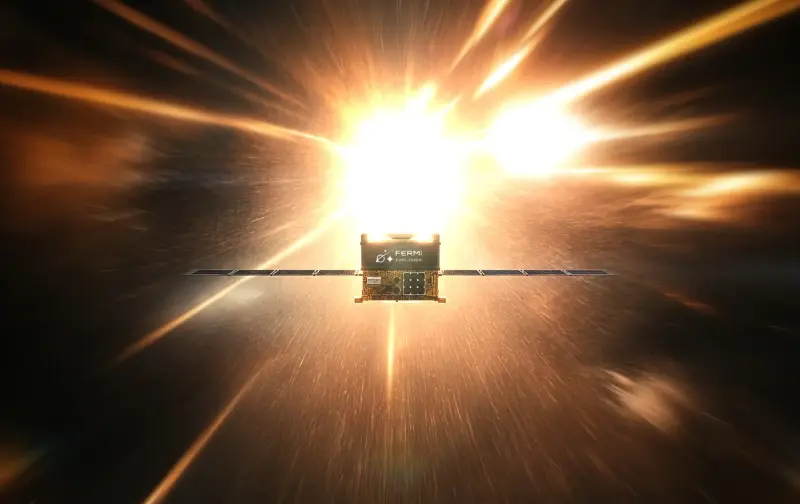
“We hope to be both the first to leave and the last to arrive at Alpha Centauri. None of us will be here when this journey ends, and that is the point,” said Philip Johnston, co-founder and president of the Fermi Explorer Mission
“It’s about taking the first achievable step and inspiring future generations to keep pushing beyond the limits we inherited.”
Alpha Centauri is moving north-west in the night sky and so the spacecraft will not be aiming for its current location, but where it will be in 79,500 years, a part of the sky in which the constellation Cancer now sits.
The mission is named after Enrico Fermi, who gave his identity to the Fermi Paradox which questions why, if there is such a high likelihood of intelligent extraterrestrial civilisations, they have never visited Earth.
The team are in the process of raising $15m to fund the mission, and have called for scientists to propose instruments and artworks to be placed on the spacecraft.
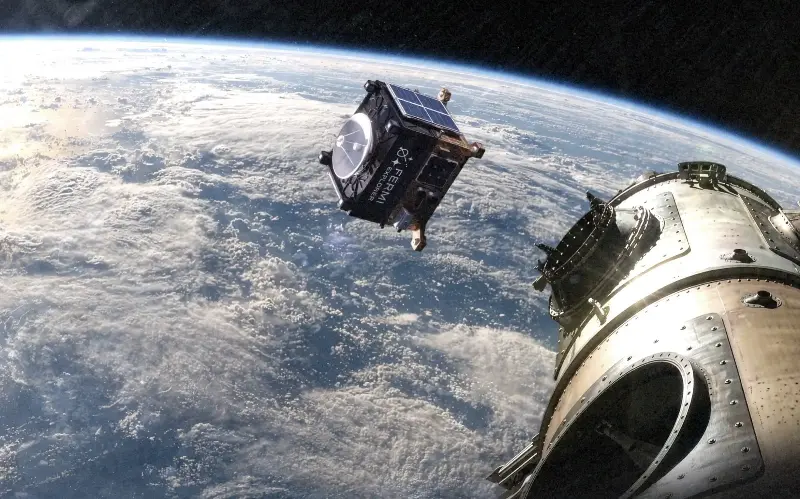
Scientific projects being considered include micrometeoroid “witness plates” with aerogel tiles to capture interstellar dust grains as well as a radioisotope clock so that whoever finds the spacecraft can date the launch by the rate of decay.
However, they were warned: “Scientists should expect that for most sensors, we will likely not get data back from these instruments for around 80,000 years.”
The mission is about to go out to open tender to major satellite manufacturers, and the team said that they were still deciding how it would be powered. It will also only carry a small antenna so it will no longer be contacted once it leaves the Solar System.
“The most inspiring part of this mission is that people do not have to wait for permission or perfect conditions,” said Garrett Jameson, a former US air force officer who leads day-to-day execution.
“We can embrace the constraints, build what is possible now, and give the next generation something meaningful to build upon.”
If the launch is a success, the team wants to send another spacecraft to the Andromeda galaxy, which they estimate would take one billion years to leave our Milky Way galaxy and reach another.
No mission to another star has been launched before, although Prof Stephen Hawking proposed, before his death, the Breakthrough Starshot mission to blast a small raft to Alpha Centauri using a light beam.