



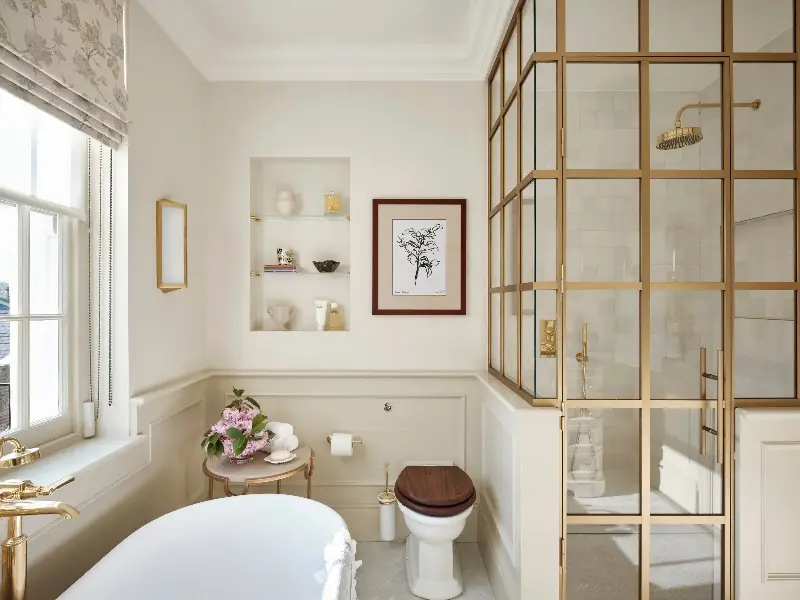
Renovating a bathroom isn’t for the faint of heart. Although the kitchen takes the top spot for the most expensive room to remodel based on sheer size alone, bathrooms are the most costly on a per-square-foot basis. Fitting intricate plumbing, specialist waterproofing and expensive fixtures into a compact footprint drives up costs before you’ve even chosen your taps or tiles, so knowing where to invest and where to cut back can make a huge difference.
In a utopian universe, we would all have unlimited budgets to invest in the very best. But while spending more on quality materials often pays dividends, not every feature deserves the same share of your budget. A slight compromise on spending can often go a long way without impacting your overall aesthetic. Whether you’re planning a new bathroom or looking for easy ways to upgrade your existing space, these are the features designers say are worth splashing out on, and those where you can save a few pennies.
Where to spend
Hardware
Faucets, towel rails and toilet roll holders all seem like minor details until you realise that, as the jewellery of a room, these unassuming features really are the secret to a luxury bathroom. In such a small space, these fittings and fixtures are especially noticeable. “They’re also what your hand goes to every morning, so items like cheap taps announce themselves immediately,” explains Tom Cox, designer and co-founder of HÁM Interiors.
“Cheap brassware also quickly loses its finish, begins to drip or suffers from stiff, unresponsive taps,” warns Marcelina Janiszewska, head of interior design at Project London. Instead, invest in the likes of premium taps, valves and fixtures. Not only do they feel luxurious to the touch, says Janiszewska, but they also promise to last. “I love opting for ‘living’ finishes like unlacquered brass, hand-brushed nickel or bronze which age beautifully.”
Joinery
When space is at a premium, every inch matters. That’s why it’s worth spending extra on bespoke joinery when renovating a bathroom. “Bathrooms are notoriously tight on space, and off-the-shelf units rarely maximise the footprint efficiently,” says Janiszewska. “A bespoke vanity allows you to design around your exact storage needs, discreetly conceal ugly pipework and introduce beautifully tactile materials.”
There’s no doubt that a custom bathroom design can increase the value of your home, but if fully bespoke joinery is out of your budget, ask your contractor to add custom trim or elegant beading to your off-the-shelf cabinets. “Top it off by sourcing a beautiful marble off-cut directly from a local stone yard to use as the worktop,” adds Janiszewska. “It gives you a completely custom, luxury finish for a fraction of the price.”
Ventilation
Skimping on ventilation is one of the most common bathroom design mistakes. While it’s not the most glamorous place to splurge, it’s one that promises a return on investment. “Get it wrong and the paint peels, the joinery swells and you’ll be redoing the whole room,” says Cox. “Nobody ever admired an extractor fan, but it’s the thing protecting everything you did spend on.”
Janiszewska says high-quality, “whisper-quiet” extractor fans are a non-negotiable in this day and age. “The best models are designed to be recessed directly into the ceiling or are paintable, allowing them to visually disappear,” she says. “Position them slightly to the side or over the shower rather than making them the first thing you see when you open the bathroom door.”
The bath
Although not all of us have one, a bath is a worthy place to spend if your budget only allows for one real indulgence. The difference between a cheap bath and an expensive one often lies in the shape and the material, says Keeley Sutcliffe at BC Designs, who always recommends a free-standing option to clients.
“A cheaper bath may look similar in a photograph, but the proportions, edge profile and internal space can be very different when you actually use it,” she says. “Spending more can give you a bath that feels deeper and more comfortable, with a more substantial finish and a shape that holds its own in the room.”
Where to save
Tiles
To save money, consider buying budget-friendly tiles for your bathroom instead of splashing out on premium ones. “There are so many good affordable metro tiles out there, and a simple one laid well will always beat a mediocre expensive one,” says Cox. However, with that in mind, it is worth spending on a professional tiler. “Beautiful grout lines, perfectly mitred edges and meticulous attention to detail will elevate the entire space,” says interior designer Rebecca Hughes.
If you have fallen in love with an expensive, hand-made tile, don’t abandon it. “Instead of tiling entire walls, use them in high-impact curated pockets like your vanity splashback or to line the inside of a shower niche,” says Janiszewska.
Engineered stone
Natural stones like marble, soapstone and onyx are all beautiful choices for a luxury spa-style bathroom, but they also come with eye-watering costs. Engineered varieties that rely on resin casting or digital printing look incredibly convincing and won’t cost the earth. “Choosing a ceramic or porcelain tile splashback instead of solid marble, for example, is a smart way to reduce costs while still achieving a timeless, high-end aesthetic,” says Hughes.
Grazzie Wilson at tile brand Ca’ Pietra notes that cheaper materials are often more practical, making them a better investment. “Ceramic tiles are lighter, easier to cut and often offer wonderful colour and glaze at a more accessible price,” she says. “Porcelain can also recreate marble or limestone with remarkable detail, giving you the character of natural material with less upkeep.”
Retaining the plumbing footprint
Instead of skimping on design elements, the single most effective way to save when planning a bathroom is by keeping the plumbing footprint the same. Shifting wet services like your toilet soil pipe, shower drains and basin water feeds will come at a huge cost. By all means, upgrade them, but keep them in their original positions. “Working within the existing plumbing layout will save thousands of pounds in structural labour, floor core-drilling and pipe re-routing,” Janiszewska says.