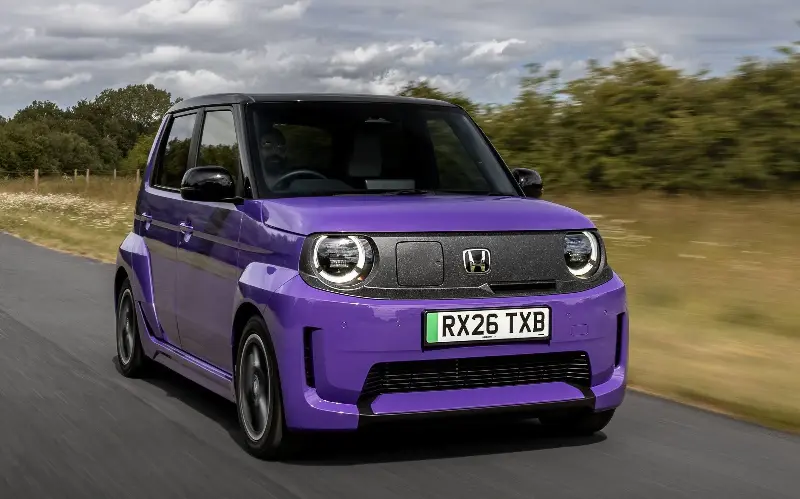
Honda’s previous small electric car, called simply the e, should have been an oven-baked hit when it was launched in 2020, due to its dinky dimensions and cute, retro-inspired styling. Yet it went out of production two and a half years ago, its short range, high price and cramped interior making it an acquired taste.
Now, Honda is again trying to carve a slice of the small-EV pie with the Super N. But has it learned any lessons after its previous foray?
Pros
- Colossal sense of fun
- Surprisingly roomy
- Extraordinary value
Cons
- Short range
- Disappointingly slow charging speeds
- Cheap interior plastics
Under the skin
It’s based on Honda’s N-One, a car sold in Japan under the much-vaunted kei regulations, which allow tax breaks and special dispensations on parking for cars that meet a certain set of diminutive dimensions. Technically, the Super N is not a kei car however; its wide wheelarches and jutting bumpers mean it exceeds the dimensions to which lesser versions of the N One so religiously adhere.
What’s more, while the engine usually develops 63bhp – the kei car limit imposed by a gentleman’s agreement between manufacturers and lawmakers – the Super N’s Boost mode raises the output to 94bhp.
The 29.6kWh battery is tiny though, so the official range is only 128 miles – which is 10 miles less than the e could achieve. On a hot day, the predicted range in my freshly charged test car was only 110 miles.
And because the Super N will only charge at 50kW, it takes about 31 minutes to add 70 miles on a fast charger, which you’ll need to do every 100 miles or so. That will restrict the Super N’s appeal for most buyers who, even if they rarely need to travel far, would appreciate the ability to do so if required.
The price is right
Then again, as a second car for urban running around, you might forgive the above when you see the Super N’s price; it’s only £18,995.
This sum includes a glut of equipment simply unheard of in any car costing this little, let alone an EV. Heated front seats, front and rear parking sensors, a rear-view camera, keyless entry and start, adaptive cruise control and even a Bose sound system – all are standard.
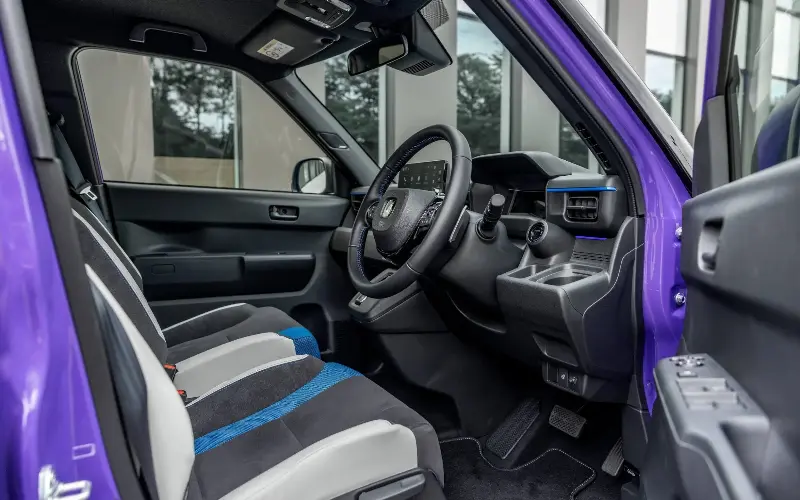
As you might expect, there are signs that costs have been cut. You know those plastic trays you slide along the metal rails at a cafeteria? The dashboard feels like it’s built from those.
There are precious few spaces for odds and ends, too; the shelf on the dash looks useful, but at the first corner your phone will slide off and fall to the floor, perhaps even sliding under the front seats and into the rear footwell.
But there are cheery blue accents and the sports seats – styled to ape those of the cult-classic Honda City Turbo II kei car of the 1980s – are comfortable, grippy and trimmed in jaunty, high-quality fabrics. Ambient lighting at night contributes to the interior not feeling too downmarket.
Even better, there are physical buttons and dials for most ancillary functions, including the climate control, along with a touchscreen that’s snappy and easy to find your way around.
Space rocket
And it’s astonishingly roomy. Granted, two large adults in the front will occasionally rub shoulders, but given its size, that’s no great surprise.
There is plenty of head room and a surprising amount of leg room; in the back, meanwhile, there’s enough leg room for a six-footer to get comfy: the raised front seats mean passengers can tuck their feet beneath.
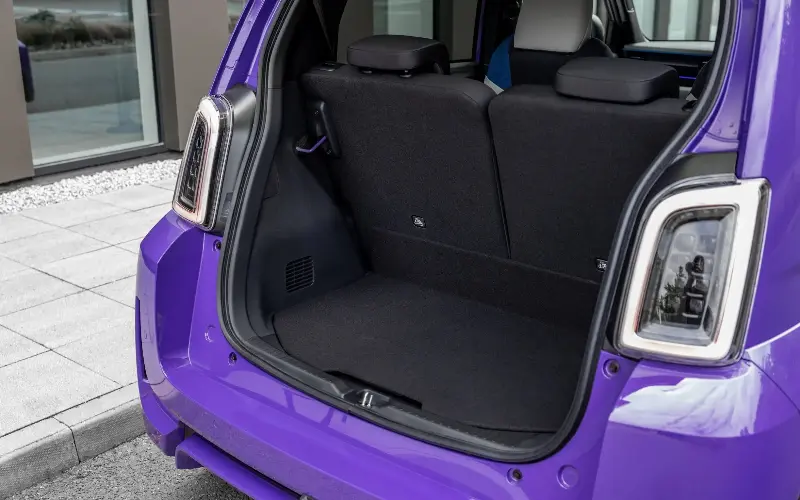
The boot accommodates only 162 litres, but its lid cuts into the rear bumper so the load lip is usefully low. What’s more, the rear seats flip up, cinema-style, in the style of the larger Jazz, to provide extra luggage space if required.
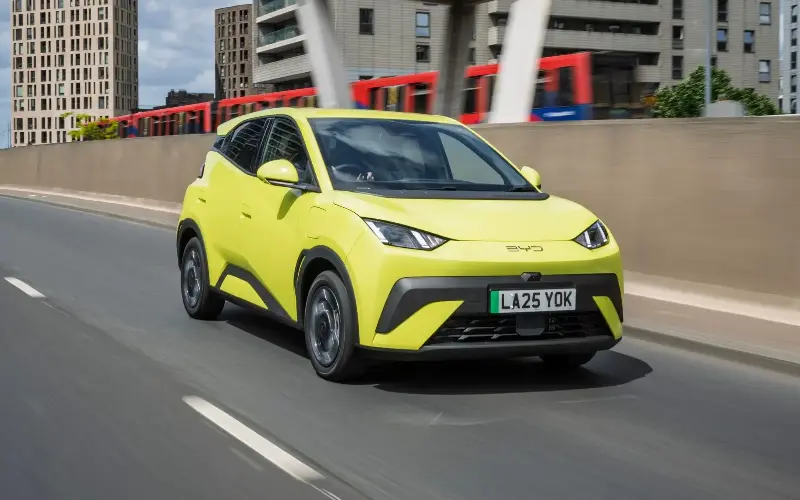
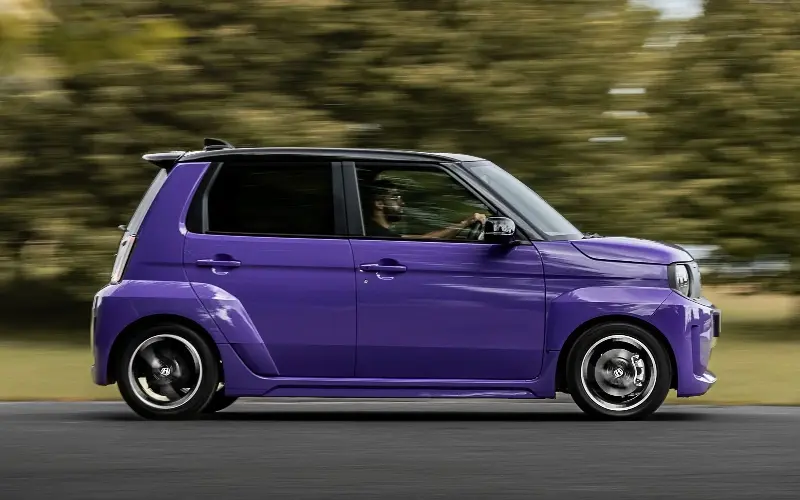
As it’s more than 10cm narrower than rivals such as the BYD Dolphin Surf or Renault Twingo, the Super N is in its element in urban driving. On the open road, meanwhile, it’s utterly endearing, like a cute, purple puppy that can’t run very fast yet but that won’t stop trying to keep up with you regardless.
Fun factor
The sense of fun is immense. Because the battery is so small, it’s light – the whole car weighs only 1,097kg – and is also positioned low, so the Super N changes direction with a deftness few other EVs can muster, dancing from corner to corner.
And due to the low centre of gravity, the suspension doesn’t have to be rock hard to keep the tall, narrow body upright. It could do a better job of handling urban potholes, although you can’t expect Rolls-Royce levels of refinement in such a small car with a very short wheelbase and tiny wheels. At higher speeds, however, the Super N evens out.
In Sport mode, paddles on the rear of the steering wheel let you flick up and down a set of synthetic gear ratios; there’s even a faux “rev limiter”, which makes itself felt if you don’t change up in time.
Due to the small battery, it runs out of puff fairly quickly unless you select the Boost mode. In addition to the extra power, this tweaks the accelerator and “gear” mapping to make them feel more aggressive.
This, combined with a slightly odd synthetic engine note, provides enough feedback to make the Super N feel convincing – just about. Stop and think about it for too long and you’ll remember how ridiculous this car is.
Yet that’s all part of its charm. Anyone who keeps a straight face while driving a Super N lacks joy in their heart.
The Telegraph verdict
As a second car – or a young driver’s first – the Super N would work well. It’s terrific value, surprisingly roomy and good fun to drive. More importantly, its sense of fun is inversely proportionate to its dimensions. Sadly, it also inherits the short range and slow charging speeds that hamstrung its predecessor.
I’d argue that perhaps it doesn’t need greater range; keep the small, relatively light battery, but add the option of faster charging. That way, occasional longer trips might only need a 10-minute top-up on the way home.
For all that, to be worthy of four stars with such flaws shows what a compelling little car Honda has cooked up. With faster charging, it could easily earn a fifth. Still not quite the perfect bake, then – but far closer than Honda came with the e.
The facts
On test: Honda Super N Advance
Body style: five-door hatchback
On sale: now
How much? £18,995 on the road (range from £18,995)
How fast? 83mph, 0-62mph in 14.5sec (10.0sec in Boost mode)
How economical? 4.2mpkWh (WLTP Combined)
Electric powertrain: AC permanent magnet synchronous motor with 29.6kWh battery, 50kW on-board charger, Type 2/CCS charging socket
Electric range: 128 miles (WLTP Combined)
Maximum power/torque: 94bhp/119lb ft
CO2 emissions: 0g/km (tailpipe), 18g/km (well-to-wheel)
VED: £10 first year, then £200
Warranty: 3 years/90,000 miles (main dealer service-activated warranty up to 8 years/100,000 miles)
Spare wheel as standard: no (not available)
The rivals
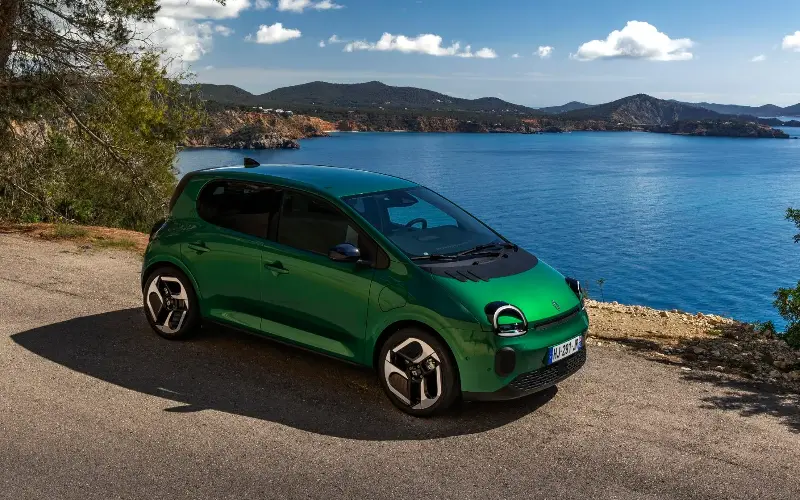
Renault Twingo E-Tech 27.5kWh
79bhp, 163 miles, £19,000 on the road (estimated)
Renault’s city EV has more range and more boot space than the Super N – and a similar sense of fun. Honda provides more equipment and a longer warranty, though.
BYD Dolphin Surf Active
88bhp, 137 miles, £18,675 on the road
BYD’s small EV is larger and therefore roomier than the Super N, but nowhere near as much fun. It’s also spoilt by an over-reliance on its hard-to-read touchscreen.