



As my Bhutan Airlines plane banks right, a mass of mountain fills the cockpit windscreen, skimming close enough to the crags for me to distinguish the blue pines from the white. Sandwiched between puffs of clouds, the valley feels like it is narrowing as we weave left, then right again, and left once more, before the runway finally comes into view.
Sitting at 7,332ft above sea level, the airstrip appears as small as a sticky plaster, dwarfed as it is by Himalayan peaks rising to more than 18,000ft. The thin, high-altitude air churns up crosswinds and forces the plane to fly faster. Viewing the proceedings from the cockpit’s jump seat, my entire body clenches as Captain Kelzang Jamtsho makes one last precipitous drop and turn, before kissing the runway at Bhutan’s Paro International Airport.
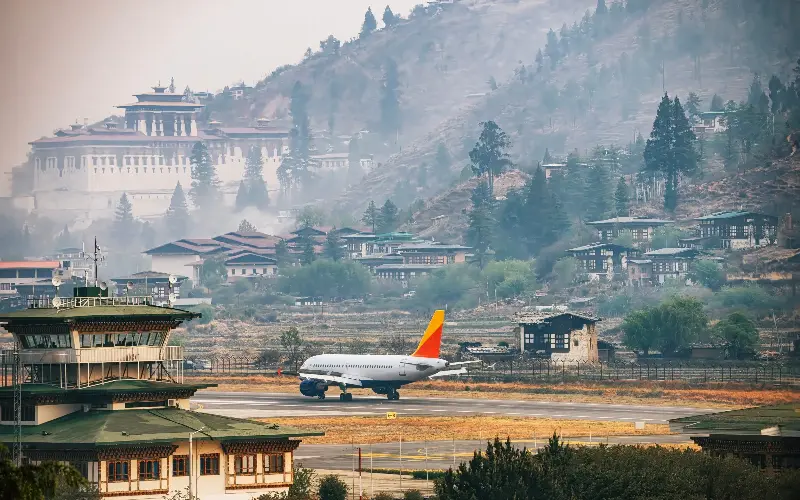
It’s the perfect landing – smooth, centred and stable – at what is to be renowned for being one of the most technically demanding airports in the world. Fewer than 50 pilots are qualified to land in these extreme conditions. During the approach, the flight crew switch to manual flying and use visual indicators, tracking mountain ridges, the winding Paro Chhu River and squat Bhutanese villages to guide their plane, in this case an Airbus A319, towards the runway.
“On today’s flight, we disconnected the autopilot at around 13,500 feet, or about 6,000 feet above the airport’s runway elevation. That’s roughly 5,000 to 6,000 feet of manual flying. You need lots of focus,” explains Captain Jamtsho, who has 22 years of experience flying single-aisle A319s, among the largest commercial jets that can fly to Paro, given the tricky conditions and its relatively short (2,265m) runway.
Our First Officer, Ugyen Lhendup, tells me he has almost reached the 3,000 flying hours required to qualify as a captain, but it will take him another 500 hours of specialised training for mountain flying before he’s fully certified to land at Paro. “It can take anywhere between seven to 10 years to qualify,” says Lhendup, who keeps a small picture of Trulku Jigthub Rinpoche, a Bhutanese Buddhist master, perched on a lotus flower next to his instrument panel.
Passenger demand at Paro International might be light – Bhutan Airlines only has two aircraft; its competitor Druk Air owns five – but private jets can also operate here with the assistance of a specialised local navigator or instructor pilot. All flights are also restricted to daylight hours and require a minimum horizontal visibility of five kilometres (3.1 miles).
Given this, it’s easy to see why flight disruption is common here, something I learn when it comes to my return journey, which is delayed for four hours due to low cloud. On the plus side, the friendly Captain Jamtsho is called in from standby due to the delay and allows me to sit in the cockpit once again for take-off.
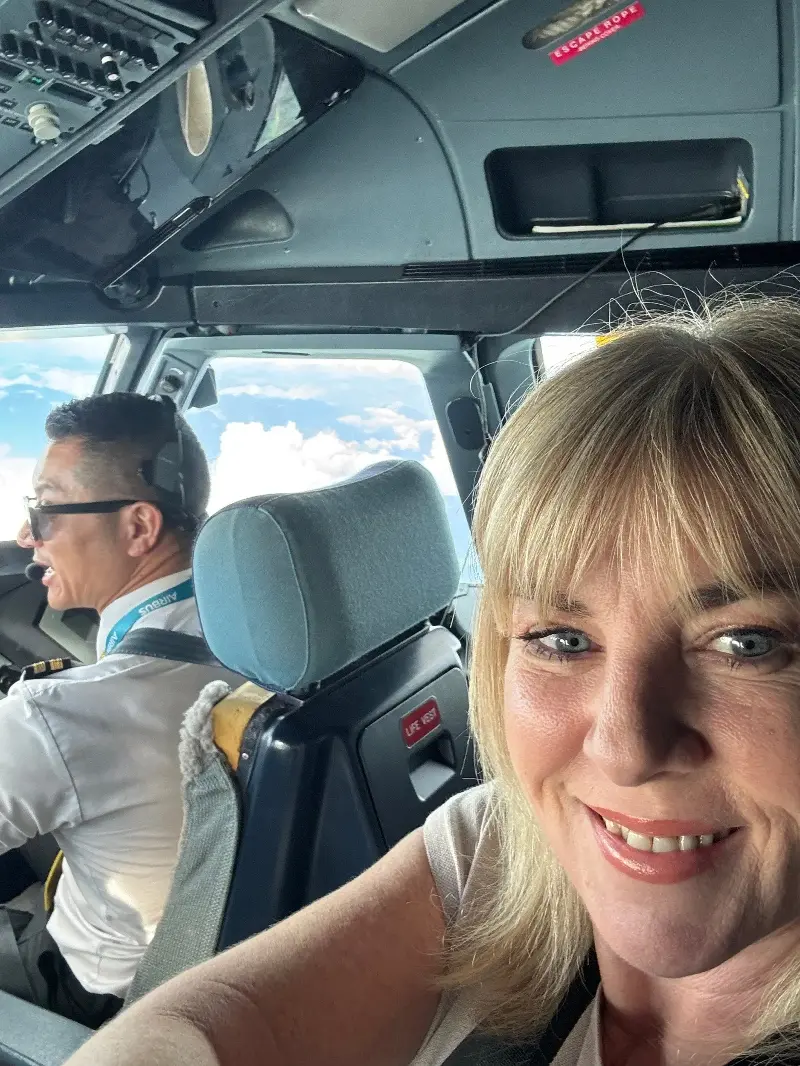
As with the landings, take-off procedures are performed entirely manually and the skills required to make a successful ascent are just as impressive. As we turn onto the runway, the pilots crane their necks to identify another aircraft in the vicinity, on the advice of air traffic control. Having been given the all-clear, they power up the plane’s CFM56-5 turbofan engines, which have been designed with the extra thrust required to lift the aircraft off the high-altitude runway and across the Himalayas.
Within minutes, we climb to 18,000ft, swooping above cliff-side villages, zigzagging mountain paths and undulating summits before breaking through the clouds and flying onto Kolkata. For me, it’s a thrilling once-in-a-lifetime experience. For Bhutan Airlines’ highly skilled pilots, it’s just another day at the office.