



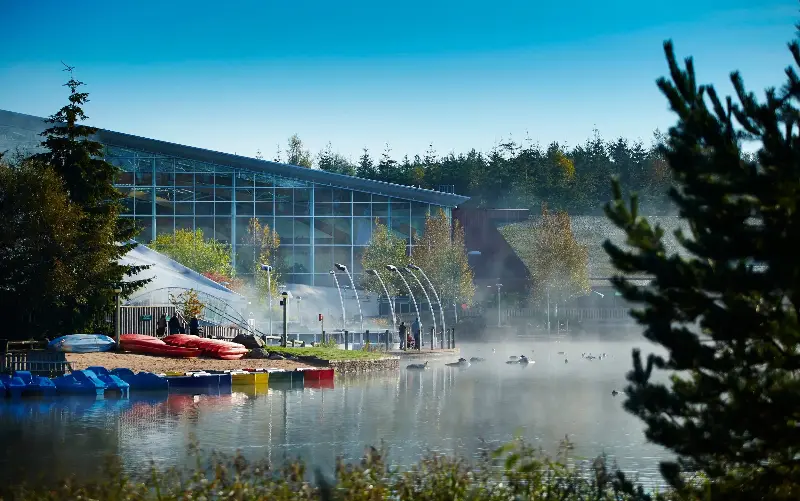
In 2025, on assignment for The Telegraph, I went to all five UK Center Parcs sites. I made some lovely memories with my children – boating across Longleat’s lake; spotting red squirrels in Whinfell Forest; and working out the mystery of Woburn’s escape rooms (with lots of help from the helpful staff).
But my overriding memory is of opening the kitchen cupboard in our Woodland Premium Lodge at Elveden Forest to find gnaw marks in sealed packets of biscuits we’d brought with us from home. I rang the customer services hotline. Somebody came over and placed a trap in the kitchen cupboard. Nobody offered to move us (though they did give us a voucher to buy new food). We cut our stay short by a night.
In response to my experience, a spokesman for Center Parcs said: “As our villages are situated in the heart of the forest, on rare occasions woodland creatures can find their way into our buildings, and we have measures in place to minimise this.” Still, after reading TripAdvisor reviews mentioning rats, I was left wondering why Elveden remains so perennially popular.
Perhaps our experience was unusual – it certainly didn’t chime with chief marketing officer Sarah Holt’s brand philosophy. “I would always, always put the time and the money in getting every detail right in that product first before the marketing,” she recently told the audience at an event for The Drum. “You can’t market your way out of a bad product.”
Happy campers
Center Parcs’ own figures suggest that most guests do leave happy: according to its latest annual report, 88 per cent of visitors were satisfied with their stays. These are people like sales strategist Daisy Ferns, who returns up to four times a year on breaks with family and friends.
“It’s my son’s favourite place on the planet,” she says. “His birthday’s right at the end of August and you say, ‘What do you want to do for your birthday?’ thinking maybe party, soft play. No, it’s Center Parcs.”
Ferns also holidays abroad, opting for all-inclusives with facilities such as water parks on site, and notes the similarities with Center Parcs. “It makes sense because everything is all there,” she says.

Originally part of the same entity, Center Parcs UK and its European counterpart became two separate companies in 2001. Occupancy at the latter now runs at around 79 per cent – far less than in the UK, despite cheaper pricing and, sometimes, better reviews.
There’s something about a break to British Center Parcs that keeps people coming back (68 per cent of visitors are repeat guests). Friends as well as Center Parcs’s adapted accommodation and practicality for multi-generation trips.of mine return every year. Some are fuelled by nostalgic memories of their own childhoods. On Facebook, fans praise the fact they don’t need to deal with the airport and can easily head home if need be,
For those nervous of the Great Outdoors, it’s a sanitised way to enjoy nature too. “I’m not an outdoors person,” admits Ferns. “In a controlled environment like Center Parcs where there’s a pub at the end of the road, yes. But you wouldn’t see me in hiking boots on a regular basis.”
All this may explain how the brand reached record 97.5 per cent occupancy according to the report, generating a revenue of more than £758m in the period between April 2025 and April 2026.
Cabin fever
But these loyal visitors may not tell the whole story. In a recent Which? holiday park survey, Center Parcs scored only 69 per cent for customer satisfaction, placing it 17th out of 21 operators. It dropped points on customer service and food and drink, but the main issue was value for money, for which it was only awarded two stars.
The operator is notorious for its dynamic pricing. During the February 2027 half-term week, for example, a seven-night stay at a two-bedroom Woodland Lodge at Sherwood Forest was available for £2,508 at the time of writing. That price fell to £1,318 the following week.
Meanwhile, those looking for a last-minute October half-term break can expect to pay £3,498 for a two-bedroom Woodland Lodge at Elveden – almost £1,000 more than a one-week all-inclusive break for a family of four at Menorca’s four-star Mar Senses Paradise Club, with Jet2 Holidays, over the same dates.
Operator Landal, which placed fourth in the Which? survey and is one of its recommended providers, has a week’s stay in a slick two-bedroom lodge at its pretty Cornwall site from £1,165 for a family of four during the same period.
“When kids were little, we would go at least every year, if not twice a year, midweek in term time. It’s really affordable then and you’ve got all of the swimming stuff. But once the oldest one hit five and we looked to go within the school holidays, say May half-term, it’s £1,400,” says Vicki Ivins-Jones, who owns Somerset glampsite Tractors & Cream. She made a decision not to implement high-season pricing there, informed by her Center Parcs experience.
Back in 1987, when the first UK Center Parcs opened at Sherwood Forest, it justified its price by pitching itself as an upmarket alternative to Butlins and Pontins – the only real competition in England at the time. Center Parcs was, in its own words, “a completely new experience from the Continent”, with a “subtropical swimming paradise” where it was always 84F, allowing an escape from the changeable British weather (no longer so much of a problem, almost 40 years later).
The brand had been operating on the Continent for two decades, offering no-nonsense, value breaks (you can still bring your own linen and towels to its cheapest mainland European lodge options). In contrast, Center Parcs’s UK “villas” were presented as the height of 1980s luxury, with underfloor heating in the loos, pristine bathrooms and fun bunk beds for kids. Its first-ever UK TV ad showed a roaring fire with a bottle of red wine casually placed in front of it.
The brand has since added 170 activities to its original 30, but the Sherwood Forest site hasn’t changed much. And though lodges across all properties are undergoing a period of refurbishment, it would be hard to describe all but the most expensive options as luxurious these days. Some I stayed in had peeling window frames and scuffed walls; one had a dirty toilet.
On job-search website Glassdoor, a former employee described her cleaning round, saying “most lodges I went into appeared to have not been kept up to standard e.g. layers of dust, dead woodlice behind the sofa, greasy extractor fan.” Meanwhile, at a couple of the outposts I visited, the subtropical domes smelt of dirty nappies and had litter on the floor – in contrast to the pristine dome and lodge I experienced at Denmark’s Center Parcs Nordburg Resort in 2026.
A Center Parcs spokesman said: “We take the quality and cleanliness of our villages extremely seriously. This is also a high priority within our Subtropical Swimming Paradise, which is cleaned throughout the day. We continue to invest significantly in our accommodation, including the introduction of our new Woodland Premium and Grand Forest Lodges, which we are currently rolling out across our villages. Our new lodges elevate the Center Parcs experience, while retaining the distinctive forest setting that we know our guests love.”
Escape to the country?
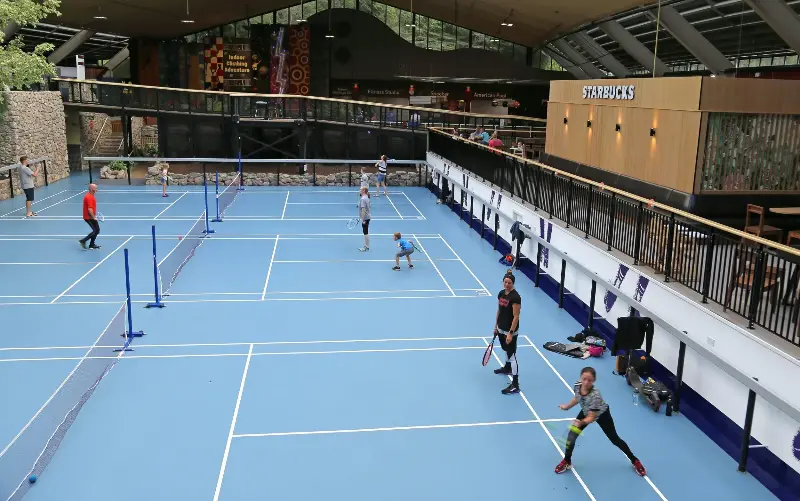
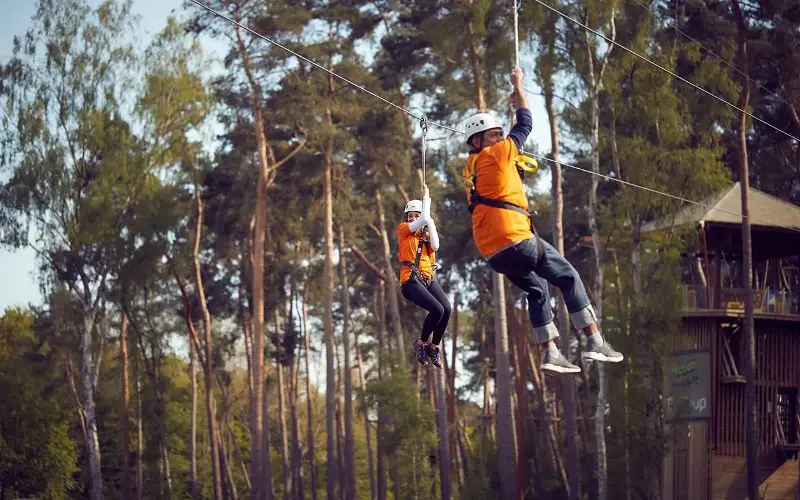
Aside from walking or biking in this forest setting, or splashing in the subtropical dome, most activities push the price up even more. An hour in Woburn’s escape room is around £70; electric boat hire at Longleat costs from £28-£40 per half-hour; and Center Parcs’ aerial adventure courses are around £42pp.
All this came as a surprise to food scientist Adrian Massey when he visited Center Parcs Sherwood Forest. “It wasn’t cheap and, given the price, I was really expecting the accommodation to be of a reasonably high standard in a nice tranquil setting, and to be able to access most of the facilities for free,” he says. “We got in, and it felt very basic.”
“Everything that you want to enjoy, you have to then pay to get that extra bit of enjoyment. It becomes more of a – not budgeting exercise – but it loses its sparkle a little bit.”
Like Daisy Ferns, Massey was struck by the sanitised nature of the offering – but not in a good way. As somebody who has subsequently climbed Ben Nevis and Snowdonia, this was not the kind of back-to-nature break he was expecting.
“I went out feeling there must be some walking trails somewhere – and maybe they were, but we couldn’t find them. We just felt like there were a lot of people in a densely populated area. Although it’s in a beautiful location, you didn’t really feel able to access it.”
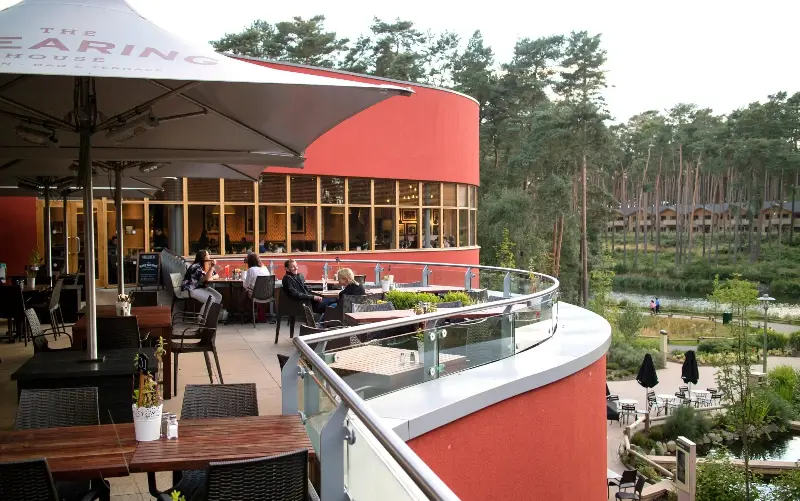
With everything on site, guests often don’t explore the wider area, raising questions about whether these resorts help the local economy. “They’re supporting big corporations: Starbucks is always there, isn’t it? Café Rouge, Bella Italia. There’s not really much support for independent businesses,” says Ivins-Jones.
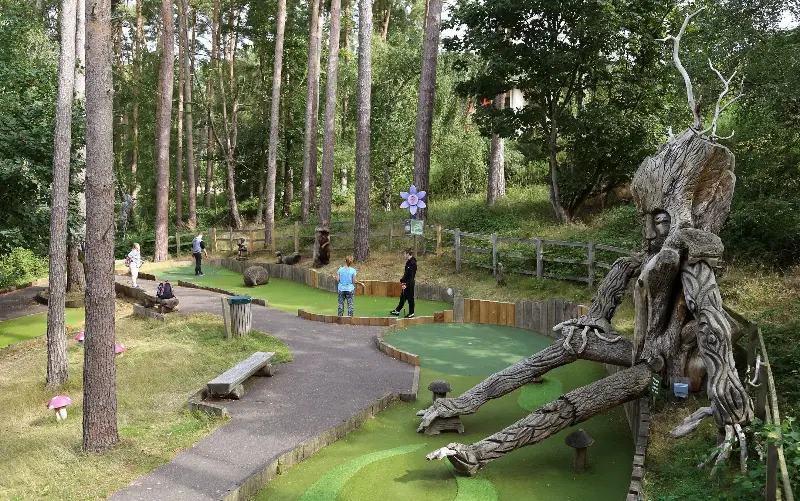
To modern holidaymakers seeking adventure, immersion and that new buzzword “authenticity”, it can appear to fall short. Center Parcs disputes this. “We’re committed to providing families with a high-quality and premium experience, providing over 170 indoor and outdoor activities. We’re also proud of the positive contribution our villages make to local communities through employment, tourism and our supply chain. For example, in the Scottish Borders, we estimate our new village will contribute an additional £75m a year to the regional economy,” said its spokesman.
Park life
Still, whether the brand can keep drawing the crowds remains to be seen. There is far more competition these days – from Landal’s sites to Wales’s Bluestone National Park Resort, which has its own “subtropical paradise” as well as a vast indoor/outdoor adventure playground, a spa and live music and entertainment.
Massey recently stayed in a Park Holidays resort. “It was really nice,” he says. “We stayed there for a week, and probably paid less than £1,000. I think maybe £700 in May. For that price it’s excellent value. You get the pool, like in Center Parcs, and the spa.”
In line with the current focus on wellness, the spa is one area that Center Parcs hopes offers a point of difference. It’s currently putting the spotlight firmly on its impressive Aqua Sana offerings, where the settings, experiences and treatments are better than most hotel versions.
“They are amazing... and ridiculously expensive,” says Ferns. “But when you break it down, if you were to pay for a spa day or a massage or whatever, it’s not actually that bad. You get a lot included.”
Many people, however, have relinquished trips to Center Parcs altogether. “The kids really want to go back,” says Ivins-Jones. “But the cost is astronomical. Even if we could afford to go, we couldn’t justify the price because you’re kind of trapped there so you have to buy stuff from their supermarket and from their restaurants. And I would so much rather support small independent holiday parks and businesses.”