



The Beeching cuts of the Sixties caused chaos across Britain, with railways and stations shuttered at short notice as we supposedly headed into the age of the car and the bus, and the closures have caused controversy for decades.
But Beeching’s axe wasn’t the permanent death knell it first seemed, because around the country railways are being reopened and new ones delivered as we fall in love once again with the train.
New lines in rural areas aren’t just for local commuters either. They help visitors see the best of Britain too. Here are 10 new or proposed lines and routes that will make touring Britain that little bit easier.
1. Norfolk Orbital
Saying a-ha to a new circular route
Melton Constable, like so many other small English towns, was robbed of its very reason for existence after the Beeching cuts. Formerly a junction and servicing centre, overnight it lost its entire industry.
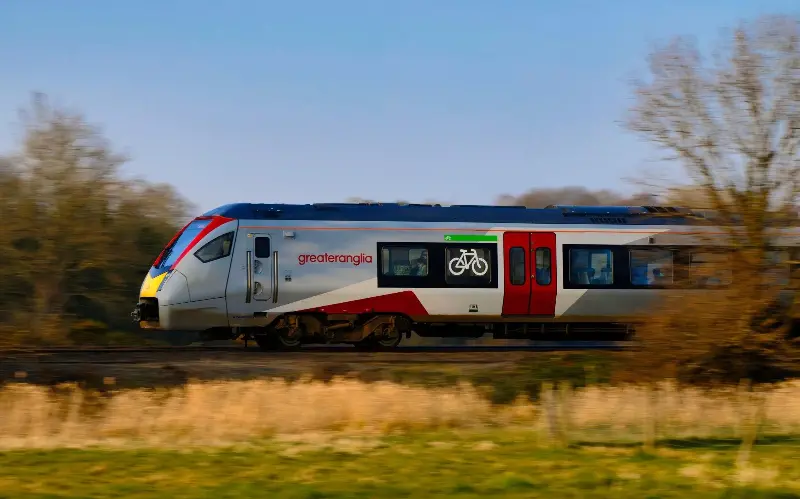
But the railway tracks could be back. The ambition in Norfolk is to connect the existing Mid Norfolk and North Norfolk heritage lines with a new route through Fakenham and Melton. These would funnel into Norwich through the Bittern and Breckland Greater Anglia lines. And then, like Alan Partridge, you could catch the train to London (“stopping at Disappointment, Rejection, Backstabbing Central and Shattered Dreams Parkway”).
2. Northumberland Line
For Saltburn-style excess
John Vanbrugh’s 1718 Seaton Delaval Hall is one of the National Trust’s hidden gems, with a story straight out of the film Saltburn: the hard-partying Delavals got up to all sorts of mischief. The house is now easy to visit since Seaton Delaval station opened on the new Northumberland Line from Newcastle to Ashington at the end of 2024. The line had all its stations closed and was mainly used for coal traffic after 1964, but has been re-opened. The final station at Bedlington opened in March this year, completing the line.
3. Helston Railway
The Glenfinnan of Cornwall
In May 2026, Helston Railway bought the Cober Valley Viaduct with the stated intention of restoring train services to the most southerly town on the British mainland, Helston. The acquisition should eventually help tourists summering in Cornwall to reach the Lizard, and one day a connection to the Cornish Mainline could allow through trains to Helston from the network.
The branch was a 1964 Beeching victim and volunteers have been hard at work since reopening in 2011 and restoring service from Prospidnick to Truthall. The 100ft-high viaduct, from 1886, is sometimes called “Cornwall’s Glenfinnan” after the curved Scottish viaduct the “Hogwarts Express” famously careers along.
4. Camp Hill Line
Manna for Tolkien fans
The three Camp Hill Line stations of Moseley, Kings Heath and Pineapple Road opened on April 7, ending 85 years of abandonment. These stations were closed well before Beeching, during the Second World War. Freight and through trains used the line but none stopped, until now.
The new stations open up the area for fans of JRR Tolkien. He lived in nine homes in Birmingham, including on Moseley’s Alcester Road and at Westfield Road in Kings Heath. But the most significant address was 264 Wake Green Road, from which the young Tolkien explored Moseley Bog and Sarehole Mill, both critical to inspiring his fictional worlds.
5. East-West Rail
Varsity variety
At one stage Oxford and Cambridge were linked by an air route, and this was briefly resuscitated in 2006. But of course rail makes much more sense, and when the full East-West Rail is finally complete this will again become possible. The Milton Keynes to Oxford section is complete, but at present no trains are running. When they start up, the pretty Bucks village of Winslow will be a stop, regaining its connection to the network. The dubious delights of Bicester Village will no doubt be on the radars of foreign visitors too.
6. Stirling Line
New route to Scotland
Lumo’s new service from Euston to Scotland began on May 25 and connects places that have never had a service to London, such as Greenfaulds. Next door is Cumbernauld, which will need no introduction for fans of the film Gregory’s Girl, which showcases its space-age Seventies architecture, which has been attracting a younger generation of architectural Instagrammers. Whifflet also gets served; the Summerlee Museum of Scottish Industrial life there is a noted living museum with working trams. Grand Central has also applied to run trains from Newcastle to Brighton and from Grimsby to London along existing lines.
7. The Waterside Line
Howard’s Way country
Southampton Water, the Hamble and the Solent were the setting for the BBC’s smash-hit “yuppie soap” Howard’s Way, featuring big phones, big shoulder pads and bigger egos. But trains stopped well before the Eighties, in 1966. Oil trains to Fawley Refinery continued for a time and freight too. But the ambition is to bring passenger trains back to Hythe and Marchwood. The Office of Road and Rail rejected an application to run trains in May 2026, but with a wealthy population and a growing Southampton it seems inconceivable that this line won’t reopen at some point.
8. West Somerset Railway
London to Minehead?
As with the Severn Valley Railway (SVR) to Bewdley, the West Somerset Railway (WSR) looks like it could one day host mainline trains and connect communities along the route with destinations such as Taunton and Bristol. Like the SVR, the WSR is a very long and well-staffed heritage line with a long history (50 years, in fact, and it was one of Britain’s first heritage lines following its Beeching closure). Running to Minehead and Dunster, you don’t need me to tell you that this is a beautiful part of the world with numerous castles and beaches, and Exmoor National Park next door.
9. Portishead to Bristol
Severn-side revival
It’s obvious who should play a track onboard the first new Great Western Railway (GWR) train that runs from Portishead to Bristol: the band Portishead, based in Bristol, but whose name has spread the name of the Severn-side resort around the world. Portishead’s Lido has also been restored recently. Its marina and lighthouse are further attractions that will be within reach when the line to Bristol Temple Meads opens in 2028. The route will also include a stop in the attractive village of Pill and a revelatory journey along the Avon, right underneath the Clifton Suspension Bridge.
10. HS2
Britain’s biggest railway project
Cutting through the High Speed 2 (HS2) controversy for a minute, it’s worth noting a couple of things. When it does finally open, Birmingham’s Curzon Street Station will be rescued from its wilderness years in a Royal Mail car park. The listed 1838 building was the first terminus of the London to Birmingham line and will become a heritage centre connected to the brand new station.
And let’s look at the journey times to Birmingham International from Euston. If it’s 42 minutes, that would be faster than the train journey to Luton Airport Parkway, Stansted Airport, Southend Airport and even the Piccadilly Line from, say, Hyde Park Corner to Heathrow. Which means suddenly Birmingham Airport becomes a viable option for London globetrotters.