



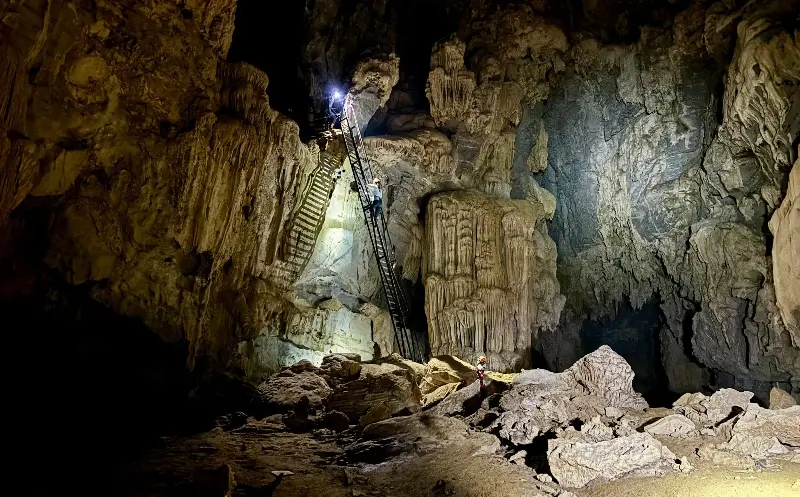
As I turned my head, the torch on my helmet captured gigantic golden jellyfish piled together into 50ft-high chandeliers. A few paces forward, the spotlight fell on glittering white avalanches stopped mid-flow. Around a ragged corner, there were satiny ruffles big enough to hide in, and pearly turrets that looked like they once topped the Sagrada Familia. Behind us, darkness closed in, leaving the alien landscape eerily invisible once more.
These scenes aren’t from a sci-fi film. I was deep in the belly of Hung Ton, in the cave-dense Quảng Bình Province, within the untouched wilds of central Vietnam.
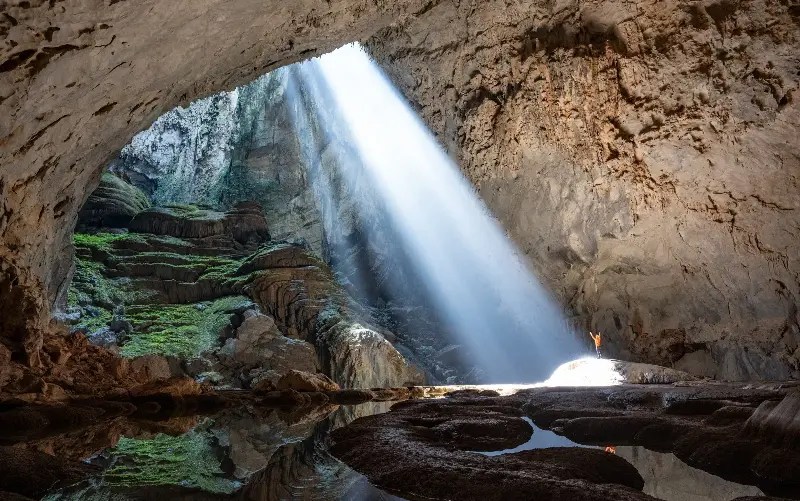
More than 500 hollows riddle this part of the country, including the world’s largest natural cave, Son Doong, a space so enormous that you could fly a 747 through its corridors and comfortably fit St Paul’s Cathedral inside the tallest chamber.
At 5.6 miles long, Son Doong has evolved its own rainforest and weather system, with coconut palms and wild fig trees soaring through two collapsed dolines (ceiling areas), with the canopies wrapped in localised mist caused by the temperature differential between the cool cavern and the warm outside air.
Even the locals didn’t know about the geological superstructure in their midst until 2009, when the British Cave Research Association successfully located an entrance with the help of a local logger, Hô Khánh, who had stumbled across the cavern during a rainstorm nearly 20 years before.
An instant national treasure, the cave was immediately folded into the Unesco-protected Phong Nha-Ke Bang park and declared a conservation zone, a rare move for Vietnam, which has a penchant for planting cable cars and concreting over places of natural beauty (see Sapa and Phu Quoc).
A single operator, British-led Oxalis Adventures, was tasked with managing expeditions, which involved a gruelling six-day Bear Grylls-worthy trek, with visitor numbers capped at just 1,000 places a year.
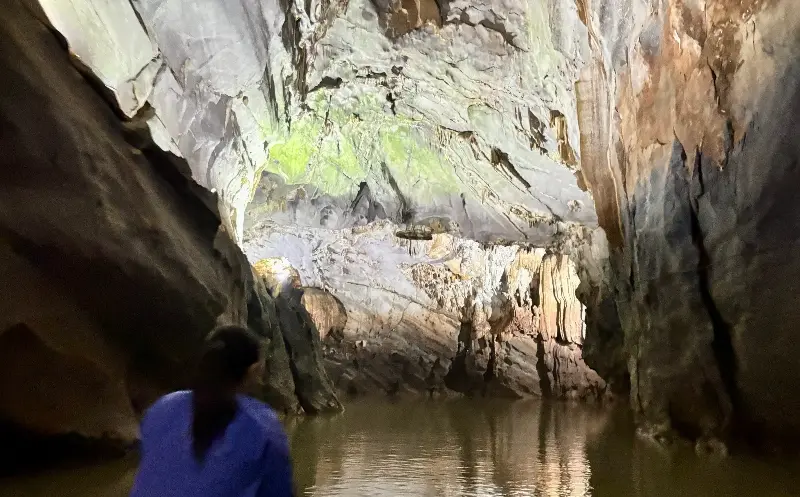
The Son Doong expedition isn’t something that your average tourist – or this travel writer, as a matter of fact – could do and, even if you wanted to, the tours are fully booked until 2029. But there’s an abundance of reasons to visit this pristine part of Vietnam, from nature walks along Victory Road 20, a heavily bombed part of the war-critical Ho Chi Minh Trail, to easily accessible subterranean boat trips through the ethereal chambers of Phong Nha cave, to full-day trips trekking to the aforementioned Hung Ton.
My visit to Hung Ton formed part of Oxalis’s full-day Tu Lan Experience, spanning six miles of rice fields, mountain ridges, gurgling rivers and a number of otherworldly caves. A comprehensive pre-booking questionnaire makes it clear that a good level of fitness is required.
The nearest hospital is 70km away, and that’s after you’ve been carried across steep mountains on a stretcher. It’s definitely a challenge, but the pace is relaxed and – fortunately – you don’t need to be a hardcore hiker to do it.
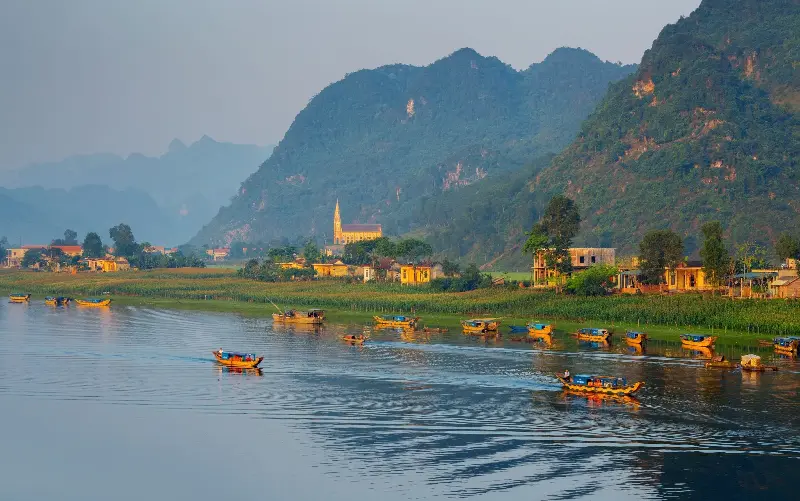
The calls of red-collared woodpeckers and brown hornbills echoed across dawn-lit farmland when my group of nine guests and six guides set off from base camp in the morning, strolling through golden ready-to-harvest rice paddies encircled by rounded, almost symmetrical limestone mountains that reminded me of nuns bowed in prayer.
“I haven’t been to Son Doong yet,” said Hoàng Duc Huy, our cheerful 24-year-old guide, originally from Phong Nha town, an hour’s drive away. Like the rest of the guides, he walks in special sandals to avoid the foot rot that would quickly set in from tearing through mud and the Vietnamese humidity every day.
“I’ve only been working for Oxalis for four months and guides need to have at least two years’ experience before they can go to that one,” he added, as we pulled on sticky climbing gloves and clambered uphill to our first stop, Rat Cave.
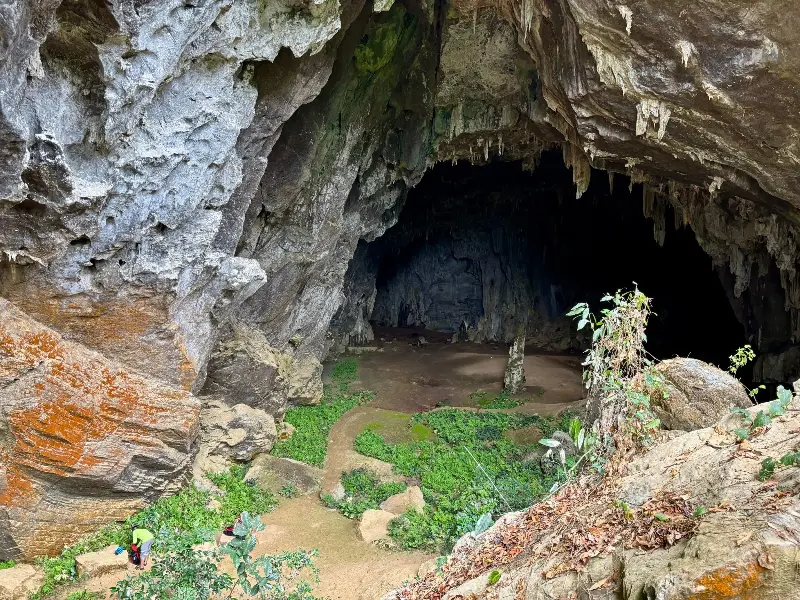
We were instructed to avoid stepping on the indigenous plants that festoon the entrance, then clicked on our helmet lights and passed through the cave’s high, heart-shaped dome, into a world of 400-million-year-old stalactites and stalagmites.
We scrambled up and over Baby Hill, a misnomer for this peak of spiky rocks, tangled roots and slippery mud that left us caked in thick red clay.
The reward was worth the effort: on the other side, now clad in lifejackets and helmets, we plunged into the Ráo Nan river, which flows above and below Hung Ton.
I’d been expecting a leisurely lazy-river-style ride, but rains in neighbouring Laos had swollen the chalky waters to a torrent that flung us through inky caves and passages like twigs, bouncing us off the fluted walls and over time-smoothed boulders before spitting us into a mythic green lake curtained by soaring limestone karsts.
It was the highlight of a day littered with splendid lake swims and boat trips, as well as a thrilling five-storey ladder climb and even some Devonian-era fossil spotting. By the end, I felt I had truly earned the bamboo medal with which we were each presented, and wore it proudly all the way back to my hotel in the neat little town of Phong Nha.

I spent the evening exploring its tiny web of streets, nipping into locally owned businesses such as Blind Massage Gia Bao and plastic-free restaurant Bamboo Chopsticks, relishing the sense that I had stumbled into such a remarkably unspoilt corner of this ever-popular country.
In a landscape that has barely changed in hundreds of millions of years, I can only hope that Phong Nha stays exactly the same for millions more.
Essentials
InsideAsia has the 13-night Adventurer’s Vietnam trip from £2,845, including three nights in Phong Nha with cave treks, time at Capella Hanoi and Namia River Retreat in Hoi An, as well as guided experiences. Excluding international flights.
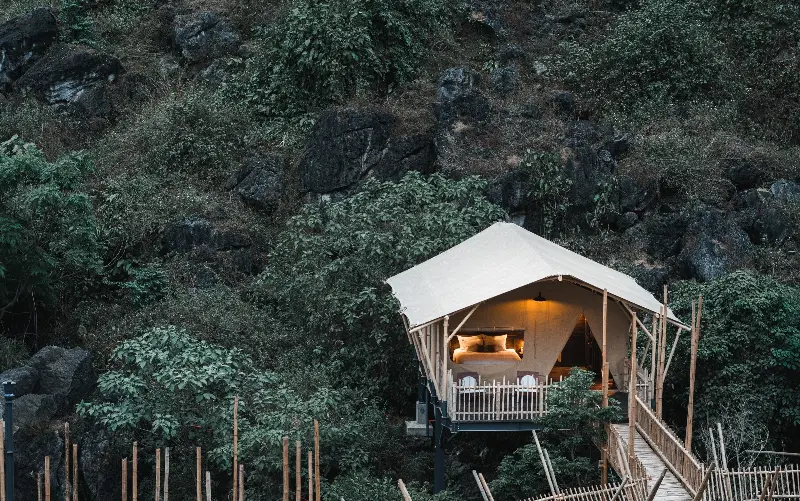
AUKO Eco-Wellness Lodges (doubles from £255, all-inclusive) is a collection of 30 glamping tents perched on stilts, looped around the base of limestone bluffs linked by floating bamboo walkways. A daily hydrotherapy journey – herbal rhassoul, cold plunge – and 30-minute foot massage are included in the rate.
Vietnam Airlines operates flights from London to Hanoi from £638 return. Domestic flights between Hanoi and regional airport Dong Hoi start at approximately £60 return.