



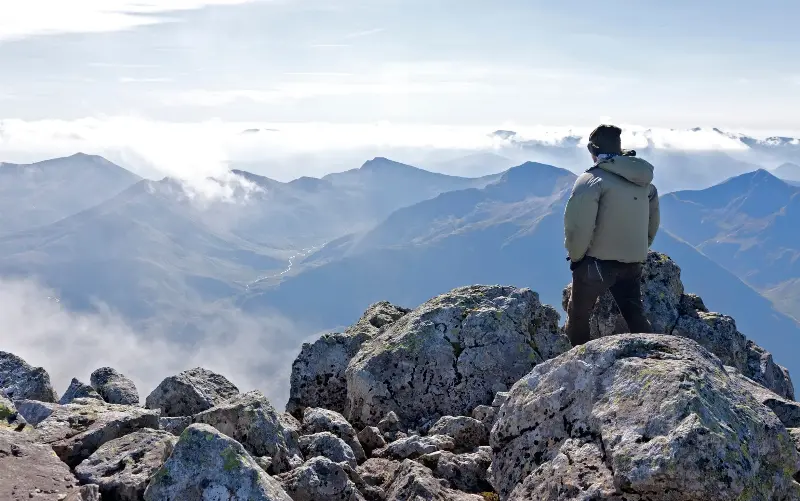
Around 23 miles. More than 10,000ft of ascent. Some 460-odd miles of driving. All in 24 hours. That’s the National Three Peaks Challenge, a gruelling attempt to get up and down the highest peaks in Scotland, England and Wales – Ben Nevis (4,413ft), Scafell Pike (3,209ft) and Yr Wyddfa/Snowdon (3,560ft) respectively – in the space of one day. It’s considered one of the country’s toughest hiking tests, but also a popular way to raise funds for charity.
Indeed, in June, Catherine, Princess of Wales, completed the Three Peaks in aid of the Royal Marsden, the hospital where she was treated for cancer in 2024. The challenge was, she said, a “chance to explore life beyond diagnosis and to give something back”.
It’s estimated that at least 30,000 people undertake it each year, a number only set to rise after the Princess’s endeavours. Searches for “Three Peaks Challenge” jumped by 942 per cent since her hike. But how do you go about following in her regal footsteps? How hard is it? Could you do it yourself? And should you even try?
How hard is the Three Peaks Challenge?
Britain’s mountains aren’t high by global standards, but the Three Peaks entails unrelenting ascents and descents on rough terrain, in potentially inclement weather, on increasingly tired legs. “Each of the three mountains is a significant challenge,” says Colin Lovell, a leader for events company Charity Challenge. “What makes it so demanding is tackling all three in quick succession with little time to recover.”
Can anyone do it?
With training and dedication, yes, almost anyone can. “Walking doesn’t cost anything,” says Heather Thompson at The Ramblers charity. “You can start with five minutes and build on that. It’s important to build up to a challenge like the Three Peaks.”
Walking offers physical, mental and spiritual benefits, and – as the Princess has found – can be a balm after serious illness. “Dealing with any illness is challenging,” says Thompson. “Emotionally, it’s a huge strain; releasing that strain via walking in nature can be a huge relief. Also, many people in recovery have a sense of wanting to make the most of every moment.”
How much training do you need to do?
You’ll need to build a good level of cardiovascular fitness, stamina rather than speed. The best prep is spending time hiking in the hills; if you don’t have big hills nearby, do repeats on smaller ones. If you can, hike one of the three peaks beforehand, to gauge whether you can complete it within the required time. Note, the gym’s stepper machine won’t cut it. It doesn’t work the downhill muscles.
Ramblers runs free Wellbeing Walks across England, and a free Out There Award, which gives 18 to 26-year-olds the confidence to join and plan a walk. The British Mountaineering Council (BMC) also runs free guided walks. All good ways to start Three Peaks training.
Independent or guided?
Logistics can be complex. Many companies offer guided group challenges, which will take care of elements such as transport, accommodation and route-finding. “All of our challenges are operated with qualified and experienced Mountain Leaders, a fleet of minibuses with professional drivers, and the provision of food and drink – this removes a huge amount of stress,” says Lovell. “Being part of a larger group also means you’re likely to find people walking at a similar pace, which helps with motivation and enjoyment.”
If you plan your own challenge, you’ll need to recruit drivers, potentially hire a minibus, book accommodation and either hire a guide or hone your navigation skills – relying on Google Maps is not sufficient.
What time of year?
The main season runs mid-April to October; the optimal months are June to July as days are longer and conditions often better. Earlier in the season there’s still a chance of snow on Ben Nevis; later, shorter daylight hours and more unpredictable weather can make the challenge considerably harder.
What’s the perfect plan?
Most walkers start in Fort William, climb Ben Nevis, then Scafell, then Snowdon. This gets the highest peak and the longest drive done first. Snowdon shouldn’t be underestimated, but it’s a more straightforward climb.
The challenge entails roughly 13 hours of hillwalking and 11 hours of driving. Many Three Peakers begin ascending Ben Nevis around 6am, fresh from a night’s sleep, aiming to be down by 11am/noon for the long drive to the Lakes. Scafell is started around 5/6pm; in midsummer, most of the climb should be completed in daylight, before the drive to Wales for a 2am-ish start up Snowdon.
Alternatives include beginning Ben Nevis at noon – this avoids the worst traffic, but means doing Scafell in the dark – or around 6pm, to maximise daylight walking: you should be down the Ben before dark, start Scafell at dawn, Snowdon in the afternoon.
What to pack?
Comfortable footwear is essential; some companies insist on hiking boots with ankle support. Buy or hire a quality head torch and take spare batteries. Pack multiple sets of clothing so you can change between mountains if you get soaked. Take a pair of walking poles. They’ll help prevent trips and slips. Hats and gloves are essential, year-round, as summits can be cold even in summer. Carry snacks – both sweet and salty – in accessible pockets, so you can eat on the go.
Download the What Three Words and OS Maps apps, so you can give Mountain Rescue your location if you get into trouble.
Is it safe?
“The biggest risk is the driving – that’s where you’re going to have accidents,” says the BMC’s Jon Garside. If joining a group challenge, check the organiser is adhering to Driver and Vehicle Standards Agency legislation. If self-driving, enlist designated drivers who are not hiking, and who can rest while you’re on the mountains.
A unique problem with the Three Peaks is the time pressure, which can lead to bad decisions, groups separating, and accidents caused by rushing or growing fatigue. It’s imperative to prepare in advance; think about what could go wrong and plan for all eventualities. Visit threepeakspartnership.co.uk, which collates information from the organisations that look after the three landscapes.
Should you do it?
No organisation – the National Parks, the BMC, Ramblers – wants to discourage more people from enjoying the countryside, but they’d probably prefer you to do so in a different way.
“The Three Peaks is a lovely idea but it’s important to think about the impact,” says Garside. Negative effects range from traffic snarl-ups to path erosion, public defecation and noise pollution. “I used to live up the Llanberis Pass,” says Garside, “and remember being woken by people whooping at 4am.”
Litter is a huge problem. “It increases during Three Peaks season, possibly because we’re the last mountain,” says Catrin Glyn, who works at Eryri (Snowdonia) National Park. No hiker should be dropping litter – plastic bottles take 450 years to decompose; even banana skins take two years – but, better, litter should be taken home, rather than rammed into overflowing bins.
In short, the communities around the mountains get all the downsides for minimal economic benefit. Three Peakers zoom through, spending little. “They buy a pizza in Scotland, then dump the packaging in Wasdale,” says Richard Warren.
Warren has been a member of the Wasdale Mountain Rescue Team (WMRT) for over 40 years and has witnessed the changes. When he started, WMRT did about 30 rescues a year; now, it’s typically 160-180. Over half of those are on Scafell, half of which are “avoidable” – lost or missing people, as opposed to medical emergencies or accidents.
“Social media has had a huge impact,” Warren says. “There are more people doing the Three Peaks now, and more people going up the mountain – and they don’t always know what they’re doing.”
He urges anyone to check the guidance on adventuresmart.co.uk before heading out: “Basically, ask yourself three questions: Do I have the right kit? Have I checked the weather? Do I have the skills? If the answers are no, don’t go.”
How to do it more sensitively?
Glyn recommends hikers slow down. “The Three Peaks is packaged as a 24-hour challenge but we advise doing it less quickly; it’s still a massive challenge if you stay a night in each place, plus you get more out of each area, and spend a bit more money.”
Or how about doing the Three Peaks by public transport? Fort William is accessible by train; the Wasdale Explorer bus runs to Wasdale Head from Ravenglass station; the Sherpa’r Wyddfa S2 bus links Bangor station to the trailheads for Snowdon.
Garside advises thinking outside the box. “There are lots of variations on the challenge, with no time elements,” he says. “Have your own adventure.”
Whatever you do, donate to Mountain Rescue. These entirely voluntary teams receive no government funding but risk their lives so we can enjoy the mountains.