



Apparently, tall people enjoy certain privileges such as greater happiness and a lower risk of cardiovascular disease. On the downside, we also have a propensity for chronic back pain. Over the years, I have endured everything from agonising muscle twinges and epic shoulder throbs to excruciating sciatica. The wear and tear of middle age only compounds this most dispiriting of ailments.
Statistics show that back pain isn’t just the preserve of cloud-sniffers like me. Indeed, it has become a major health concern across the whole of society with roughly 31 million workdays lost annually due to back, neck and muscle pain. I’m guessing that sitting at computers doesn’t help (he says, hunched over his laptop).
Approximately 17.9 per cent of adults in England self-report long-term musculoskeletal conditions, while about 73 per cent of Britons experience daily back pain. It has become a leading cause of disability and sickness with approximately 1.5 million GP consultations and 500,000 hospital admissions in England every year.
Car manufacturers design vehicles for healthy people of average height because they tend to make up the majority of the population, but with back pain reaching epidemic proportions, designers really need to sit up and take note.
As an avid driver (and reluctant passenger), I find that even tall-looking SUVs skimp when it comes to headroom, a lack of which can inflame neck and back pain. Getting in and out of a chunky Nissan X-Trail, for instance, was easy enough but once in the back seat, I had to tilt my already painful neck at an ungainly angle for the duration of the ride.
Many SUVs resemble a kind of reverse Tardis – huge on the outside, not so much on the inside. Interestingly, smaller cars such as the Volkswagen ID.3 hatchback often resemble an actual Tardis – compact on the outside with acres of interior space.
Advantages of SUVs
For back pain sufferers, the most obvious advantage of an SUV is the raised access. Stepping up into the driving seat is much easier on the spine than the twist-n-crouch manoeuvre required to access step-down models – a move designed to inflict maximum misery.
At the more luxury end of the SUV market, the Audi Q7 boasts a massive 42.1 inches of clearance. I’m 6ft 4in but even someone an inch taller has plenty of bobbing space. Due to boxy profiles and high rooflines, the Land Rover Defender and BMW iX also have cathedral-like levels of headroom.
Of the cheaper SUVs, the Citroën C3 Aircross, Kia Sportage and Jaecoo 7 include ample legroom and plenty of seat adjustments. Finding the perfect sitting position is of course paramount but with so much tech at our disposal, locating that all-important sweet spot often involves multiple microscopic adjustments.
Lap of luxury
I was particularly impressed by BMW’s decision to place the seat positioning knobs on its iX xDrive 60 along the upper door trim (as Mercedes has done since the 1980s), avoiding the need to scrabble blindly and painfully for those hard-to-reach knobs on the side of the seat’s base.
Of course, all those intricate position settings won’t count for much if the driving seat itself is uncomfortable and it’s here that the luxury end of the market really shines. The Audi A8 offers multi-contour seating packages that mould to your body, with added heating and ventilation options, while BMW’s 7-Series has airline first-class levels of comfort.
Of the cheaper options, Citroën’s C5 Aircross has Advanced Comfort seats which use high-density foam to absorb bumps while giving maximum support. In tandem with some nifty dampers, this made a huge difference as I drove around London failing to negotiate crater-sized potholes.
Medical advice
According to my chiropractor, reducing pressure on the spine by maintaining its natural curve is essential, especially during longer journeys. He recommends tilting the seat cushion slightly so that the hips are a little higher than the knees. I had always assumed that sitting bolt upright would be good for my posture, but apparently too much erectness while driving places a burden on the lower back, which is exacerbated if it’s not fully supported.
For maximum back comfort, slide the seat forward until your knees have a slight bend (about 120 degrees) when fully pressing on the pedals. Then position the steering wheel so it sits level with the shoulders. Make sure your head is in contact with the headrest at all times.
Most manual cars now have clutch footrests, which help take some of the strain in between gear changes. As much as I love the thrill of manual cars, operating heavy clutches has become a real pain in the butt (literally). Constant, repetitive left-leg engagement can lead to muscle imbalances and unequal wear on your hips, buttocks and lower back. This in turn places extra strain on already sensitive spines. Automatics may not be as fun for the keen driver but they keep repetitive strain to a minimum.
Lumbar support
With back pain so high on the agenda, you’d think decent lumbar support would be standard by now, but some superminis such as the Vauxhall Corsa and VW ID.3 left a worrying gap between my lower back and the seat back, making longer journeys more of a challenge. My advice is to take a firm cushion with you wherever you go.
On models such as the Jaecoo 7 and VW, the driving seat felt a little on the firm side, although my chiropractor recommends firmness over squishiness.
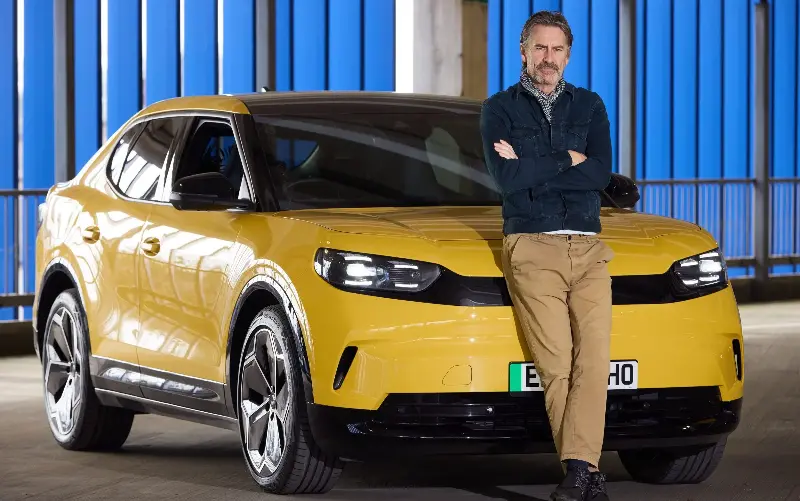
Of all the cars I tested, the new Ford Capri EV’s ergonomic sports seats offered the best relief. The driver’s seat felt particularly decadent with its 12-way electric adjustments, heating, lumbar support, built-in massage functions and memory settings. Even after a four-hour round trip to Suffolk, my back and neck felt rested and surprisingly pain-free.
On the whole, “sports” seats tend to be quite narrow with intrusive side bolsters, making them unsuitable for those of us with broad backs, but Ford has found the perfect balance of sporty good looks combined with rise-and-recline care-home comfort.
Sadly for car lovers, driving and back pain make for uncomfortable bedfellows, which is why a little part of me is excited by the prospect of bedding down in the back of a Waymo driverless taxi and letting the tech take all the strain.
Best for overall comfort
- Ford Capri EV
Top of the pile thanks to 12-way electric adjustment, heating, lumbar support, massage functions and SUV levels of headroom. Generous amounts of legroom, too. - BMW iX xDrive60
- Audi A8
- BMW 7-Series
- Citroën C5 Aircross
Best for ease of getting in and out
- BMW iX xDrive60
Frameless doors with very large openings and an unobstructed footwell that prevents long legs from knocking against the steering column or centre console. - Audi Q7
- Land Rover Defender
- Citroën C3 Aircross
- Kia Sportage / Jaecoo 7
Best for roominess and headroom
- Audi Q7
Over six-footers get 39.9in of front headroom and 41.7in of front legroom. A tracking system allows the seat to slide all the way back while maintaining a low, downward position to preserve head clearance. - BMW iX
- Land Rover Defender
- Volkswagen ID.3
- Kia Sportage / Citroën C3 Aircross / Jaecoo 7