



Will Groenings and Ghiblis one day be as prized as Picassos and Pollocks?
It would once have seemed a fanciful thought, but today the world’s top auction houses are already being animated by everything from production cels to mythical-creature trading cards produced as recently as the 1990s.
In February, a 1998 Pikachu Illustrator Pokémon card sold for a record $16.5m (£12m). It was auctioned by the US influencer and wrestler Logan Paul, who had snapped it up for $5.2m less than five years earlier.

In March, Christie’s held its first sale focused on the Japanese art forms of anime and manga. The New York auction explored “the visual dialogue between Japan’s classical artistic heritage and the subcultural movements that have shaped contemporary global culture”.
But while an impression of Hokusai’s iconic 19th-century Great Wave went for six times its low estimate, it was the modern stuff that made the biggest splash. The top anime work was Ito Ikuko’s Pretty Guardian Sailor Moon, from the 1990s, which realised $88,900 – almost 18 times its low estimate.
Takaaki Murakami, the head of the Japanese and Korean art department at Christie’s, says the Anime Starts Here sale brought in a new generation. “Thirty-six per cent of bidders and buyers were new clients, while 35 per cent were millennials or Gen Z.”
And in July, a single 1999 cel (short for celluloid, the transparent sheet used for hand-drawn animation) from The Simpsons, featuring Homer Simpson at Barney’s Bowlarama, sold for more than £25,000, a world record for original production artwork from the animated sitcom created by Matt Groening.
“This is a museum piece in the real sense of the term,” the lot’s description effuses, “a physical record of how the work was actually done. Years from now, when hand-painted animation is something people study rather than something they remember, a setup like this is what they will pore over.”
The artwork also managed to put classic Disney artefacts in the shade. Despite having survived for almost 90 years, a Snow White and the Seven Dwarfs cel in the same Propstore auction sold for a Grumpy £1,600.
Animation interlopers are making it into hallowed exhibition halls too. The Academy Museum of Motion Pictures in Los Angeles is presenting Studio Ghibli’s Ponyo, a show celebrating the handcrafted art of the Japanese studio’s 2008 film. And at the Museum of Modern Art (Moma) in New York, It’s Alive! A Century of Animation from the Collection runs until the summer of 2027.
According to Russell Singler, an animation art specialist at Propstore – pioneers in the “pop-culture hybrid of fine art and memorabilia collecting” based in London and LA – we are seeing a sweet spot where nostalgia meets scarcity.
As millennial and Gen Z superfans are “ageing in” to the market, “you’ve got those collectors that have grown up, got a bit of money and they want to buy parts of their childhood”.
At the same time, connoisseurs old and young are becoming increasingly aware of how rare physical animation-related objects are, amid an ocean of digitally produced entertainment.
The Simpsons cel was so valuable because only the first 13 seasons were hand-drawn (season 38 began in September). For the animated TV comedy SpongeBob SquarePants, it was only the first series in 1999 made the old-fashioned way. “From a collecting point of view,” says Singler, “you’ve got something that’s really in demand but is a finite amount.”
The shift from pencils to pixels started towards the end of the last century. The Little Mermaid, released in 1989, was the last Disney feature film to use the traditional hand-painted-cel method of animation. Each frame was drawn and coloured by hand, and the cels could be laid over a painted background to avoid having to reproduce the static scenery for the up-to-24 frames per second.
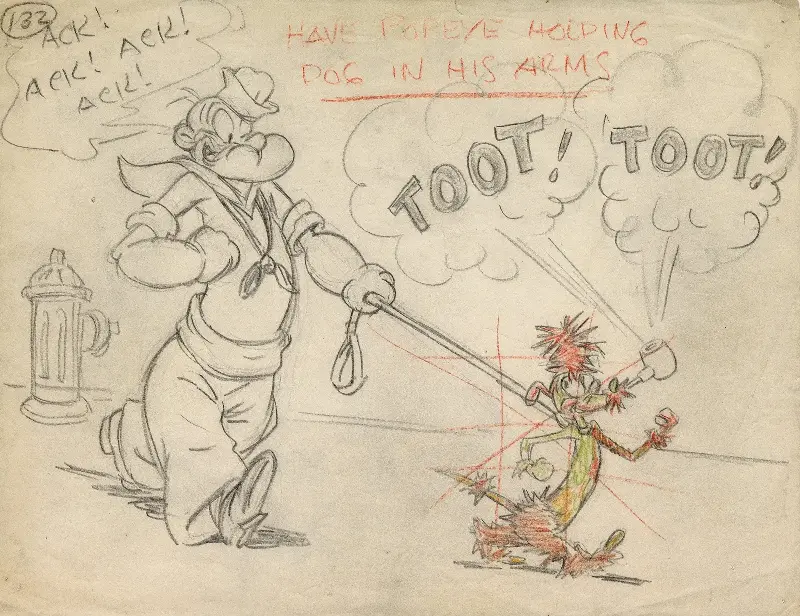
Much of this material was once regarded as disposable as soon as the film was completed. Some of it was literally thrown in the bin.
“It was just a tool of the job,” says Singler. “So once it’s on film and photographed, they don’t need to keep it around anymore. You hear stories where people used to go to the huge bins of the studio and just pick out wads of animation artwork.”
It means that what survives is scant. And individual cels with the most beloved characters interacting in an appealing composition are rarer still.
The most valuable object Singler has ever sold was an original 1937 production cel of Snow White and the Seven Dwarfs with the hand-painted key master production background: “A wonderful moment of them all wide-mouthed in fright thanks to the birds knocking on the wood and scaring them. Eyes wide open, mouth open, great expressions, wonderful emotion.” He sold it to a private collector in the late 1990s for £55,000. The first cel Singler bought for himself was of Baloo from The Jungle Book (1967) – the first film he saw at the cinema.
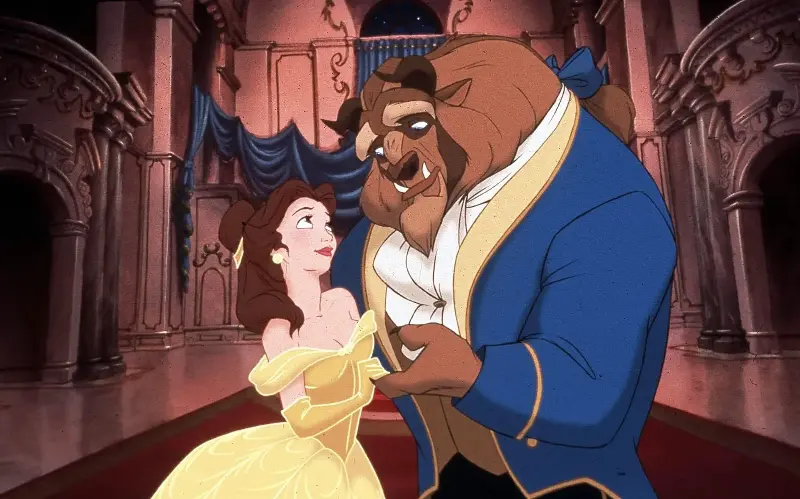
Since the switch to digital, vanishingly few new tangible treasures are coming down the track. In 1990, Disney’s The Rescuers Down Under was the first feature film to be completely drawn and painted digitally, and in 1991 the leads in Beauty and the Beast waltzed through a computer-generated ballroom.
Consequently, while full-colour completed cels were once the only game in town, now all physical objects involved in their creation, from sketches to storyboards, are rocketing in value.
“When I was first offering animation artwork”, in 1995, says Singler, “I felt that production drawings were kind of undervalued, and those days are gone.” He is fielding interest everywhere from France to “an emerging market in the UAE”.
Ramin Zahed, the editor-in-chief of Animation Magazine, notes that “the unpredictable financial markets around the world and tech-driven wealth also play a part in this elevation in value of animation art” because they “can be used as portable financial resources”.
Indeed, where once it was only die-hard fans jostling to bid, now dispassionate investors are looking to hoard. “Certainly with the anime artwork, explosive values are leading to speculative acquisition in the market because things are accelerating so quickly,” says Singler.
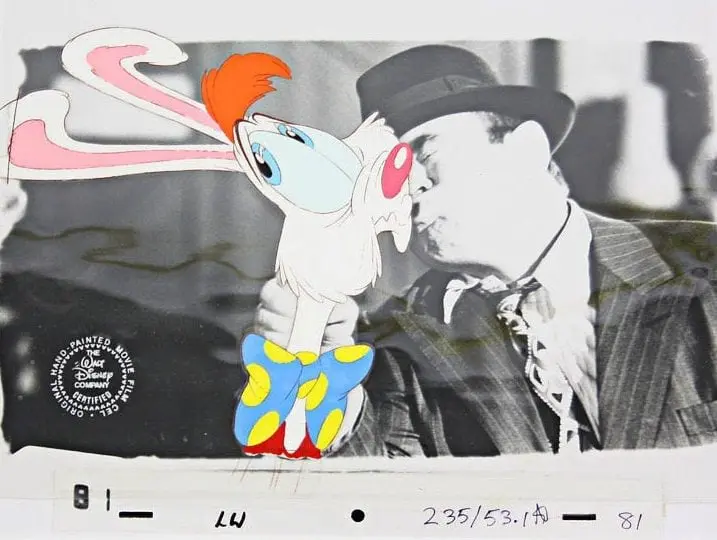
He adds that particular draws are objects from the making of Who Framed Roger Rabbit (the 1988 Bob Hoskins film that combined animation with live action) and anything from Studio Ghibli, makers of Spirited Away and My Neighbor Totoro (“some artwork can be £70,000”).
And cartoons are even conquering academia. Lincoln Geraghty is a professor of media cultures at the University of Portsmouth who researches “fandom, nostalgia, genre and paratexts within broader media and cultural contexts”.
He says that while many might assume this kind of collecting is a nerdy, solitary activity, a key part is about connecting with others. “It certainly is about finding a community. Once you’ve found that community, you begin to realise that a lot of people think like you.”
He adds that even younger fans who were not born before the advent of digital animation appreciate the power of having an object to stroke and display.
“They understand that there is some lineage, and owning a bit of that legacy is a way of experiencing something that they missed out on. In this age of AI and digital media, physicality is important. Those hand-drawn, 2D cel cartoons are seen as somehow more authentic and connect to a practice, skill and talent that some might feel is being threatened.”
Beth Bryan, the director of the Cartoon Museum in London, says: “Nostalgia of all forms is increasingly appealing to collectors – both public and private. As individuals, we collect things that bring us joy; at an institutional level, we collect things with importance, meaning and relevance. Cartoons, of course, tick a lot of these boxes.”
Geraghty predicts that a Simpsons image may soon be every bit as venerated as a da Vinci.
“Within their own communities, these texts are just as valuable and reach more people than a classic piece of art perhaps ever could. In a few years’ time, [gallery visitors] will be thinking: ‘Yeah! This is what captured people’s imaginations. This is what brought people together.’”
It is a proposition that would have even Bart Simpson yelping in surprise: Ay, caramba!