



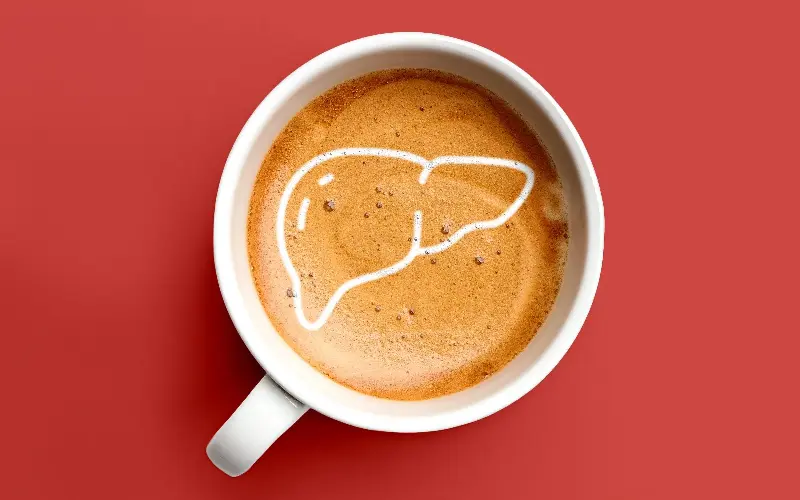
Scientists are increasingly discovering that coffee can boost multiple parts of our body, from the gut to the brain. But some of the clearest benefits of all apply to the liver, a vital yet fragile organ which we need for filtering toxins and medications from the blood and storing crucial vitamins and minerals.
A new study, which tracked 355,000 adults in the UK for 13 years, has discovered that people who consumed the most coffee – five or more cups per day – had a significantly lower risk of cirrhosis (advanced liver scarring) and liver cancer. In fact, blood tests revealed that they had higher levels of proteins linked to healthy liver function. Added to this is the recent report – from the American Heart Association that up to five ordinary-sized cups of coffee a day (up to 400mg caffeine) is safe for most adults – and drinking our favourite pick-me-up has never looked healthier.
The findings have particularly intrigued scientists, because it appears that drinking coffee may offer protection against the development of fatty liver disease, one of the world’s fastest emerging chronic health conditions, which in some cases can ultimately lead to liver cancer.
Estimates suggest that as many as one in three adults in the UK may have some form of fatty liver disease, while across Europe there has been a 50 per cent rise in deaths from liver cancer since 2000.
“This form of liver disease typically develops because fat starts to accumulate within the liver which perceives the fat as foreign,” says Hyunseok Kim, assistant professor of medicine at Cedars-Sinai Health Sciences University, who led the latest study. “So the liver attacks, causing inflammation, and if that persists, it leads to progressive scarring which can then serve as a background for liver cancer to grow.”
It appears that coffee could interrupt this process, as well as slow down other diseases.
Why coffee is so good for your liver
When Jonathan Dranoff, a professor of medicine at Yale University, sees patients with signs of fatty liver disease, he makes four recommendations: do more exercise, reduce intake of sugar and refined carbohydrates, limit or quit alcohol, and drink more coffee. “I actually do prescribe therapeutic coffee to people that are at risk,” says Prof Dranoff.
In the late 1980s, Norwegian scientists discovered that people who consumed more coffee had lower levels of three key liver enzymes, a sign that their livers were under less stress. As well as appearing to protect people against liver scarring and cancer, coffee drinking has even been shown to slow disease progression in people living with hepatitis C, a blood-borne viral infection which causes liver inflammation.
The most popular explanation relates to caffeine, a powerful stimulant which has many functions. Research has shown, for example, for people with fatty liver disease, caffeine may shield the liver by preventing the production of scar tissue.
This caffeine theory is supported by studies which have shown that people who consume tea as their hot drink of choice, which has a notably lower caffeine content, do not appear to get the same amount of liver protection.
But it may not be the full story. As well as caffeine, coffee contains at least 100 different plant chemicals, which help stimulate the liver’s own innate antioxidant defences, protecting liver cells from injury. The Cedars-Sinai study showed that people who consumed multiple cups of decaffeinated coffee each day, also seemed to benefit from some degree of liver protection.
Coffee is also great for the gut which supports the liver
Drinking more coffee may also be helping the liver by altering the gut microbiome in various beneficial ways. Excessive amounts of alcohol, sugar and saturated fat can stimulate the growth of pathogenic bacteria within the gut, as well as triggering local inflammatory responses which make the gut more leaky. This then leads to various microbes ending up in the bloodstream and provoking a wider inflammatory response that harms the liver.
It appears that coffee could have a soothing effect on the gut, promoting the growth of beneficial bacteria. The plant compounds in coffee may also improve the composition of microbes in the gut, and consequently reduce inflammation.
So how many cups is really best?
A lot of this depends on your ability to tolerate caffeine, a stimulant which isn’t appropriate for everyone, as people metabolise it in different ways depending on their genetics. Pregnant and breastfeeding women shouldn’t exceed 200mg of caffeine per day.
But if you can handle plenty of caffeine without noticing any ill effects, like jitteriness, insomnia, or an irregular heartbeat, then Dranoff says that it may actually benefit you to be drinking anywhere between two and four standard sized cups (around 200ml) of coffee, containing up to 90mg of caffeine.
Kim believes that the maximum liver benefit may be achieved with five cups of coffee a day, based on his latest findings. “Beyond five cups, the liver benefits plateaued, while people might start getting palpitations or negative effects on other organs due to the caffeine,” he says. “To me, I think the sweet spot lies with three to five cups a day.”
What about decaff coffee?
Overall, there is most evidence for caffeinated coffee. However, with Kim’s study decaffeinated options can still help the liver, and is a good alternative for anyone who notices ill-effects from too much caffeine, or who have high blood pressure or heart rhythm disorders. It’s possible that these people can improve their liver health by drinking three to five cups of decaffeinated coffee per day.
How best to drink coffee for your liver health?
Some of the cheapest ways to consume coffee may also be some of the most effective. When Dranoff prescribes therapeutic coffee, he recommends drip coffee, for example versions made via a cafetiere, or slowly filtering hot water through ground coffee in a paper filter. He also believes that instant coffee has similar benefits.
Some research has suggested that neither espresso nor Americano is as beneficial for preventing the progression of fatty liver disease. One study found that while filter coffee appeared to stop liver scarring, espresso drinking did not. Some of this may be due to the lower caffeine content. A 60ml cup of espresso contains approximately 80mg of caffeine per serving, while a standard 230ml cup of filter coffee offers anywhere between 115-175mg depending on the coffee bean type and brewing time.
If you’re an espresso lover, Dranoff suggests boosting the benefits by choosing an Americano, because this is made with a double shot of espresso and so carries more caffeine. However, right now the strongest evidence is for either filter or instant coffee.
Adding a splash of milk for some extra flavour is also thought to be fine. However, scientists are highly sceptical about popular milkshake-style coffees, which are not just made by roasting beans, but also with a sizeable amount of added milk, cream and sugar, such as a Frappuccino. In such cases, they believe that the calorific nature of these drinks is definitely cancelling out any health benefits provided by the actual coffee.
In his study, Kim noticed that people who consumed their coffee with sweeteners, whether sugar or artificial sweeteners, seemed to have more liver inflammation. However, this doesn’t mean that you have to stick with black coffee for the rest of your days.
Dranoff says that some sweetness won’t do you any harm, as long as it’s in moderation. “It sounds like Mary Poppins, but if someone needs a spoonful of sugar or milk to get the medicine down, I think it’s OK.”