



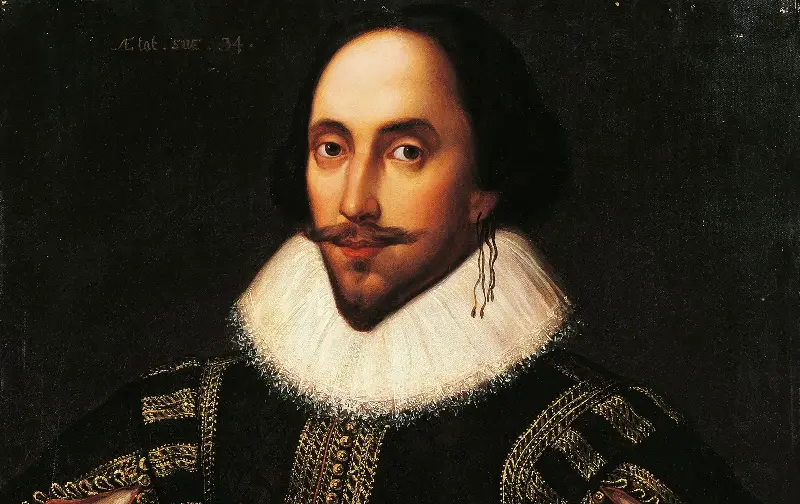
Edward III should be added to the canon of plays by William Shakespeare, first of its kind research has revealed.
Academics have long believed some scenes from the history play, published anonymously in 1596, were written by the Bard.
New evidence not only concludes that he is its main author, but that he collaborated on the play with his great rival Christopher Marlowe, who contributed some of its scenes.
Rory Loughnane, a leading scholar and co-author of the research, said that computerised textual analysis had confirmed their joint authorship “beyond doubt”.
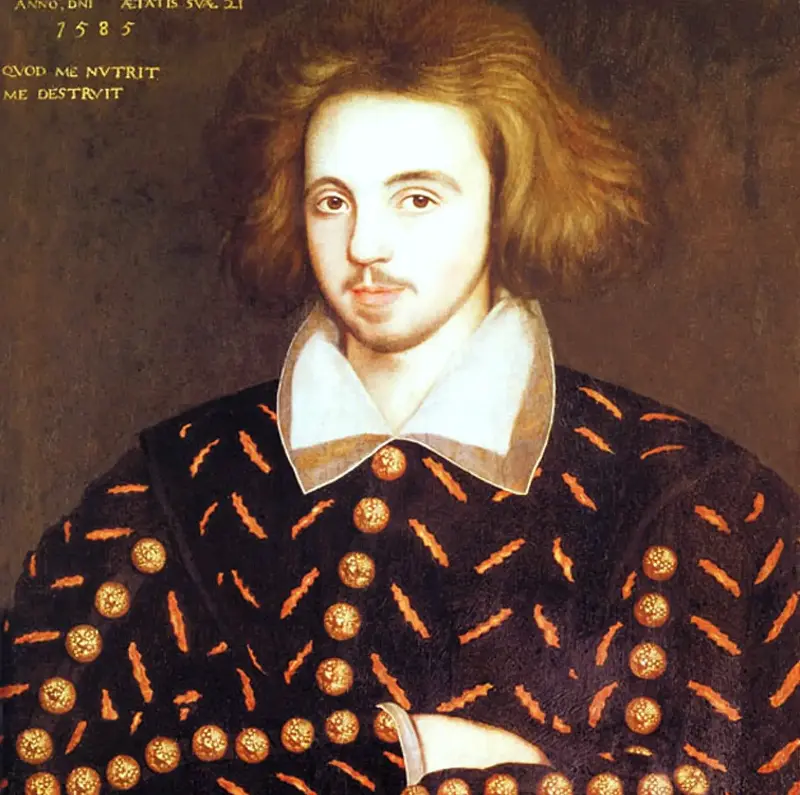
Computerised linguistic analysis divided Edward III into segments and compared the text with plays by 10 professional dramatists, who were working between the late 1580s and the mid-1590s.
The analysis works by examining factors such as the repetition of particular words and the distancing between words in sentences.
For example, the word “martial” is typically present in Marlowe’s plays and correspondingly not often found in the plays of other dramatists.
The “lion’s share” of 23 segments was attributed to Shakespeare, while nine segments went to Marlowe, the researchers found.
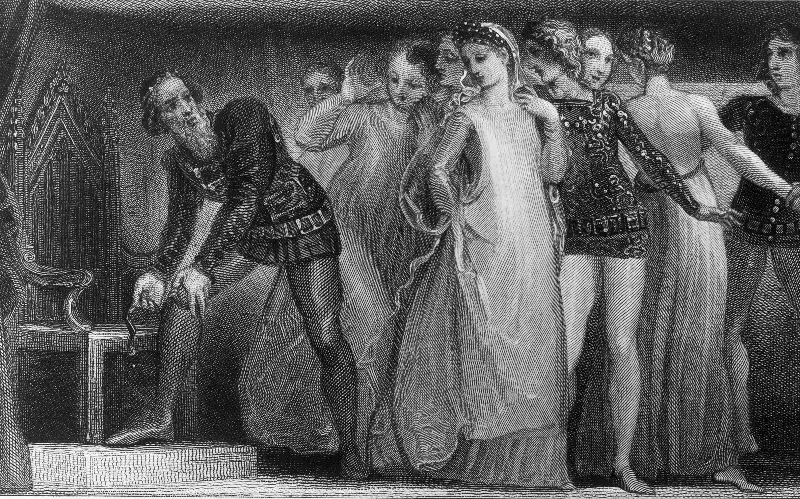
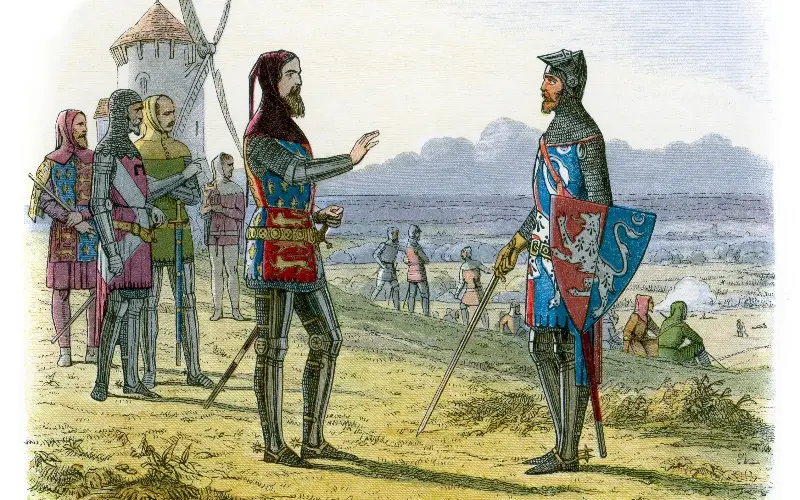
The findings confirm that the Countess scenes, among others, were written by Shakespeare, while Marlowe’s hand is detected in, for example, the concluding scenes involving the capture of King Jean and Prince Charles and the mass surrender of the French at Calais.
Dr Loughnane said: “The discovery helps us see young Shakespeare differently. The Shakespeare of the early 1590s was not yet the solitary national genius constructed by later generations.
“He was an ambitious young dramatist working in an extraordinarily collaborative theatrical industry.
“He was writing with other dramatists, learning from them, competing with them, and moving between collaborative and independent projects.”
The study was jointly conducted by Dr Loughnane, reader in Early Modern Studies at the University of Kent and general editor of the Oxford Marlowe editorial project, and Brett Greatley-Hirsch, professor of Renaissance literature and textual studies at the University of Leeds.
Dr Loughnane edited Edward III for the 2016 New Oxford Shakespeare: Complete Works, which suggested that a couple of scenes were written by Shakespeare.
“This is the first time this case has been made seriously,” he told The Guardian.
Marlowe’s death at 29 following a brawl in a lodging house in 1593 ended “a fruitful early career series of collaborations” between them, Dr Loughnane said, noting that a 2016 study concluded that Marlowe was also co-author of the three Henry VI plays.
Prof Greatley-Hirsch told The Guardian: “What makes the evidence particularly compelling is that we’re not relying on a single verbal parallel or statistical test.
“Different forms of analysis, looking at different features of the language, appear to repeatedly distinguish Marlowe’s writing from Shakespeare’s within the play.”
The findings will be published in Shakespeare Quarterly in November.