



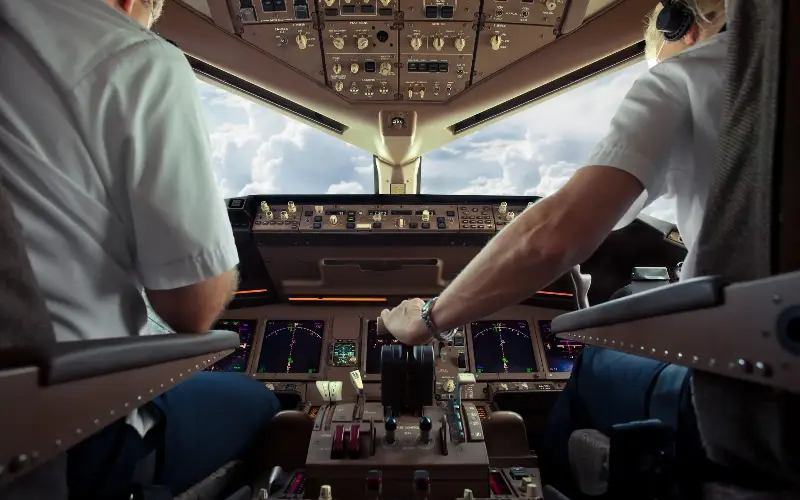
According to the National Careers Service website, pilots require a wealth of skills: verbal communication, maths, reasoning and patience, to name just a few. Based on this week’s events, it appears “basic steering” ought to be added to that list.
On Tuesday, a British Airways plane veered off the tarmac while taxiing at Heathrow Airport. Pictures taken at the scene showed the Boeing 787 Dreamliner stuck in muddy grass. It is understood the aircraft travelled several hundred yards before overshooting a turn.
It was BA’s second incident at Heathrow in less than a week. On Thursday, an aircraft’s tail scraped the runway while attempting to land, before aborting the touchdown and carrying out a successful go-around. Forecasts at Heathrow showed only light winds, with north-westerly gusts of 10mph.
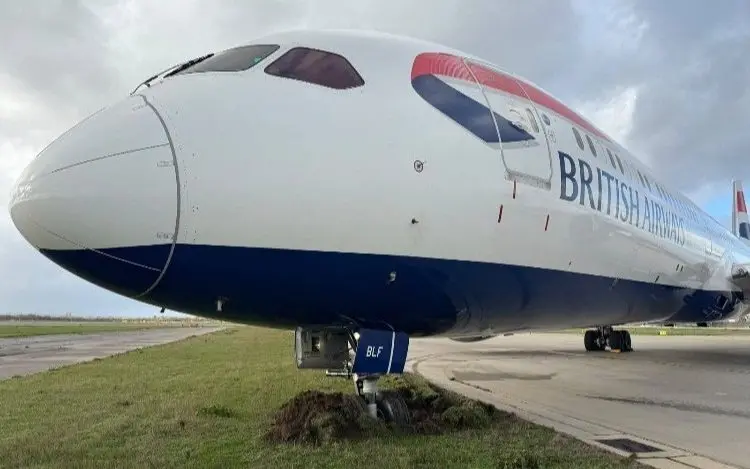
The Air Accidents Investigations Branch is investigating both events, so it is too early to draw any conclusions as to what occurred. However, when you take the wider picture of recent runway bumps and wing scrapes – against a backdrop of a global pilot shortage – it is reasonable to ask the question: are piloting standards beginning to slip?
Ground incidents on the rise
According to the International Air Transport Association’s (Iata) latest safety report, tail strikes, landing gear “events”, runway excursions and ground damage were the most common accident types worldwide in 2025. In addition, the UK’s Civil Aviation Authority (CAA) reports that runway incursions, when an unauthorised aircraft, vehicle or person enters a runway, have increased by around 10 per cent over the past decade.
However, retired pilot Brian Smith, who flew with passenger and cargo airlines for decades, says that to attribute ground incidents to cockpit incompetence misses the bigger picture.
“Major hubs like Heathrow are operating near to maximum capacity with complex, legacy taxiway layouts, where a momentary lapse in visual cues or situational awareness can put a wheel off the paved surface at walking pace,” he says.
“The combination of tight turnaround pressures, congested ground-radio frequencies and 24-7 livestream scrutiny at major airports makes any minor ground error far more visible than it was 20 years ago.”
Damian Devlin, an air transport management specialist at the University of East London, offers similar context.
“Heathrow is one of the busiest airports in the world, operating at almost its legal limit of 480,000 takeoffs and landings a year. The more movements an airport handles, the more likely it is that some of these events will occur,” he says.
“The question is less about whether pilots are getting worse than whether the conditions they fly in are becoming more challenging.”
The evolution of airmanship
Automation and co-piloting tools have made aviation extraordinarily safe. Between 2012 and 2016, there was one fatal accident for every 3.5 million flights; between 2021 and 2025, it was one for every 5.6 million. But these tools have also altered the skill sets required in the cockpit.
“Automation dependency is a recognised issue, and one reason training has changed,” says Devlin.
Today, pilot training has evolved from the traditional seat-of-the-pants airmanship to something more disciplined, based around communication, leadership and problem-solving. Psychometric testing, cognitive resilience and non-technical skills have become central to the process, says Smith.
“When I first trained as a commercial pilot, simulator checks consisted mainly of set-piece exercises, which were relatively predictable,” he adds.
Now, pilots in training are exposed to unpredictable scenarios that build genuine startle recovery. This is important, as pilots still hand-fly for at least a few minutes at the start and end of every flight.
“When something goes awry, such as a tail-strike during a gusty crosswind landing, that is a direct lapse in one of aviation’s core competencies – manual flight-path management – and there’s no way to sugar coat it. Keeping manual handling skills fresh remains a constant priority for training departments,” says Smith.
“If there is a vulnerability, it’s that high levels of reliability and automation can breed subtle complacency during routine phases of flight, like taxiing at a familiar home base.”
Amid a global pilot shortage, airlines have adapted their pathways to recruitment, including sponsored-cadet schemes. This has not lowered the standards required to gain a licence. Nevertheless, Smith says some pilots might find themselves moving into larger jets earlier than previously.
“Post-pandemic fleet expansion means pilots are sometimes moving on to larger jets or upgrading to captain with fewer total flying hours than a decade ago. However, their formal training standards remain very high,” he says.
Eradicating blame in the cockpit
The very question of whether pilots are getting worse runs against a central philosophy in 21st-century pilot training, known as “just culture”.
“Crews are trained to actively assess and brief risks, and agree on a strategy for managing them and to challenge each other, calling go-arounds early, without fear of blame,” explains Smith.
“It focusses on identifying and reducing risk rather than assigning blame,” adds Devlin. “Pilots and other staff are encouraged to report errors and near misses, because each report helps the whole system learn and prevent the next event.
“Channels such as Big Jet TV [a popular YouTube channel] stream live footage of aircraft movements from major airports, and event footage is shared across social media very quickly, often from multiple sources at once. This can create the impression that incidents happen more often.
“In fact, these events attract attention because they are so rare. What the public sees less often is how the sector learns from them.”