



I made the mistake of listening to a UK radio station during my stay in Costa Rica. The hourly BBC News bulletin brought tales of division, and a sweeping narrative of a country deep into an impressive run of self-harming. You might argue that the purpose of travel is to forget the woes of your everyday life, and that the country you’re visiting is almost definitely facing similar issues.
But the metrics don’t lie: this year, according to the World Happiness Report, Costa Rica became the fourth happiest country in the world (up from sixth in 2025), and one of only two countries outside Europe to crack the top 10. The US was 23rd. The UK? 29th.
My Costa Rica visit was part never-ending human quest to determine just what happiness is, part expedition with the hope of bottling, cataloguing and releasing new invasive strains of this precious commodity to my home country. It was also part personal.
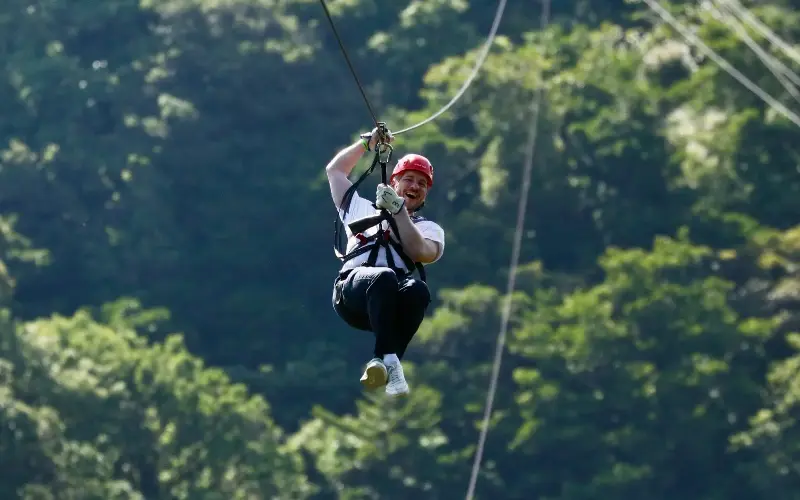
I’ve battled chronic depression for the best part of 30 years, and recently decided to wean myself off fluoxetine (more commonly known by brand name Prozac), which partly works by releasing serotonin into the brain. I started to entertain the idea when, hanging over the New York skyline on a harness one year previously, I felt nothing.
So, under medical supervision, I stopped. The results have been mixed, but I was hoping a life-affirming organic top-up in a certified “happy” country would help, coupled with a better understanding of that most elusive and abstract of emotions.
Finding peace
Costa Ricans not from San José do not like San José, and first impressions are far from uplifting: all tarmac, concrete and relentless traffic fumes. But there are pockets of calm. I based myself at Hotel Grano de Oro, an Edwardian-era building which felt as if Hemingway had just checked out: wafting ceiling fans, wood panelling, a showstopping courtyard restaurant and tropical planting.
Framed by a thick heat, the city has a gnarly, lively pulse to it, with elevated viewpoints where the sharp grey corners meet backdrops of surrounding jungle-covered mountains. There are some excellent museums, including the wonderfully brutalist Museo del Oro, relaying their golden history, and the National Museum – a bright yellow Spanish colonial survivor which takes visitors from millennia-old indigenous tribes, via the conquistadors and up to the peaceful present day.
Peace is a big part of both the physical and psychological landscape here. The army was abolished in 1948 after a brief civil war, with defence spending instead being invested in education and welfare. The red of the flag doesn’t symbolise blood, but the red faces of the field workers; the white represents peace, the blue represents the two coasts. The coat of arms is instead a national crest, war-related words have been removed from the constitution.
This information was imparted by our bottomless font of knowledge, guide Leo Araya, as we slowly travelled through thick traffic out of the valley surrounding San José towards our next destination, La Fortuna.
Living the pura vida
It is important at this point to mention pura vida. It is not, as I initially thought, a tourist slogan dreamt up in a PR agency in Belgravia, but as much a part of Costa Rica’s lexicon as “can’t complain” is of ours. Literally meaning “pure life”, it is a constant nudge for them to embrace their surroundings and enjoy the moment.
As Araya told me: “It means a reflection of our lifestyle. It’s the name of our decision to be happy. We could not conceive Costa Rica as it is if peace was not a fundamental part of it.” That one goes in the notebook.
La Fortuna is known for the active Arenal Volcano, which we hiked up on arrival. In our cabined rainforest accommodation, we had hummingbirds darting around the pools, troops of howler monkeys hurtling over our roofs... and at one point a 5.6-Richter tremor (which I initially thought was a troop of monkeys hurtling over my roof).
Nature is never taken for granted here. Indeed, Costa Rica has managed to replant one million hectares of forest that had been decimated for arable use. It feels symbiotic – just as in the happiest country in the world, Finland, there is the feeling that whatever the weather, you should be in and amongst it, enjoying, working, replenishing and just existing.
Despite jet lag and early starts continually tapping me on the shoulder for the next week, pura vida was tapping on the other one. Worries recessed as the elevated breezes of Monteverde Cloud Forest, the striking views of Lake Arenal and the dense nature of Manuel Antonio National Park (a personal highlight was a hushed night-boat tour amongst the mangroves, where we spotted red-eyed frogs, pigmy kingfishers, and a Northern tamandua) washed over me, and, crucially, I allowed them to.
The Costa Rica blues
I then headed to the Four Seasons of Costa Rica’s Pacific coast, which takes pura vida and gives it a luxurious, considered polish. They utilise local cacao in the spa, where I was covered in chocolate and wrapped in banana leaves; embrace spiritual traditions in the wellness centre; and, most significantly for me, offer day trips to Nicoya, one of Costa Rica’s oldest settlements, and a recognised Blue Zone.
One of a handful of regions in the world where people are claimed to have exceptional longevity, Nicoya is particularly notable, for better or worse, for being where men live the longest. It was only right then that one of my stops should be to the house of Papi Claudio, a 95-year-old Nicoyan who, after talking to me about Britain’s valiant Second World War efforts (he was a teenager at the time), revealed the secrets to a long life: physical activity, fresh fruit, the “three sisters” of Costa Rican cuisine (beans, corn and squash) and, of course, a pura vida attitude.
It’s not as if some magical mist descends when you enter a Blue Zone, but the attitude is almost an elixir: the mascarada workshop where Doña Melina keeps the festival tradition alive, taking great joy from it; Mildred, who tends lovingly to her bountiful kitchen garden in Matambú, the only Chorotega indigenous reserve in Costa Rica; Dennis, a master coffee roaster engrossed in his occupation.
Maybe this isn’t happiness. Maybe this is something gentler: contentment. A comfort and balance in where you find yourself and, yes, an inner peace.
I may never say “pura vida” out loud again. However, I can say without any cynicism that I will use it as a mental tap on the shoulder, so that the next time I’m hanging off a skyscraper, I can at least feel the wind in my face and the delirium in my vagus nerve. It takes courage to enjoy life and, more than a fridge magnet or bag of coffee, this was the most valuable Costa Rican souvenir I returned to Number 29 with. Then there was a bus replacement service from Sevenoaks.
If you are experiencing difficult feelings, distress, or suicidal thoughts, you are not alone. You can call the Samaritans anytime, day or night, for free on 116 123.
How to do it
Intrepid Travel’s nine-day Premium Costa Rica itinerary costs from £2,304pp, not including flights. Four Seasons Papagayo offers rooms from £900.